
Hosts stocking up on bread for a group
You want to put enough bread on the table without having lots left over. Check the weight of whole and half loaves, and think about what other dishes you’ll be serving.


For a shared international food night, a whole or half multigrain loaf is a sensible choice if you want to match the quantity to the number of people. Individual rolls or bake-at-home baguettes are better when you want separate portions or bread as a side dish. As well as checking the size, look for the wholegrain label, and check the allergens and ingredients on the exact packaging for guests with specific dietary requirements. According to the Netherlands Nutrition Centre, multigrain means that at least three types of grain have been used; it does not mean that the bread is wholegrain.
You want to put enough bread on the table without having lots left over. Check the weight of whole and half loaves, and think about what other dishes you’ll be serving.
You want to know whether a multigrain loaf is also wholegrain and how much fibre it contains according to the nutritional information. The Netherlands Nutrition Centre says these two labels do not mean the same thing when it comes to bread.
If your guests need to avoid certain allergens, check the packaging of the bread you’re actually serving. If baker’s salt matters to your choice, check the ingredients list or ask about it when buying unpackaged bread.
Work out how much bread you’ll need alongside the other dishes. Then compare the type of bread and the information on the packaging, especially if wholegrain or specific ingredients matter to your guests.
| What to consider | What to check | Who it matters to |
|---|---|---|
| How much to serve | Check the net weight and choose between a whole loaf, half a loaf or individual portions. | I want enough bread for the group without ending up with lots of leftovers. Getting the quantity right is the top priority for around 45% of consumers. |
| Wholegrain and fibre | Look for the wholegrain label and, where stated, compare the fibre per 100 g of the exact products. | The name multigrain alone doesn’t tell me whether I’m choosing wholegrain bread. Around 36% of consumers say that choosing wholegrain matters most to them. |
| Ingredients and allergens | Read the allergen information and ingredients list; if you want to know what type of salt is used, look specifically for baker’s salt. | If I’m serving bread to guests with specific dietary requirements, I want to be able to check the packaging itself. For around 19% of consumers, checking the ingredients is the top priority. |
According to the Netherlands Nutrition Centre, multigrain bread contains at least three different types of grain. The name alone doesn’t mean that the bread is made from the whole grain.
If you want wholegrain bread, look for the explicit wholegrain label on the bread or packaging.
A whole loaf, half a loaf, baguette and bake-at-home bread won’t necessarily provide the same amount for the table.
Check the weight and match the quantity to the number of people and the other dishes.
According to the Netherlands Nutrition Centre, bakers are not required to use baker’s salt. The name of the bread doesn’t tell you which type of salt it contains.
Check the ingredients list on packaged bread or, if it matters to your choice, ask about the salt used in unpackaged bread.
The grains and other ingredients vary from product to product. Jumbo lists cereals containing gluten, soya and sesame among the ingredients of one of its own multigrain breads; that doesn’t tell you what’s in another loaf.
Check the allergen information on the exact packaging just before serving.
Albert Heijn’s online bread range includes multigrain and corn bread, including hearth-baked loaves and Liefde & Passie Multigrain.
Jumbo has an online multigrain bread category that includes its own varieties as well as whole and half loaves.
ALDI lists multigrain bread and country-style wholegrain multigrain bread in its bread range.
As well as multigrain bread, PLUS lists sourdough and bake-at-home varieties, including multigrain demi-baguettes.
Dirk’s online search results include whole and half multigrain loaves, hearth-baked bread and bake-at-home baguettes.
Lidl lists multigrain bread and organic rustic multigrain sourdough bread.
This selection includes two loaves for sharing, baguettes to bake at home and rolls for individual portions. Choose the size to suit the meal, and check the packaging if ingredients or allergens are important.
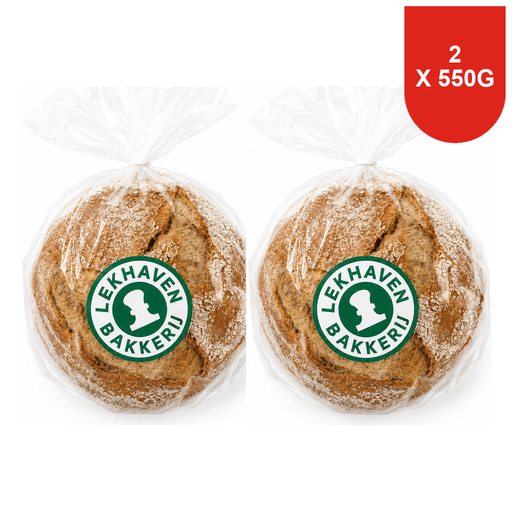 No image available
Two 550 g loaves give you a set quantity to serve at a shared table.
Match the quantity to the other dishes, and check the packaging for allergens, the wholegrain label and the type of salt used if that information matters to your choice.
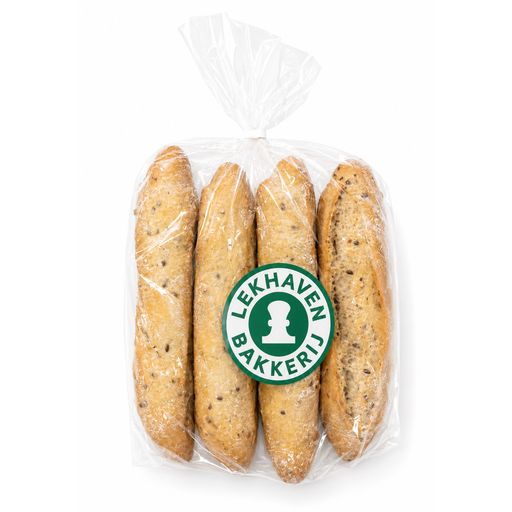 No image available
Four baguettes weighing 135 g each are a good choice if you want to serve bread as individual side portions.
The product description says to defrost and bake. Follow the preparation instructions on the packaging and check the allergens before serving.
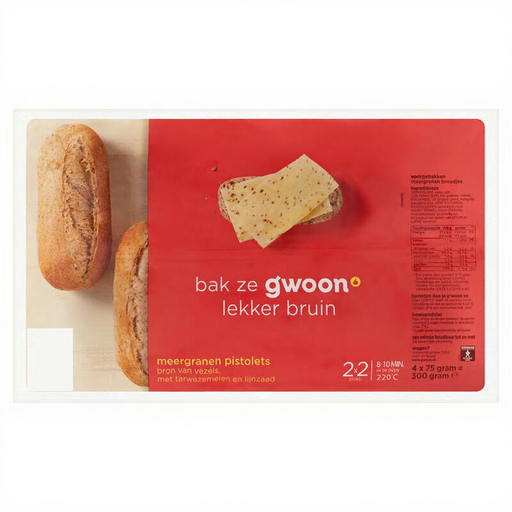 No image available
Four individual rolls are a good option if you want to serve separate portions rather than slice a loaf.
Check the net weight to work out the quantity, and read the packaging for ingredients and allergens.
No. According to the Netherlands Nutrition Centre, multigrain means the bread contains at least three different types of grain; it doesn’t mean that the whole grain has been used. If you want wholegrain bread, look for the explicit wholegrain label.
No. The Netherlands Nutrition Centre says that bakers are not required to use baker’s salt. For packaged bread, check the ingredients list; for unpackaged bread, ask which type of salt is used if it matters to your choice.
Choose a size to suit the number of people and the other dishes: you can slice a loaf at the table, while baguettes can be served individually. Check the net weight, and remember to follow the preparation instructions for bake-at-home products.
Check the allergen information for the exact product, as the ingredients vary from loaf to loaf. Jumbo lists cereals containing gluten, soya and sesame among the ingredients of one of its own multigrain varieties; don’t assume the same applies to other varieties.