
Parents who prioritise wholemeal bread
You want to be able to check whether the bread is wholemeal and compare its fibre content per 100 g. If the salt used in baking matters to you, check the ingredients too.


When choosing multigrain bread for a school holiday lunch, don’t judge it by its rustic appearance alone. Check whether it is labelled wholemeal, as well as the ingredients and allergen information, if the composition is your priority. If you want to serve the bread straight away or bake it at home, consider when you plan to serve it and compare the nutritional information on the packaging too.
You want to be able to check whether the bread is wholemeal and compare its fibre content per 100 g. If the salt used in baking matters to you, check the ingredients too.
You’re looking for a rustic loaf, a bread with seeds or one you can bake at home and serve warm at a planned time, rather than sandwiches made in advance.
Before buying, check the current ingredients and allergen information, for example if anyone needs to avoid wheat, sesame or soya. If you need gluten-free bread, look for a product explicitly labelled gluten-free.
First, decide what matters most for this school holiday lunch. Then check the ingredients, serving requirements and storage instructions for each loaf.
| What to consider | What to check before buying | Who is this important to? |
|---|---|---|
| Wholemeal content and nutritional information | Check whether the bread is labelled wholemeal and compare fibre and salt per 100 g. If you’re interested in the salt used in baking, check the ingredients list. | I want to be able to assess the bread’s ingredients for my children’s lunch. This is a priority for around 36% of consumers. |
| Crust and serving time | Choose between serving it straight away, making sandwiches in advance or baking it at home; if it’s bake-at-home bread, read the preparation instructions. | For a more substantial lunch at the table, I need a loaf that suits when I plan to serve it. This matters most to around 29% of consumers. |
| Allergens | Read the ingredients and allergen information every time you buy. If necessary, check whether the product is explicitly labelled gluten-free. | If not everyone at the table can eat the same ingredients, I need to know which bread is suitable first. This is the top priority for around 21% of consumers. |
| Storage and portions | Compare loaf sizes and storage instructions, and check whether the product is suitable for freezing in portions. | The number of people eating varies during the holidays, so I don’t want to prepare more bread than we need. This is the main consideration for around 14% of consumers. |
The words ‘multigrain’ and ‘rustic’ don’t tell you whether a loaf is wholemeal. According to the Voedingscentrum, this distinction matters when comparing multigrain bread with regular wholemeal bread.
Read the product description and ingredients, then compare the nutritional information per 100 g.
Seeds don’t determine whether everyone can eat the bread. In the Jumbo and PLUS loaves described here, allergens such as sesame and gluten-containing grains are among the things to check.
Check the current packaging if anyone at the table needs to avoid certain ingredients.
If lunch times or the number of people eating vary, you may have bread left over. The Voedingscentrum recommends freezing bread in portions as soon as you buy it if you plan to use it later.
Choose a loaf size that suits your group and follow the product’s storage instructions.
A whole loaf takes extra space and time to portion and freeze.
Not every multigrain loaf lists the use of iodised salt. The Voedingscentrum notes that bread made with iodised salt can be relevant to children’s iodine intake.
If this affects your choice, check the ingredients for iodised salt or salt used in baking; ask about it when buying unpackaged bread.
AH Vloerbrood meergranen heel is an option if you want to serve a whole artisan-style loaf for lunch.
Jumbo Stevig Meergranen is a wholemeal multigrain loaf with seeds.
PLUS Korenlanders Donker meergranen rond heel is a good fit if you’re looking for a whole, round loaf for lunch.
ALDI lists both Boeren volkoren meergranen and a multigrain baguette with seeds.
Lidl sells fresh and pre-packed bread; its pre-packed loaves feature a fibre meter.
Dirk lists Bakker van der Akker Bakkers meergranen half as a fresh half loaf, suitable for occasions including lunch.
For a planned school holiday lunch, here are two multigrain breads to bake at home before serving, plus a pack of four multigrain rolls for individual portions. Check the current packaging for each product if wholemeal content, nutritional information or allergens are important to your choice.
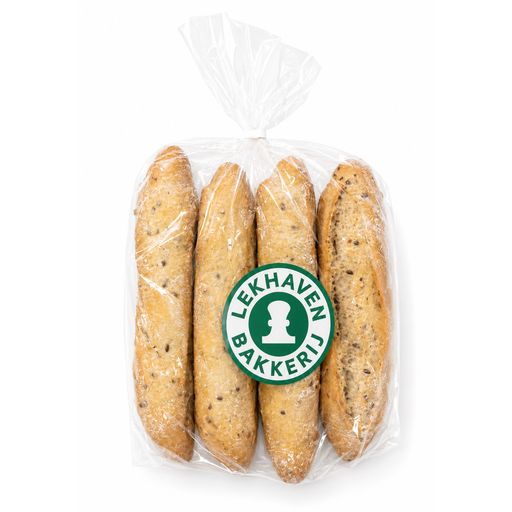 Image unavailable
Four individual baguettes for a lunch you plan to serve at a set time. Allow time to defrost and bake them according to the product instructions.
Check the packaging to make sure the ingredients and allergens are suitable for everyone eating.
 Image unavailable
A round loaf for a lunch where you want to put one loaf on the table. Allow time to defrost and bake it according to the product instructions.
Check the current packaging if wholemeal content or allergens are important to your choice.
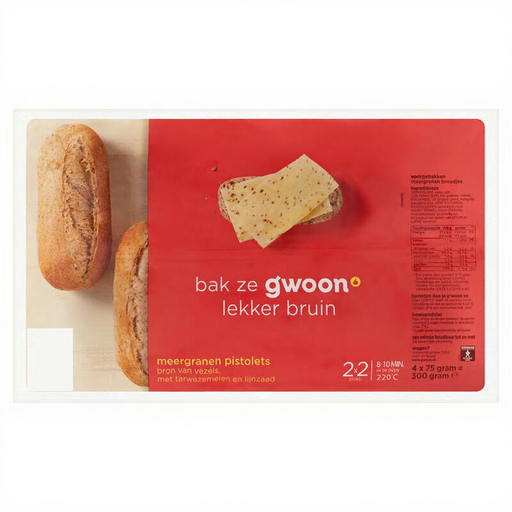 Image unavailable
Four multigrain rolls are a good option when individual lunch portions work better than a whole loaf. If they affect your choice, check the wholemeal description, nutritional information and allergens on the packaging.
No, multigrain doesn’t automatically mean wholemeal. According to the Voedingscentrum, multigrain bread itself must be wholemeal before you can compare it with regular wholemeal bread on that basis. So check the product description and ingredients.
No, don’t assume that based on the type of bread. If the salt used in baking matters for your children’s lunch, check the ingredients for iodised salt or salt used in baking, or ask about it when buying unpackaged bread.
If you want to use bread later, it’s best to freeze it in portions as soon as you buy it. This follows the Voedingscentrum’s storage advice; also follow the instructions on the packaging of your chosen loaf.
Check the current allergen information for the specific loaf every time you buy it. Multigrain breads can contain gluten-containing grains and sesame, among other allergens. If you need gluten-free bread, choose a product explicitly labelled gluten-free.