If you’re mainly looking for a wholemeal base for a late-night snack, choose bread that is explicitly labelled as wholemeal multigrain bread. Brown multigrain bread may contain both wholemeal flour and white flour, while taste, texture and portion size may matter more with white multigrain bread or bake-at-home rolls. The name ‘multigrain’, a dark colour and visible seeds don’t, on their own, tell you whether a loaf is wholemeal.
Which option is right for you?
If you’re looking for a wholemeal base
If wholemeal flour and fibre are your priorities, start by checking the bread’s description and comparing the nutritional information per 100 g. Bear in mind that seeds, kernels or coarse grains may not suit everyone’s taste.
If you’re particular about texture
If you’d prefer a milder bread for a late-night snack, check for kernels, seeds and coarse grains as well as whether it’s labelled white or brown. Even white multigrain bread may contain these ingredients.
If you only sometimes eat bread as a late-night snack
Half loaves, individual slices or small bake-at-home portions may be more practical if you don’t eat bread every day. The Voedingscentrum recommends freezing bread in portions straight after buying it if you want to use it later.
What should you look for when choosing?
Wholemeal multigrain bread
A good fit if: you’re specifically looking for a wholemeal base and the bread’s description confirms it.
Consider: kernels, seeds and a denser texture may be less appealing if you’re a fussy eater; this varies from loaf to loaf.
Brown multigrain bread
A good fit if: you want brown bread but don’t require it to be entirely wholemeal.
Consider: brown doesn’t automatically mean wholemeal. For example, Albert Heijn’s multigrain version contains both wholemeal wheat flour and white wheat flour.
White multigrain bread or bake-at-home rolls
A good fit if: you care more about the texture or a small, warm portion than having a wholemeal base.
Consider: white multigrain bread may still contain kernels and seeds; bake-at-home rolls also need to be prepared.
| What to consider |
What to check when buying |
Who it matters most to |
| Wholemeal base and fibre |
Look for the word ‘wholemeal’, read the ingredients and compare fibre per 100 g across the breads you’re considering. |
If I want a late-night snack with a wholemeal base, I don’t rely on the colour or seeds alone. Around 36% of consumers prioritise this wholemeal option. |
| Taste and texture |
Check the bread description and ingredients for kernels, seeds, sourdough and coarse grains. |
Bread with lots of noticeable kernels isn’t for everyone looking for something to eat in the evening. For around 29% of consumers, their preferred taste or texture is the deciding factor. |
| Portions and storage |
Compare whole loaves, half loaves, sliced bread and bake-at-home options; check the preparation instructions for bake-at-home products and freeze bread in portions if needed. |
If I only eat bread late at night occasionally, I want to be able to take what I need without leaving a whole loaf open. This practical consideration is the priority for around 21% of consumers. |
| Ingredients and allergens |
Check the current label for allergens, salt and, if relevant to you, baker’s salt or iodised salt. |
If certain ingredients affect my choice, I need to be able to check what each loaf contains. Around 14% of consumers give this ingredient check top priority. |
Common mistakes
-
Assuming dark bread with seeds is wholemeal
According to the Voedingscentrum, ‘multigrain’ means that different types of grain are used; it doesn’t tell you whether the bread is entirely wholemeal.
If you prefer wholemeal bread, look for an explicit wholemeal description and then check the ingredients list.
-
Expecting every multigrain bread to contain the same allergens
Ingredients vary by product: for example, varieties from Jumbo and Albert Heijn list different grains, kernels and seeds. So a loaf you’ve bought before isn’t a reliable guide to another one.
If you have an allergy or intolerance, always check the current allergen information for the specific product.
-
Assuming a bread contains iodine based on its name
The word ‘multigrain’ doesn’t tell you which salt has been used in the bread. The Netherlands Food and Consumer Product Safety Authority describes baker’s salt as a possible source of iodine in bread.
Check the ingredients list for ‘baker’s salt’ or ‘iodised salt’ if this distinction matters to you.
-
Opening a whole loaf for the occasional snack
If you only have a slice now and then, the rest of the loaf may not be as enjoyable to eat by the time you get round to it.
Choose a suitable portion or, following the Voedingscentrum’s advice, freeze bread in portions straight after buying it. Don’t eat mouldy bread.
Brands to consider
Albert Heijn
Albert Heijn offers sliced brown multigrain bread, making it easy to grab a slice straight away.
- The variety described contains, among other things, wheat, rye, millet, kernels and sesame; Albert Heijn also provides nutritional information and allergen details.
- This brown variety contains both wholemeal wheat flour and white wheat flour. Check the current packaging if you’re specifically looking for wholemeal bread.
Jumbo
Jumbo’s Stevig Meergranen is described as a whole wholemeal multigrain loaf with kernels and seeds.
- The explicit wholemeal description is helpful if that’s the type of bread you’re looking for.
- The listed ingredients include wheat, barley, sesame and soya, among others; check allergens for each product.
PLUS
PLUS offers both wholemeal multigrain bread and small multigrain triangles to bake at home.
- PLUS describes Korenlanders Donker Meergranen as a whole wholemeal multigrain loaf; the triangles offer a different portion size.
- The triangles also contain white wheat flour and need to be baked. Don’t assume they’re the same type of bread as the wholemeal loaf.
ALDI
ALDI offers, among other options, a half loaf of farmhouse wholemeal multigrain bread.
- A half loaf is a convenient portion if a whole loaf is too much.
- Check the packaging for the ingredients, allergens and nutritional information that matter to you.
Lidl
Lidl offers both a small dark multigrain loaf and a white multigrain sourdough loaf.
- These two types of bread let you decide first which kind and portion size you’re looking for.
- The white bread is also described as containing kernels and seeds. Check the ingredients if you want to avoid this texture.
Dirk
Dirk offers various types of multigrain bread, including wholemeal multikorn and smaller loaves.
- The distinction between bread types helps you choose the variety and portion size that suit you.
- If you’re choosing based on ingredients, allergens or nutritional value, check the information for the individual loaf or its label.
Multigrain rolls at Joybuy
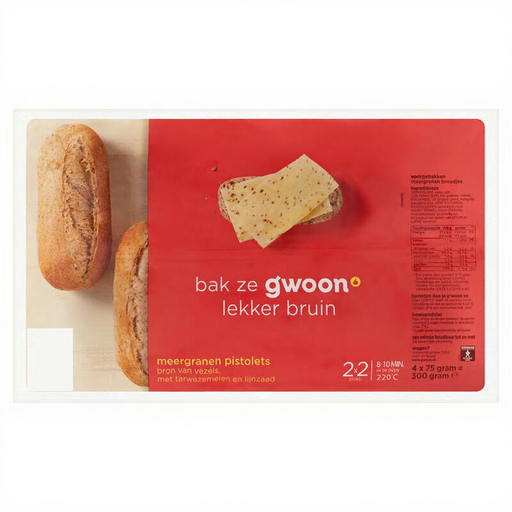
For a late-night snack with individual rolls, you could take a look at this pack of four multigrain rolls. Check the bread description and ingredients if a wholemeal base or a particular texture is important to you.
 No image available
g'woon Multigrain Rolls, 4 pieces
A pack of four individual rolls for anyone who’d rather have rolls than slices for a late-night snack.
Check the bread description, ingredients and allergens on the current packaging if they affect your choice.
View at Joybuy
Frequently asked questions
Is multigrain bread always wholemeal?
No. According to the Voedingscentrum, multigrain bread is made from at least three types of grain, but that doesn’t tell you whether it’s made with white flour, flour or wholemeal flour. Look for the explicit ‘wholemeal’ description if you want wholemeal multigrain bread.
How can I check whether multigrain bread contains iodised salt?
Read the ingredients list for the specific loaf and look for ‘baker’s salt’ or ‘iodised salt’. Don’t infer whether it’s used from the bread’s colour or the name ‘multigrain’.
Should I check for allergens in both loose and packaged multigrain bread?
Yes. If you need to avoid certain ingredients, check the information for the specific product in both cases. The Netherlands Food and Consumer Product Safety Authority describes the mandatory allergen labelling for pre-packed foods; ask for the available allergen information when buying loose bread.
How should I store bread if I only have a late-night snack occasionally?
Following the Voedingscentrum’s advice, freeze it in portions straight after buying it and take out what you need. Also follow the storage instructions on the packaging of the bread you buy.


