
Families who prioritise wholemeal
If several family members want wholemeal bread but not everyone likes the same taste or texture, start by looking for the ‘wholemeal’ label. Then compare multigrain options for taste and fibre.


For everyday sandwiches, first look for bread labelled ‘wholemeal’ if a wholemeal base matters to your family. ‘Multigrain’, a dark colour and seeds don’t tell you this on their own. A lighter multigrain loaf may appeal more to fussy eaters, but compare the fibre, salt and allergen information for each loaf. When doing a big shop, choose a loaf size and quantity that match what your family will actually eat.
If several family members want wholemeal bread but not everyone likes the same taste or texture, start by looking for the ‘wholemeal’ label. Then compare multigrain options for taste and fibre.
A lighter or softer multigrain loaf may be worth trying if a denser wholemeal loaf keeps getting left uneaten. Check the ingredients and nutritional information before treating it as an alternative to wholemeal bread.
Compare salt on the same basis, such as per 100 g, and check the allergen information for each loaf. Choose an amount that will be eaten, or freeze some of the sliced bread.
For everyday sandwiches, first decide whether a wholemeal base or taste matters more to your family. Then compare the labels and choose a loaf format that suits how you’ll use it; bake-at-home baguettes are better suited to a separate meal or occasion.
| What to consider | What should you check? | Who is this most important for? |
|---|---|---|
| Wholemeal base | Look for the ‘wholemeal’ label and compare fibre per 100 g. Colour and seeds don’t prove that bread is wholemeal. | If I’m looking for wholemeal bread for everyday sandwiches, I don’t want to rely on the name ‘multigrain’ alone. For around 36% of consumers, a wholemeal base would be the main priority. |
| Taste and texture | Check whether the loaf format and ingredients suit what your family likes to eat; you could try half a loaf first. | If dense bread gets left uneaten in our house, I want to choose a multigrain option that everyone will enjoy. Around 29% of consumers would put taste and acceptance first. |
| Salt and allergens | Compare salt per 100 g in similar breads. Read the allergen information on the packaging, or ask for it if the bread is sold loose. | If lower salt or a particular allergen determines our choice, I need to be able to assess each loaf individually. For around 21% of consumers, this label information would be the top priority. |
| Quantity and storage | Choose a whole or half loaf to suit how much your family eats, and check what you can freeze. | If everyone at home doesn’t eat the same bread, I want to avoid a whole loaf being left uneaten. For around 14% of consumers, buying the right amount and storing it well would matter most. |
According to the Voedingscentrum, multigrain bread can be made with refined flour. So its appearance doesn’t tell you whether it has a wholemeal grain base.
Check for the ‘wholemeal’ label and read the ingredients list if the grain base is an important factor in your choice.
Salt levels vary from product to product. Jumbo lists 0.5 g of salt per 100 g for its Lo-Sel multigrain bread and 1 g per 100 g for a standard multigrain loaf; these figures apply to those specific breads.
Compare the salt and fibre per 100 g of the loaves you’re considering, and also check whether your family likes the taste.
The name of the bread doesn’t tell you whether it’s suitable for someone with a food allergy or gluten intolerance.
For packaged bread, read the allergen information on the label. If the bread is sold loose, ask for information about that specific product before buying.
If family members eat different types of bread, a whole loaf may be left uneaten before it’s finished.
If needed, try half a loaf first. Freeze any sliced bread you won’t eat soon in suitable portions.
These supermarkets offer different types of multigrain bread. Check whether each product is wholemeal, its nutritional information and its loaf format individually; don’t judge by the shop alone.
Albert Heijn lists several multigrain breads online, including hearth-baked loaves and sliced options.
Jumbo lists standard, wholemeal and lower-salt multigrain bread.
Lidl sells freshly baked bread, including an organic rustic multigrain sourdough loaf.
ALDI lists freshly baked bread, including farmer’s wholemeal multigrain bread, as well as multigrain products to bake at home.
PLUS lists multigrain bread and bake-at-home wholemeal multigrain baguettes.
Dirk lists both half and whole Bakkers multigrain loaves.
These options include round multigrain loaves for anyone wanting to try a standard loaf, and bake-at-home baguettes for a separate meal or occasion. For each option, check the packaging if a wholemeal base, number of portions, allergens, fibre or salt are important to you.
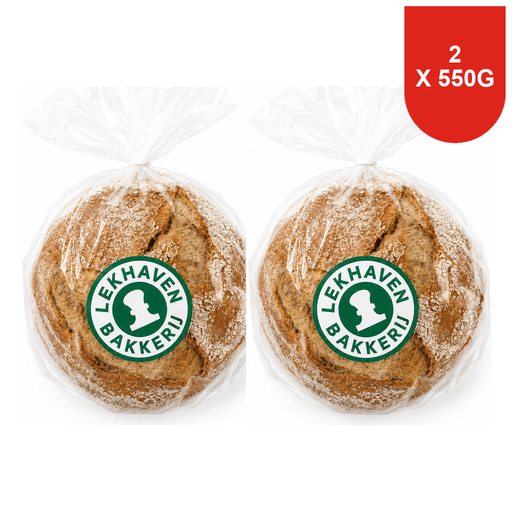 No image available
This pack of two round loaves could suit a family shop if you’ll use both. Check the wholemeal label and compare fibre and salt on the packaging. Also plan how to thaw and bake the bread, following the latest preparation instructions.
 No image available
At 550 g, this round loaf is a smaller amount to try if you’re new to multigrain bread. If you’re looking for a wholemeal option, check the packaging and compare fibre and salt per 100 g. Follow the latest preparation instructions when baking.
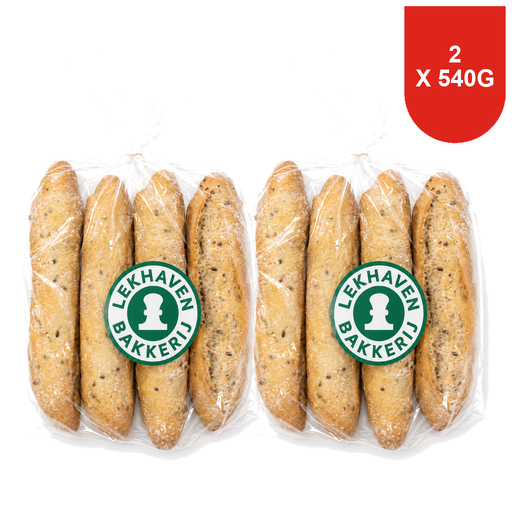 No image available
These bake-at-home baguettes are suited to a planned meal or occasion alongside your everyday bread. Check the total number of baguettes on the packaging before deciding how many portions you’ll need for your family. Also check the wholemeal label, allergens and nutritional information for this option.
No. According to the Voedingscentrum, multigrain bread can be made with refined flour. If you want a wholemeal base, look for the ‘wholemeal’ label; don’t rely on the colour or seeds.
For packaged bread, read the allergen information on the label. If the bread is sold loose, ask for information about that specific product before buying; the name ‘multigrain’ doesn’t tell you which allergens it contains.
That isn’t guaranteed by the Dutch rule on bakers’ salt. The Netherlands Food and Consumer Product Safety Authority explains that iodine compounds may only be present in bread through added bakers’ salt; this doesn’t mean that every loaf contains iodised bakers’ salt. If you have a specific question, check the product information or ask the baker or shop.
Buy an amount that matches how much your family eats, and freeze bread in portions if it won’t be used up soon. The Voedingscentrum recommends storing opened wholemeal bread in a kitchen cupboard for 2 to 4 days, or in the freezer for 1 to 3 months. For other products, follow their own storage advice.
No. Nutri-Score can help you compare products within a category, but it doesn’t tell you on its own whether a loaf is wholemeal or suits your family’s needs. Also check the ingredients, fibre and salt per 100 g, allergens and loaf format.