
Families who buy bread regularly
If you need bread every day for breakfast and lunch, you’ll want to know how much each size gives you. Check the quantity rather than relying on the half or whole loaf description alone.


If you’re feeding a large family on a budget, start by working out how much bread you’ll use before it loses its freshness. You could buy a half loaf, a whole loaf to freeze, or portions to bake at home. Then check the label to make sure the option you choose meets your requirements for wholemeal, fibre, baker’s salt and allergens; the word ‘multigrain’ doesn’t tell you this by itself.
If you need bread every day for breakfast and lunch, you’ll want to know how much each size gives you. Check the quantity rather than relying on the half or whole loaf description alone.
A whole loaf could work if you won’t use it all at once and have space to freeze portions. Follow the storage instructions for the bread you choose.
If you’re specifically looking for wholemeal bread or checking fibre, baker’s salt or allergens, you’ll need more information than the product name ‘multigrain’. Check the description, ingredients and nutritional information for the exact loaf.
First, choose a type of loaf that suits how much your family eats. Then compare the labels of the options that fit the way you’ll use them.
| What to consider | What to look for | Who it matters to |
|---|---|---|
| Quantity per purchase | Check whether it’s a half or whole loaf, and compare the net weight. | When I do the family food shop, I want to know how much bread we’ll actually get. Around 36% of consumers put this exact quantity first. |
| Stocking up and storage | Choose a size that matches how much you use, and check the freezing or preparation advice. | I want to have bread in reserve without buying more than we can use. For around 29% of consumers, planning their supplies is the top priority. |
| Wholemeal, fibre and baker’s salt | Read the product description, ingredients and nutritional information per 100 g; check separately whether baker’s salt has been used. | If I’m looking for wholemeal bread, I don’t want to rely on the word ‘multigrain’ alone. Around 21% of consumers prioritise this label information. |
| Gluten and other allergens | Check the label on the exact product and read its ingredients and allergen information. | If I have a dietary requirement or need to avoid certain allergens, I first need to know whether this specific loaf is suitable. For around 14% of consumers, this is the first thing they consider. |
A half loaf won’t necessarily give you the same number of slices as a whole loaf. Even two half loaves can differ in net weight.
Check the size and net weight of both products before deciding which quantity suits your family’s needs.
According to the Netherlands Nutrition Centre, multigrain bread contains at least three types of grain. That alone doesn’t tell you whether it’s made with wholemeal flour.
Look for ‘wholemeal’ in the product description and check the ingredients and fibre information for the loaf you’ve chosen.
The Netherlands Nutrition Centre says that bread doesn’t have to be baked with baker’s salt. So the name ‘multigrain’ doesn’t confirm which type of salt has been used.
Check the ingredients list if baker’s salt or iodised salt is important to your choice.
If your family doesn’t eat the bread in time, some of it may go to waste. So before choosing a larger size, be realistic about how much you’ll use.
Choose a smaller size or freeze portions according to the product instructions.
ALDI lists Boeren volkoren meergranen as both a half and a whole loaf in its daily fresh range.
Dirk lists Bakker van der Akker Bakkers multigrain bread as both a half and a whole loaf.
PLUS lists products including Korenlanders multigrain bread and multigrain baguettes to bake at home.
Lidl describes a multigrain loaf sold in store, made with ingredients including wheat, barley and buckwheat.
Albert Heijn lists Soezie All in budget multigrain bread as a 1 kg bread mix.
These products include round multigrain loaves, multigrain baguettes and multigrain rolls. Choose between a whole loaf and individual portions based on how much your family uses at a time. For products you bake at home, check the instructions on the packaging.
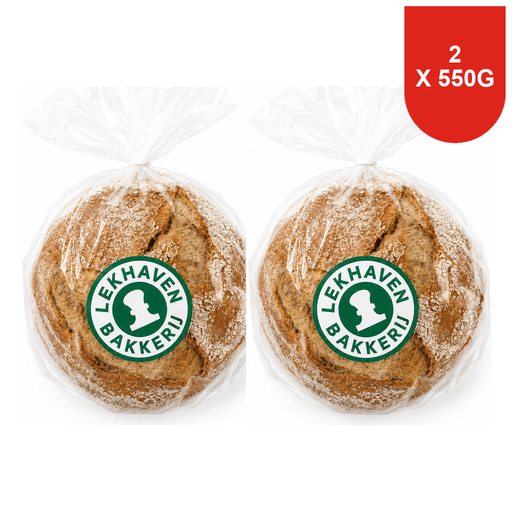 Image unavailable
Two round loaves are a good option if you want to plan for more than one loaf at a time for your family.
Check the storage and baking instructions, and read the latest ingredients and allergen information before use.
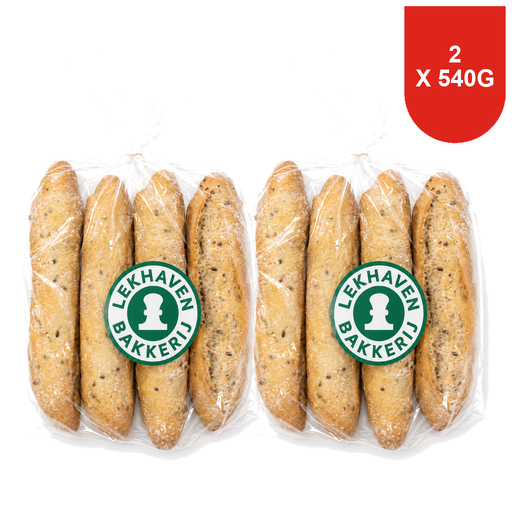 Image unavailable
The two packs of four baguettes are ideal for a family that wants to use bread in individual portions.
Check the storage, defrosting and baking instructions on the packaging before stocking up.
 Image unavailable
One 550 g round loaf is a good choice if you’d rather use one loaf at a time than buy a pack of two.
Follow the baking instructions on the packaging and check the allergen information for this loaf.
 Image unavailable
Four individual baguettes are a good option if you’d prefer smaller portions at each mealtime.
Check the baking instructions on the packaging and read the allergen information for this option.
 Image unavailable
This pack of four rolls is a good choice if you’d rather use individual rolls than slice a whole loaf.
Check the ingredients and allergen information on the packaging, especially if a particular grain or sesame is important to you.
No. According to the Netherlands Nutrition Centre, multigrain bread contains at least three different types of grain, but it can be made with wholemeal flour, refined flour or a combination of the two. If you’re specifically looking for wholemeal bread, read the product description and ingredients.
No. The Netherlands Nutrition Centre says that bread doesn’t have to be baked with baker’s salt. Check the ingredients list if you want to know whether baker’s salt or iodised salt has been used.
Freeze the bread in portions if the product instructions allow it. For its Korenlanders Donker multigrain round loaf, PLUS advises freezing it on the day of purchase and using it within one month. For other loaves, follow the instructions on their own packaging.
They can be, if you have the necessary equipment and time to prepare them. For its wholemeal multigrain baguettes, PLUS recommends 8–10 minutes in the oven at 220 °C or 5–6 minutes in the air fryer at 200 °C. For other baguettes, check their own preparation instructions.
Don’t rely on the word ‘multigrain’ alone: choose a product explicitly labelled gluten-free and check the allergen information. PLUS describes Schär Meesterbakker Mehrkorn as gluten-free, while its regular dark multigrain bread contains gluten-containing grains.