
The budget-conscious weekly shopper
Buys bread with the rest of the weekly groceries and wants to know whether a half or whole loaf suits their household’s needs. A low price per loaf doesn’t tell you much if the sizes and contents differ.


For your weekly shop, first choose a quantity of bread you’re likely to use up, then compare like-for-like sizes or the price per kilo. Look beyond the name, too: according to the Voedingscentrum, multigrain bread contains at least three types of grain, but that doesn’t automatically mean it’s wholemeal. So check the ingredients, nutritional information and any allergens on the label if they matter to your choice.
Buys bread with the rest of the weekly groceries and wants to know whether a half or whole loaf suits their household’s needs. A low price per loaf doesn’t tell you much if the sizes and contents differ.
Regularly eats bread for breakfast or lunch and checks the types of grain and fibre per 100 g. The word ‘multigrain’ alone doesn’t provide enough information.
Needs to consider ingredients or allergens, or wants to know whether baker’s salt has been used. If you follow a gluten-free diet, the precise product description matters more than the general term ‘multigrain’.
Work out how much bread you use in a week. Then compare the size and read the label for the features that matter most to you.
| What to consider | What to check | Who it matters to most |
|---|---|---|
| Weekly spending and size | Compare half loaves with half loaves, or use the price per kilo if the pack sizes differ. Check how long any offers are valid for. | If I don’t need much bread, I don’t want to go by the lowest price per loaf and end up buying too much; around 36% of consumers prioritise a weekly spend that suits their budget. |
| Wholemeal and fibre | Check the product description and ingredients list for wholemeal flour; compare fibre on a like-for-like basis, such as per 100 g. | If bread is a regular part of my meals, I want to know how much wholemeal flour it actually contains; around 29% of consumers put their choice of grains and fibre first. |
| Storage and using it up | Choose a suitable loaf size and read the storage or freezing advice for that specific product. | I do one big shop and want to avoid having bread left over before my next one; around 21% of consumers are most concerned about using it up and storing it properly. |
| Label requirements | Check the ingredients, allergens and any gluten-free labelling; look for baker’s salt or iodised salt to check whether iodine has been added. | If I need to avoid an ingredient or look for baker’s salt, the label needs to give me a clear answer; around 14% of consumers prioritise these label requirements. |
The loaves contain different amounts of bread. So the price of one pack doesn’t tell you how much bread you’ll get for the week.
Compare the same size, or check the price per kilo if it’s available. Then decide which size you’re likely to use up.
According to the Voedingscentrum, multigrain refers to at least three types of grain; the name alone doesn’t tell you whether the bread is wholemeal.
Check the product description and ingredients list. Only use fibre per 100 g to compare products when their nutritional information is given on the same basis.
The Voedingscentrum says that baker’s salt isn’t compulsory. So you can’t tell whether iodine has been added just from the type of bread.
Look for ‘baker’s salt’ or ‘iodised salt’ on the packaging. If you’re buying unpackaged bread, ask which ingredients have been used.
The word ‘multigrain’ doesn’t mean a product is gluten-free. Seeds or a dark colour don’t tell you which allergens it contains, either.
If you need to eat gluten-free, choose a product explicitly labelled as gluten-free and check the latest allergen and cross-contamination information.
Offers, among other things, a half wholemeal multigrain loaf and a whole multigrain hearth loaf.
Lists multigrain bread from Bakker van der Akker in half and whole-loaf sizes.
Its Stevig Meergranen product is described as a whole wholemeal multigrain loaf with kernels and seeds.
Korenlanders Donker multigrain lists its ingredients, nutritional information and storage advice.
Offers in-store-baked multigrain bread, with a separate ingredients and allergens list for its freshly baked range.
As well as bread, its range includes Soezie All in budget multigrain bread mix: a 1 kg mix.
These options include a round multigrain loaf, multigrain baguettes and rolls. First choose a size that suits your weekly use; when comparing prices, check the latest pack size and price on a like-for-like basis.
 No image available
For anyone looking for a round loaf and wanting to work out how much they’ll need for the week. The product name states 550 g; check the preparation and storage instructions before adding it to your weekly plans.
Only compare fibre and salt when the nutritional information clearly states the quantity the figures refer to.
 No image available
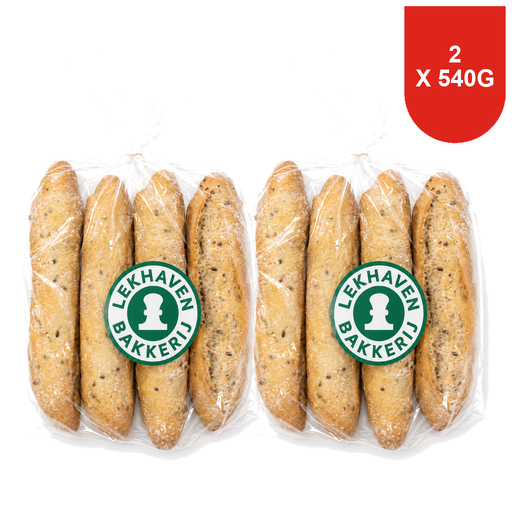
For anyone who wants to spread individual multigrain baguettes over the week. The product name states 4 × 135 g × 2, but the description mentions four baguettes, so check the number of baguettes and the total pack size.
Also read the preparation instructions and check the basis for the nutritional values before comparing this product with a whole loaf.
 No image available
For anyone who would rather buy four individual rolls than a whole loaf. Check the total weight if you want to compare the quantity or price per kilo with another size.
Check the packaging for storage advice, allergens and the basis for any nutritional values.
No. According to the Voedingscentrum, multigrain bread contains at least three different types of grain, but the name doesn’t tell you whether the bread is wholemeal. Check the product description and ingredients list to find out.
Choose a quantity that suits how much you usually use, and check whether the product information says it can be frozen. For example, PLUS advises freezing Korenlanders Donker multigrain on the day of purchase and using it within one month; follow the storage advice for any other loaf.
No. The Voedingscentrum says that using baker’s salt when baking isn’t compulsory. Check the label for baker’s salt or iodised salt rather than relying on the name of the bread.
Not based on the word ‘multigrain’ alone. Choose a product explicitly labelled as gluten-free and check the latest information on its ingredients, allergens and possible cross-contamination.