What should you look for when choosing?
Start by working out how much bread you’ll actually use: a half loaf needs less planning, while you can freeze a whole loaf in portions. A bake-at-home baguette gives you control over the slice thickness, but you’ll need to bake it first. Whatever type of bread you choose, check the slices and the label.
| What to consider |
What to check before buying |
Who should pay particular attention? |
| Quantity and storage |
Compare half and whole loaves, their weight and any freezing instructions. Think about how many slices you’ll use straight away. |
If I only eat bread occasionally, I don’t want to open more than I can use or freeze. This portion-size choice is a priority for around 42% of consumers. |
| Slice thickness for toppings |
Check the actual slices and how the loaf is cut; if it’s unsliced, ask whether it can be cut thicker. |
For a generously topped snack, I want a slice that’s easy to pick up, rather than relying on a product name. An estimated 33% of consumers prioritise this. |
| Ingredients and nutritional information |
Check the product description, ingredients, allergens and fibre per 100 g; if you’re concerned about iodine, check which type of salt is listed. |
When I compare loaves by their ingredients, the information for the specific variety is what matters. This is the main concern for around 25% of consumers. |
Brands and bread ranges to consider
These examples can help you compare loaf sizes and label information; none of the names mentioned tells you how thick the slices are.
Albert Heijn / AH Liefde & Passie
Albert Heijn describes its sliced AH Liefde & Passie Multigrain as a rustic loaf containing, among other things, wheat, rye, millet, kernels and seeds.
- The product information lists a weight of 550 g, ingredients, allergens, fibre per 100 g and says that you can freeze the loaf at home.
- ‘Rustic’ doesn’t tell you how thick the slices are. Check them for yourself if you plan to add generous toppings.
Jumbo
Jumbo’s multigrain range includes Hearty Multigrain and a half-size option.
- The different loaf sizes give you a starting point for choosing an amount that suits how much you eat.
- Don’t take ‘hearty’ to mean thickly sliced; check the ingredients and nutritional information for your chosen variety too.
PLUS / Korenlanders
PLUS lists its Korenlanders Dark multigrain loaf as a whole, sliced bread.
- For this variety, PLUS lists 50% wholemeal wheat flour, 6.8 g of fibre per 100 g, ingredients, allergens and freezing instructions.
- This is a whole loaf, so consider how much you’ll use and whether the slice thickness suits your toppings.
Dirk / Bakker van der Akker
Dirk offers Bakker van der Akker Baker’s Multigrain Half as a fresh, half-size loaf.
- The half-size loaf is worth considering if you’d rather not open much bread at once.
- Before choosing, check the ingredients, nutritional information and slice thickness on the loaf itself.
Lidl
Lidl describes its in-store Multigrain Bread as a hearty loaf containing, among other things, wheat, barley and buckwheat.
- The description gives you a useful starting point when you’re checking the slices in store.
- ‘Hearty’ doesn’t specify the slice thickness. Lidl says its fresh bread range may vary between stores.
ALDI
ALDI offers both a whole and a half-size Farmhouse Wholemeal Multigrain loaf.
- You can compare the sizes within the same range to see which better suits the number of snacks you make.
- Check the current packaging for slice thickness, ingredients and allergens for the variety you choose.
Joybuy product for slicing yourself
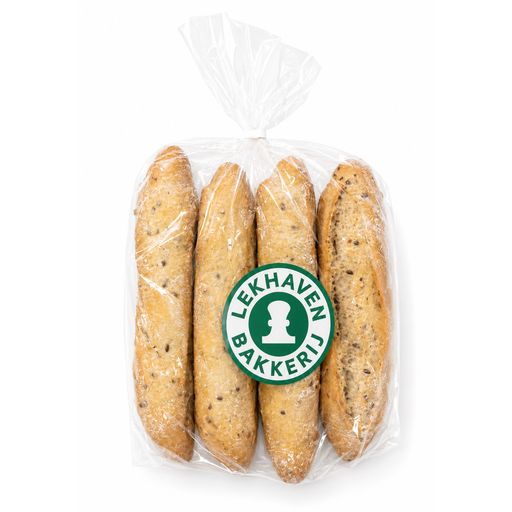
These bake-at-home baguettes suit you if you’d rather use a smaller loaf at a time and slice it yourself after baking. This lets you cut thicker slices, but doesn’t guarantee that they’ll be sturdy enough for the toppings you want to use.
 No image available
Lekhaven Bakkerij Multigrain Rustic Baguette 4 x 135 g
For a single bread snack, you can bake one baguette instead of cutting into a whole loaf. The pack contains 4 baguettes of 135 g each; once baked and cooled, you can slice them yourself. Check whether the slices are thick enough and easy to handle with generous toppings, and check the latest ingredients and allergen information, including for wheat and sesame.
View at Joybuy
Frequently asked questions
Is multigrain bread automatically wholemeal?
No. According to the Netherlands Nutrition Centre, ‘multigrain’ means that the bread contains at least three types of grain; the name doesn’t tell you how much wholemeal flour it contains. So check the product description and ingredients list for the variety you’re considering.
How can I buy bread for one without having lots left over?
Choose a size to suit how often you eat bread: a half loaf means you open less at once, while you can freeze a whole loaf in portions. The Netherlands Nutrition Centre recommends freezing bread in portions as soon as you buy it and taking out only what you need each time.
How can I tell whether the slices are suitable for generous toppings?
Check the thickness and how the bread is sliced; ‘hearty’ or ‘rustic’ in a product name isn’t a reliable guide. If the loaf is unsliced, ask whether it can be cut thicker. If you slice a bake-at-home baguette yourself, check after baking whether the slices are easy to handle with your chosen toppings.
Does all multigrain bread contain iodised salt?
You can’t tell from the name of the bread. Albert Heijn lists iodised salt in the AH Liefde & Passie variety mentioned here, while PLUS lists baker’s salt for the Korenlanders variety mentioned. If the type of salt affects your choice, check the current ingredients list for the bread you’re buying.
Where can I check the allergens in multigrain bread?
Check the latest allergen information on the packaging for the specific variety. ‘Multigrain’ isn’t a complete ingredients or allergen list; ingredients and any warnings can vary from one loaf to another.


