
Families comparing wholemeal bread and fibre
If these qualities matter to your family, look beyond the bread’s name or appearance. Check whether it’s labelled wholemeal and compare the fibre per 100 g for the variant you’re considering.


For a family dinner, start by choosing a loaf that suits the people eating: the name ‘multigrain’ doesn’t, by itself, mean the bread is wholemeal. If you want bread that’s easy to top and share, check whether it’s pre-sliced and whether the actual slice thickness suits you. Pre-sliced doesn’t automatically mean medium-sliced. Always compare the nutrition information and allergens on the packaging of the exact variant.
If these qualities matter to your family, look beyond the bread’s name or appearance. Check whether it’s labelled wholemeal and compare the fibre per 100 g for the variant you’re considering.
A pre-sliced half or whole loaf can save you time when several people are eating. Also check the slices themselves: ‘pre-sliced’ doesn’t tell you how thick they are.
If someone at the table needs to avoid certain ingredients, always check the current packaging for that exact loaf. Read the ingredients, highlighted allergens and any warnings about cross-contamination.
First, decide which quality matters most for your meal. Then compare only the variants that meet that need.
| What to consider | What to check when buying | Who is it important for? |
|---|---|---|
| Wholemeal and fibre | Look for a wholemeal label and compare the fibre per 100 g for the exact variant. | If wholemeal is the deciding factor for us, I don’t want to judge by visible grains alone. Around 33% of consumers prioritise this question of composition. |
| Slice and loaf size | Check whether the bread is pre-sliced, how thick the slices are, and whether a half or whole loaf is right for you. | When there are several people at the table, I want slices that are easy to top and share. Around 27% of consumers prioritise this convenience. |
| Ingredients and allergens | Read the current ingredient list, highlighted allergens and any warnings on the packaging. | If someone at the table needs to avoid an ingredient, I need to be able to check the exact loaf. This is the first concern for around 20% of consumers. |
| Quantity and availability | Choose a half or whole loaf to suit the number of people eating, and check where the variant you want is available. | I want enough bread for the meal, without ending up with a different size from the one I intended to buy. Around 20% of consumers prioritise quantity and availability. |
Multigrain and wholemeal describe different qualities. So a loaf made with several grains won’t necessarily meet your preference for wholemeal bread.
Look for an explicit wholemeal label, then compare the fibre per 100 g for that variant.
Ingredients and allergens may differ if you’re looking at another variant or the recipe has changed.
When you buy the bread, read the current packaging of the loaf you’re taking home, especially if someone at the table needs to avoid an allergen.
‘Pre-sliced’ doesn’t confirm how thick the slices are. That can affect the toppings or portion sizes you have in mind.
Look at the slices in store or ask the bakery department what slice thickness is available.
These brands offer different multigrain loaves or relevant bread categories. Always check the qualities of each individual variant, rather than relying on the brand name.
Albert Heijn has a multigrain and maize bread category, which includes AH Liefde & Passie Meergranen.
Jumbo offers, among other options, a half wholemeal multigrain loaf.
Lidl describes a multigrain loaf containing, among other ingredients, wheat, barley and buckwheat, which is available in store.
ALDI describes a whole, pre-sliced luxury multigrain hearth loaf.
PLUS offers Brood van Soma Haverkorn multigrain bread, with ingredients and nutrition information for that specific product.
Dirk offers a half multigrain loaf from Bakker van der Akker.
These round loaves and baguettes are multigrain options to share with a meal. They need preparing, and their names alone don’t tell you whether they’re medium-sliced everyday bread.
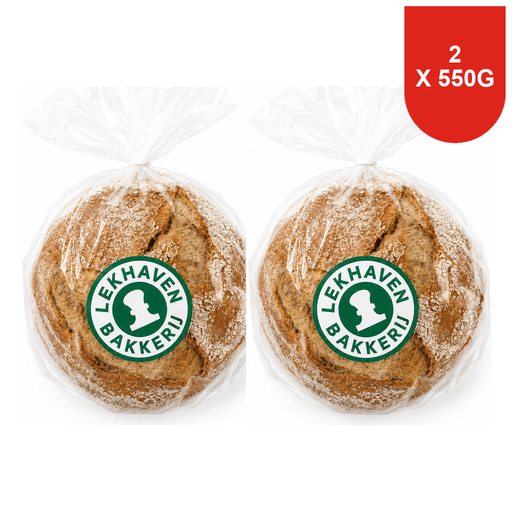 Image unavailable
These two round loaves are a good option if you want to share bread at the table and have time to defrost, bake and cool them before slicing.
Before buying, check that the slice thickness suits you and read the current packaging for ingredients, allergens and nutrition information per stated amount.
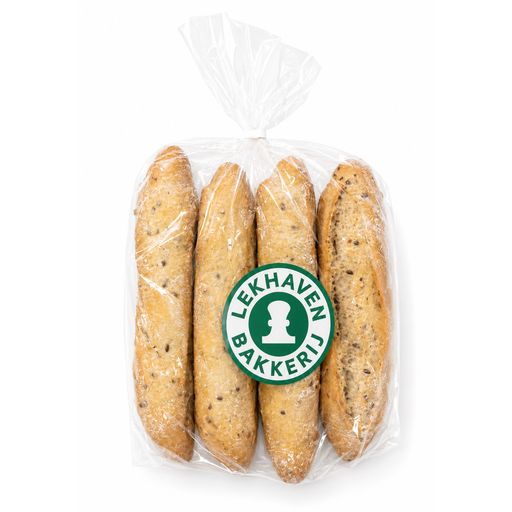 Image unavailable
Four individual multigrain baguettes are a handy option for sharing with a meal, as long as you have time to defrost and bake them.
A baguette isn’t the same size as a sliced everyday loaf. Think about how you’d like to cut them, and check the current packaging for ingredients, allergens and nutrition information per stated amount.
No. Multigrain and wholemeal are different product qualities. Look for an explicit wholemeal label if that’s what you’re after, then compare the fibre in the exact variant. The Netherlands Food and Consumer Product Safety Authority explains that, for a product to be wholemeal, all the flour used must be made from whole grains.
No. Check the current ingredient list, highlighted allergens and any cross-contamination warnings on the packaging of the variant you’ve chosen. The Netherlands Nutrition Centre points out that common allergens must be clearly listed on the label.
Don’t assume it does: check the ingredients of the loaf you choose. The Netherlands Nutrition Centre describes both the addition of iodine through iodised salt and baker’s salt, and multigrain bread made without baker’s salt.
Follow the storage advice on the packaging for the exact variant. For example, Jumbo advises keeping its half wholemeal multigrain loaf in a cool, dry place. Don’t assume the same advice applies to another loaf.