
Fussy eaters at the coffee table
If you’re looking for a milder bread, start by considering its shape and whether it contains seeds. A dark colour or the name ‘multigrain’ won’t tell you how soft the bread is.


When choosing multigrain bread to enjoy with your coffee, don’t go by colour or name alone. According to the Voedingscentrum, ‘multigrain’ means the bread contains at least three types of grain; it doesn’t automatically mean it’s made with wholemeal flour. If you’re mainly looking for a wholemeal base, check the types of flour and compare the fibre per 100 g. For a fussy eater, the texture may matter more, but the name won’t tell you how the bread tastes or feels.
If you’re looking for a milder bread, start by considering its shape and whether it contains seeds. A dark colour or the name ‘multigrain’ won’t tell you how soft the bread is.
If the flour used is important to you, check whether it’s wholemeal, read the ingredients and compare the fibre per 100 g on the bread’s label.
If you have an allergy, it’s important to check information about ingredients such as gluten-containing cereals, soya, sesame, milk and nuts. The Netherlands Food and Consumer Product Safety Authority says allergen information must also be available for unpackaged bread.
First decide whether texture, a wholemeal base or carefully checking the ingredients matters most to you. Then compare the labels of the breads that meet your needs.
| What to consider | What to check when buying | Who it matters to |
|---|---|---|
| Wholemeal base and fibre | Check which types of flour appear near the top of the ingredients list and compare the fibre per 100 g. | If I eat multigrain bread regularly, I want to know what flour it contains and how much fibre it has. For around 50% of shoppers, wholemeal and fibre content are the main priorities. |
| Taste and texture | Choose a bread shape that suits the texture you want and check whether it contains seeds; if necessary, try a smaller size. | A fussy eater needs to enjoy the bread with their coffee, so a firm texture may not be the best fit. Around 30% of shoppers put how much they enjoy eating it first. |
| Ingredients and allergens | Read the allergen information and ask for details if the bread is unpackaged. You may also want to check the salt per 100 g and whether baker’s salt or iodised salt is listed. | If I have an allergy, I need to be able to check what’s in the specific bread before buying it. For around 20% of shoppers, checking the ingredients is their main concern. |
According to the Voedingscentrum, ‘multigrain’ refers to the number of types of grain. The colour and name alone won’t tell you which types of flour have been used.
If a wholemeal base is important to you, check the ingredients list and fibre per 100 g.
Bread with lots of seeds may not suit someone who’s looking for a soft slice. If you have an allergy, it’s also important to check the allergen information for the specific product.
Choose a texture you’ll enjoy and read the packaging, checking for sesame and any other relevant allergens.
The Voedingscentrum describes bread as a source of iodine, but you’ll need to check the ingredients of each loaf.
Look for ‘baker’s salt’ or ‘iodised salt’ in the ingredients list, or ask about it if the bread is unpackaged.
If a fussy eater doesn’t like the bread, or you can’t finish the whole loaf in time, you could end up with leftovers.
Consider buying half a loaf or a smaller size first, and freeze any portions you won’t use in time.
An example of a dark multigrain bread to compare by flour type: Albert Heijn’s product information lists wholemeal wheat flour and wheat flour.
An example to consider if you specifically want to compare wholemeal multigrain bread.
ALDI Netherlands offers both a premium multigrain hearth-baked loaf and a farmhouse wholemeal multigrain loaf.
Dirk’s multigrain bread and multigrain hearth-baked loaf are examples of different bread styles.
The PLUS bread range includes Korenlanders sourdough varieties and small brown multigrain rolls, among other options.
These products include smaller multigrain rolls, baguettes and a round loaf to enjoy with coffee. Choose the bread style you’d like to serve, and check the product information if wholemeal content, fibre or allergens are important to you.
 Image unavailable
Four individual rolls could be just right for a small coffee break. Before buying, check that the ingredients, allergens and texture suit what you’re looking for. Only compare fibre values when the nutritional basis is clear.
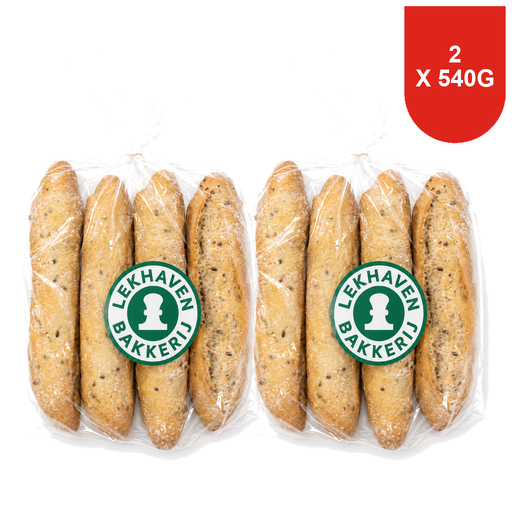 Image unavailable
A baguette-style option if you’d like to serve one with coffee. Allow time for defrosting, baking and cooling, and check the allergens and nutritional basis before comparing loaves.
 Image unavailable
A 550 g round loaf if you’d rather put a single loaf on the table. Allow time for defrosting, baking and cooling, and check the allergens and nutritional basis for this variety.
No. According to the Voedingscentrum, ‘multigrain’ means the bread contains at least three types of grain; the name alone doesn’t mean it’s made with wholemeal flour. Check the product name and ingredients list to find out.
Compare the fibre per 100 g on the labels of the breads you’re considering. Jumbo lists 7,8 g per 100 g for its Wholemeal Multigrain Bread. That figure applies to this product, not the whole category.
Before buying, ask the seller for the allergen information for that specific loaf. The Netherlands Food and Consumer Product Safety Authority says this information must be available for unpackaged foods, although it can be provided in a way other than on a label.
For packaged bread, look for ‘baker’s salt’ or ‘iodised salt’ in the ingredients list. If the bread is unpackaged, ask the seller. Don’t rely on the name ‘multigrain bread’ alone.