What should you look for when choosing?
First decide what matters most for your coffee table: wholemeal ingredients, presentation, ingredients suitable for your guests, or the amount of bread. Then compare the packaging of loaves that meet your needs.
| What to consider |
What to check before buying |
Who is this most important for? |
| Wholemeal ingredients and fibre |
Check which types of flour are listed in the ingredients and compare fibre per 100 g. According to the Netherlands Nutrition Centre, the term multigrain does not prove that bread is wholemeal. |
If I want to serve wholemeal bread, I need to be able to see what it’s made from. Around 31% of consumers say wholemeal ingredients are their priority. |
| Presentation and style of bread |
Check the shape of the loaf and whether sourdough, kernels or seeds are actually part of the bread you’ve chosen; assess the nutritional information separately. |
For a coffee table where everyone shares, I want to choose bread that suits the toppings and the way it will be served. Around 31% of consumers prioritise this serving experience. |
| Ingredients and allergens |
Check the latest ingredients list and any allergens highlighted on it, especially if you’re buying for guests. |
If a guest needs to avoid certain ingredients, I want to check the specific loaf before serving it. For around 23% of consumers, checking the ingredients is their main concern. |
| Quantity and serving time |
Compare the pack weight and preparation instructions, and think about what you’ll do with any leftover bread. |
When I’m hosting a small group, I don’t want to prepare more bread than we need, but baking it takes time. Around 15% of consumers put quantity and serving time first. |
Brands to consider
These examples show some of the styles of bread you can compare. Always assess the ingredients and nutritional information for each individual loaf.
Albert Heijn
Albert Heijn describes AH Liefde & Passie Multigrain as a rustic sourdough loaf, baked on a stone oven floor.
- The product information lists ingredients including wheat, rye, millet, sunflower seeds and sesame.
- The ingredients include both wholemeal wheat flour and wheat flour. So don’t assume it’s entirely wholemeal just because it’s rustic in style.
Jumbo
Jumbo Stevig Multigrain is a wholemeal multigrain loaf with kernels and seeds; there’s also a half Waldkorn multigrain loaf, among other options.
- According to Jumbo, Stevig Multigrain contains 43% wholemeal wheat flour and 8,6 g of fibre per 100 g.
- This product also lists cereals containing gluten, sesame and soya. Check the latest packaging if you’re buying for guests.
Lidl
Lidl lists multigrain bread and rustic multigrain sourdough options in its bakery range.
- The style of bread gives you a starting point for comparing an option to serve straight away with a more rustic one.
- For the loaf you choose, check the packaging for the types of flour, allergens and nutritional information.
Aldi
Aldi lists multigrain bread in its fresh daily bread range and also describes bake-at-home multigrain options.
- A bake-at-home option is worth considering if you want to prepare the bread just before serving coffee.
- Don’t rely on a description of the bread style instead of checking the ingredients and allergen information on the packaging.
PLUS
PLUS sells multigrain sourdough demi-baguettes, among other products, for baking at home.
- PLUS gives a baking time of 8–10 minutes for its multigrain sourdough demi-baguettes.
- Allow for preparation time when planning your coffee gathering, and follow the instructions on the current packaging.
Dirk
At Dirk, you can compare multigrain bread with wholemeal and bake-at-home options for a different serving occasion.
- Compare a half or whole loaf with a bake-at-home option, based on how much you want to serve.
- Check the ingredients and nutritional information for each loaf rather than assuming characteristics based on the type of bread.
Multigrain bread for your coffee table at Joybuy
These breads are for anyone who wants to serve rustic multigrain bread and can set aside time to bake it at home. Compare the pack size with the number of people you’re hosting, and check separately whether the ingredients meet any preference you have for wholemeal bread.
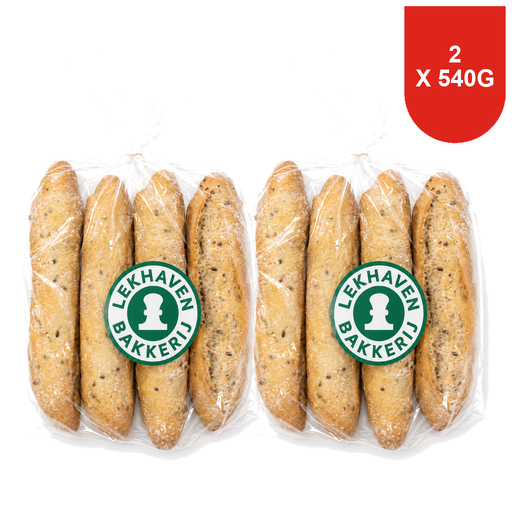 Image unavailable
Lekhaven Bakkerij rustic multigrain baguettes, 4 x 135 g x 2
Baguette-style bread for anyone who wants to bake and share bread at the coffee table.
The product title lists 4 x 135 g x 2. Check the number of baguettes and the pack weight before deciding how much you’ll need for your guests.
Also check the latest ingredients and allergen information; don’t take the term multigrain as proof that it’s wholemeal.
View at Joybuy
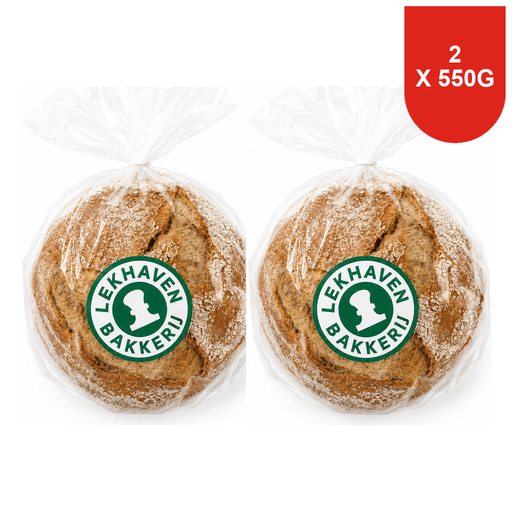 Image unavailable
Lekhaven Bakkerij round multigrain country loaf, 550 g x 2
A round loaf for a coffee table where you’d like to serve more than one loaf or save some for later.
The title lists two 550 g loaves. If you’re hosting a small group, plan what you’ll do with the second loaf.
Check the packaging for baking instructions, allergens and ingredients if wholemeal flour is important to your choice.
View at Joybuy
 Image unavailable
Lekhaven Bakkerij round multigrain country loaf, 550 g
A single round loaf for anyone who wants to tailor the amount to a smaller coffee gathering.
The title lists 550 g. Check the baking instructions on the packaging before planning when to serve it.
If you’re serving guests, check the latest allergen information and the types of flour if you’re specifically looking for wholemeal bread.
View at Joybuy
Frequently asked questions
Is multigrain bread automatically wholemeal?
No. According to the Netherlands Nutrition Centre, multigrain bread contains at least three types of grain, but it can also be made with refined flour. Check the types of flour on the packaging and compare fibre per 100 g if wholemeal ingredients are important to you.
Can I assume every multigrain loaf contains iodised salt?
No, the term multigrain doesn’t tell you which salt is in the loaf you’ve chosen. Check the ingredients list or ask the baker which salt was used.
Which allergens should I check if I’m serving guests?
Check the allergen information for the specific loaf on the latest packaging. The examples described here include cereals containing gluten, sesame and soya, among other ingredients; not all multigrain bread has the same ingredients.
How should I store bread left over after coffee?
Follow the storage instructions for the bread you’ve chosen, and freeze portions in good time if you want to use them later. For wholemeal bread, the Netherlands Nutrition Centre gives 2–4 days in a kitchen cupboard and 1–3 months in the freezer as general storage guidelines.
Is bake-at-home multigrain bread suitable for a small group?
It can be, if the pack size is right and you have time to prepare the bread just before serving. Check the instructions on your packaging; PLUS gives a baking time of 8–10 minutes for its multigrain sourdough demi-baguettes.


