
Lunch shoppers looking for wholemeal bread
If you regularly buy multigrain bread for lunch and wholemeal matters to you, check whether the bread is explicitly labelled as wholemeal. The word ‘multigrain’ alone doesn’t tell you that.


Don’t choose on the word ‘multigrain’ alone: according to the Netherlands Nutrition Centre, it refers to at least three types of grain, not necessarily wholemeal bread. If wholemeal is your priority, look for an explicit wholemeal claim. For a more substantial lunch, choose a loaf style such as a rustic loaf or sourdough, or opt for individual rolls if portion size matters more. Check the ingredients, allergens and nutritional information for each option.
If you regularly buy multigrain bread for lunch and wholemeal matters to you, check whether the bread is explicitly labelled as wholemeal. The word ‘multigrain’ alone doesn’t tell you that.
For a more substantial lunch, you could look for a rustic loaf, sourdough or a variety with seeds. The style you want and how you plan to serve it can help you decide.
If certain ingredients matter to you, check the current packaging for the exact product. According to the Netherlands Nutrition Centre, common allergens must be clearly declared; the bread’s name is no substitute for checking.
First decide whether you’re looking for explicitly wholemeal bread, a particular loaf style or portions to suit your needs. Then check the product information for the bread you’re actually buying.
| What to consider | What should you check? | Who is this for? |
|---|---|---|
| Wholemeal and fibre | Look for an explicit wholemeal claim and compare fibre content on the same basis: per 100 g. | If I often buy bread for lunch, I want to know that it’s genuinely wholemeal, not just multigrain. For around 39% of consumers, choosing wholemeal comes first. |
| Loaf style and appearance | Consider whether a rustic loaf, sourdough or bread with seeds suits the lunch you’re planning. | For a more substantial lunch spread, I’m looking for a loaf I’ll be happy to put on the table. This is the most important consideration for around 23% of consumers. |
| Portions and preparation | Compare a whole or half loaf with individual rolls. If you’re buying bake-at-home bread, read the preparation instructions. | When I’m buying bread for a small group, I want suitable portions and to know whether I need to set aside time to bake it. Around 23% of consumers prioritise this convenience. |
| Ingredients and allergens | Check the ingredients list on the exact product packaging, along with allergen declarations and warnings about possible traces. | If I need to avoid certain ingredients, I can’t rely on the bread’s name or a previous purchase. For an estimated 15% of consumers, this check comes first. |
According to the Netherlands Nutrition Centre, ‘multigrain’ tells you how many types of grain are used; it doesn’t, by itself, mean the bread is wholemeal. So it may not be the right choice if you’re looking for wholemeal bread for lunch.
Check for a wholemeal claim and, if fibre matters to you, compare the nutritional information per 100 g.
Words such as ‘rustic’, ‘luxury’, ‘sourdough’ and ‘dark’ don’t automatically tell you how much fibre the bread contains or which allergens are present.
Use these terms to choose the style of bread you want, but check the ingredients and nutritional information separately.
Bread made with several grains or seeds may contain different allergens. Even if a variety is labelled gluten-free, its other ingredients still matter.
Check the allergen information for the exact product every time you buy it, including any warnings about possible traces.
If you only use some of it, you’ll also need to decide what to do with the rest.
Consider buying a half loaf or individual rolls. The Netherlands Nutrition Centre recommends freezing any bread you plan to use later in portions as soon as you get home.
These brands offer examples of different bread styles. Always check the information for the individual product before making your choice.
Albert Heijn offers products including AH Liefde & Passie Meergranen, an option for anyone looking for a loaf for a more substantial lunch.
Jumbo has a multigrain bread category that includes wholemeal multigrain varieties.
PLUS offers both multigrain bread and wholemeal multigrain baguettes to bake at home.
Dirk offers products including Bakker van der Akker Bakkers meergranen half, an option if a whole loaf would be too much for lunch.
ALDI offers a luxury-style multigrain rustic loaf and a separate wholemeal multigrain variety.
Lidl offers organic rustic multigrain sourdough with seeds, a loaf style suited to a more substantial lunch.
These products offer two lunch options: a round multigrain loaf and individual baguettes or rolls. For the two Lekhaven varieties, check the thawing and baking times too. Don’t assume that ‘multigrain’ means wholemeal.
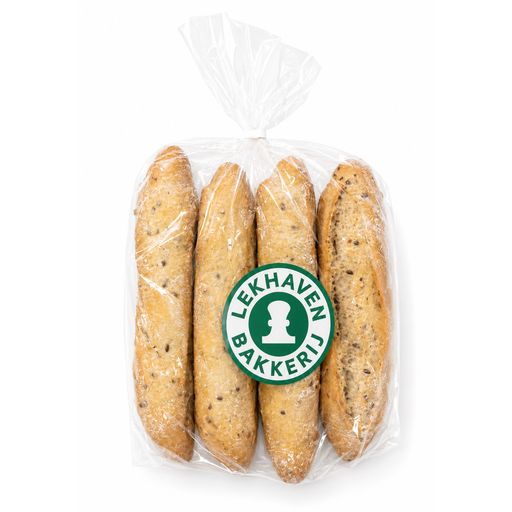 Image unavailable
The four individual baguettes are a good fit for a lunch where you want to serve separate portions. They need to be thawed and baked; follow the instructions on the packaging.
If wholemeal bread or fibre content is a deciding factor, check the claim and nutritional information for this variety. If you have allergies, read the latest ingredients and allergen information.
 Image unavailable
This 550 g round loaf is a good choice if you’d rather put a whole loaf on the table than serve individual rolls. It needs to be thawed and baked first; check the packaging for the baking time.
Check the wholemeal claim and nutritional information if they affect your choice, and if you have allergies, read the information for the exact variety.
 Image unavailable
Four individual multigrain rolls are ideal if you don’t want to cut into a whole loaf for lunch. Check the packaging to see whether the rolls are ready to serve or need further preparation.
Also check the wholemeal claim, nutritional information and allergen details for this exact variety if they matter to your choice.
No. According to the Netherlands Nutrition Centre, multigrain bread is made from at least three different types of grain, but the name doesn’t mean the bread is wholemeal. Look for an explicit wholemeal claim if that’s your main criterion.
Don’t assume so. The Commodities Act Decree on Overheid.nl describes baker’s salt as iodised table salt used for bread and other baked goods; that description doesn’t tell you which salt was used in a particular loaf. Check the ingredients list for the variety you’re buying.
Check the allergen information for the specific bread, even if you’ve bought the same product before. Depending on the variety, allergens could include cereals containing gluten, sesame, soya, milk, egg or nuts. Also check for warnings about possible traces.
If you plan to use it later, it’s best to freeze the bread in portions as soon as you get home, as recommended by the Netherlands Nutrition Centre. Also follow the storage instructions and use-by date on your product’s packaging.