What should you look for when choosing?
First decide whether wholemeal, a sturdy base for a snack or the requirements for packing it are your main priority. Then check the information for the bread you’re actually choosing.
| What to consider |
What to check when buying |
Who it matters to |
| Wholemeal and fibre |
Look for an explicit wholemeal label; don’t rely on the name ‘multigrain’, the colour or visible seeds alone. |
If fibre is the main reason I’m choosing this bread for my child, I want to know whether it really is wholemeal. Around 40% of consumers put this check first. |
| A substantial slice |
Look at the actual slice and its texture, or ask whether the bread can be cut into thicker slices. |
For a snack with a topping, I want a slice that stays intact while I prepare it and is enjoyable for my child to eat. This is the top priority for around 30% of consumers. |
| Packing and ingredients |
Read the latest allergen information and ask about the rules at your child’s school or after-school club; check whether baker’s salt is listed if needed. |
When I pack bread for my child, it needs to suit any allergens that need to be considered and meet the rules at the school or club. This matters most to around 30% of consumers. |
Multigrain bread on Joybuy
These breads are worth considering if you want to judge the shape and slices for yourself when choosing a snack. The product names confirm that they’re multigrain, but not that they’re wholemeal or thickly sliced; check these details and the allergen information before serving.
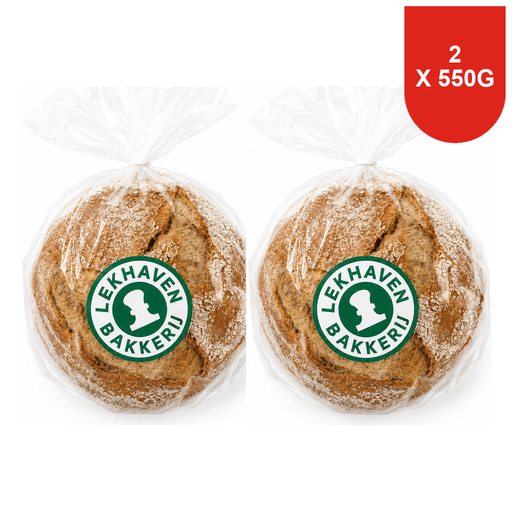 Image unavailable
Lekhaven Bakkerij round multigrain bread, 2 × 550 g
A round loaf to consider if you’d like to check the slices yourself for a snack with a topping.
The product name lists two 550 g loaves. Before packing, check the slice thickness, wholemeal labelling and latest allergen information.
View on Joybuy
 Image unavailable
Lekhaven Bakkerij rustic multigrain baguettes, 4 × 135 g
If you want to cut your own portions for a snack, the baguette shape offers an alternative to a round loaf.
The product name lists four 135 g baguettes. ‘Rustic’ doesn’t guarantee a thick slice; check the wholemeal labelling and latest allergen information, too.
View on Joybuy
Frequently asked questions
Is multigrain bread automatically wholemeal?
No, the name ‘multigrain’ doesn’t confirm that the bread is wholemeal. The Netherlands Nutrition Centre distinguishes between wholegrain products and products made with refined flour, so look for an explicit wholemeal label on the bread you choose.
Can I assume that all multigrain bread contains the same allergens?
No, check the allergen information for each product. Multigrain bread may contain cereals with gluten, while gluten-free multigrain products are also available. For packaged bread, read the latest label; for unpackaged bread, ask what allergen information is available.
Does all multigrain bread contain iodine-enriched baker’s salt?
No, don’t assume so without checking the product information. The Netherlands Nutrition Centre lists baker’s salt as a possible source of added iodine; check the ingredients for the bread you choose or ask the baker.
How should I pack bread for school or an after-school club?
Use a sturdy lunchbox that closes securely, as recommended by the Netherlands Nutrition Centre. Before packing, check the rules at the school or after-school club, along with the allergen information for the bread and its topping.


