
Small lunch group
A half loaf may be a good fit when only a few colleagues are having lunch and a whole loaf would go to waste. Choose a size based on typical demand, not just what is available on a particular day.


For a small lunch group, choose a half loaf of multigrain bread if a whole loaf is unlikely to be used up. A wholemeal multigrain loaf is a good fit when the canteen regularly uses the whole loaf and a wholemeal base is important. Bake-off bread requires a suitable oven and time to prepare. Whatever you choose, check the label for wholemeal flour and allergens, and for baker’s salt if it matters for your lunch menu.
A half loaf may be a good fit when only a few colleagues are having lunch and a whole loaf would go to waste. Choose a size based on typical demand, not just what is available on a particular day.
The name ‘multigrain’ doesn’t tell you whether a loaf is wholemeal. The Netherlands Nutrition Centre points out that wholemeal bread is particularly high in dietary fibre. So check the ingredients and compare the fibre content per 100 g for the exact products you’re considering.
If you offer a set lunch menu, pay attention to allergens and the salt used in each bread variety. The Netherlands Nutrition Centre says baker’s salt isn’t compulsory, so check the current label to see whether it has been used.
First, work out how much bread your lunch group usually gets through. Then compare the wholemeal claims, nutritional information and ingredients of the varieties that suit that quantity.
| What to consider | What to check when buying | Who it matters to |
|---|---|---|
| Quantity per purchase | Compare half loaves with half loaves and check the pack weight. | For a small lunch group, I don’t want to buy more bread than I need for the next lunch. Around 36% of consumers prioritise buying a smaller quantity. |
| Wholemeal and fibre | Look for ‘wholemeal’ or ‘wholemeal flour’ and compare the fibre content per 100 g for the exact varieties. | If bread is served every day, I want to be able to tell whether it really is wholemeal and understand what the stated fibre content means. Around 29% of consumers put this nutritional information first. |
| Leftover bread | Choose a half or whole loaf based on expected demand, and check the storage advice. | If the number of people having lunch varies, I want to avoid having bread left over afterwards. Minimising leftovers is the biggest priority for around 21% of consumers. |
| Ingredients and baker’s salt | Read the current allergen information and, if necessary, check whether baker’s salt is listed among the ingredients. | If the bread needs to meet requirements for allergens or baker’s salt, I want to check the exact variety before adding it to the lunch menu. For around 14% of consumers, checking the ingredients is decisive. |
The size alone doesn’t tell you how much bread the canteen can actually serve. The number of portions you can get from each loaf can also vary.
Compare like-for-like loaf sizes and check the weight when looking at different varieties side by side.
‘Multigrain’ refers to several types of grain; it doesn’t necessarily mean the bread has a wholemeal base. To compare fibre, you’ll need the nutritional information for the exact variety.
Look for ‘wholemeal’ or ‘wholemeal flour’ in the product description and ingredients list, and compare fibre on a like-for-like basis, such as per 100 g.
The Netherlands Nutrition Centre says bread doesn’t have to be made with baker’s salt. So the type of bread alone won’t tell you whether it contains it.
Check the ingredients list if baker’s salt is relevant to your lunch menu.
As well as grains, multigrain bread may contain seeds and other allergens. Ingredients vary from product to product.
Check the label for the exact variety whenever you receive a new delivery, before serving the bread.
These brands offer examples of different loaf sizes. The right choice still depends on the label and how much bread the canteen uses.
ALDI lists a half Boeren wholemeal multigrain loaf, a size worth considering for a small lunch group.
Dirk lists, among other options, a half Bakkers multigrain loaf and a whole multigrain hearth loaf.
Jumbo lists a half Boeren Donker Volkoren Meergranen and a whole Stevig Meergranen with seeds.
PLUS offers wholemeal multigrain baguettes to bake at home, an alternative to a fresh whole or half loaf for lunch.
Lidl lists multigrain bread as a product category to consider when choosing where to shop.
Albert Heijn lists, among other options, a whole Boeren donker meergranen loaf.
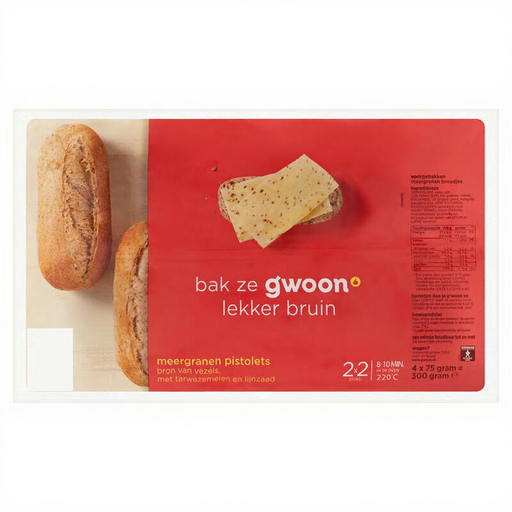
If you’re serving individual rolls at lunch, this pack of four multigrain rolls is one option. Compare the quantity with what your canteen needs, and check the packaging for any ingredients relevant to your lunch menu.
 No image available
For lunches where rolls are served individually. Before adding them to your selection, check the weight, wholemeal claim and allergens on the current packaging.
No. The Netherlands Nutrition Centre says baker’s salt isn’t compulsory when baking bread. Check the ingredients list if its presence matters for your lunch menu.
The term ‘multigrain’ doesn’t confirm that a loaf is wholemeal. The Netherlands Nutrition Centre points out that wholemeal bread is particularly high in dietary fibre. When choosing a product, look for ‘wholemeal’ or ‘wholemeal flour’ and check the nutritional information per 100 g.
It depends on the product and the oven. PLUS recommends baking its wholemeal multigrain baguettes for 8–10 minutes in a preheated oven at 220 °C. For other bread, follow the instructions on the packaging.
Check the allergens for the exact bread variety rather than relying on the name ‘multigrain’. Jumbo lists wheat, barley, sesame and soya for Stevig Meergranen. When buying bread, read the current label for the loaf your canteen will actually serve.