
If you regularly take bread with you
You want to choose an amount that will be used up for regular lunches, without ending up with unnecessary leftovers.


For a budget-conscious university lunch, choose an amount you’ll actually use and check that the bread is explicitly labelled wholegrain if that matters to you. According to the Netherlands Nutrition Centre, ‘multigrain’ means the bread contains at least three types of grain; it doesn’t mean the bread is wholegrain. If you’re buying unpackaged bread from a canteen, ask for allergen information before you buy.
You want to choose an amount that will be used up for regular lunches, without ending up with unnecessary leftovers.
You want to look beyond a dark colour or visible seeds, and compare the wholegrain label, ingredients and fibre per 100 g.
You need clear information about the ingredients and allergens in your chosen bread, whether it’s packaged or unpackaged.
First, work out how much bread you’ll need for your lunches. Then check whether it’s labelled wholegrain and, if allergens are relevant to you, look for information about the specific bread.
| What to consider | What should you check? | Who is it important to? |
|---|---|---|
| Lunch budget | Compare like-for-like types of bread and think about how many slices you’ll actually use. | I often have lunch on campus and don’t want to spend my budget on bread that goes uneaten; around 36% of consumers put their lunch budget first. |
| Wholegrain and fibre | Look for an explicit wholegrain label and compare the fibre per 100 g. | I want to know what’s in the bread I eat every day, rather than judging it by its colour or seeds. Around 29% of consumers pay most attention to wholegrain and fibre. |
| Portion size | Choose between an individual roll, a half loaf and a whole loaf, depending on how many lunches you’re planning. | For one lunch, I’d rather not take more than I can use; portion size is the main consideration for around 21% of consumers. |
| Allergens | Read the label or ask for up-to-date allergen information if you’re buying unpackaged bread. | If I need to avoid certain ingredients, I want to be able to check the bread before taking it. For around 14% of consumers, this check comes first. |
According to the Netherlands Nutrition Centre, multigrain refers to the number of types of grain used, not whether the whole grain has been used.
Look for a wholegrain label and compare the fibre per 100 g. Don’t rely solely on a dark colour or visible seeds.
A triangular roll, half loaf and whole loaf provide different amounts for your lunches.
First choose a size that suits the number of times you’ll be eating it, then think about what you’ll do with any leftovers.
Multigrain bread can contain several gluten-containing grains and other allergens. According to the NVWA, suppliers of unpackaged food must provide information about 14 allergens.
Ask for allergen information about the bread being offered at the time, before you buy it.
Albert Heijn lists iodised salt in AH Boeren donker meergranen heel. That ingredient information doesn’t tell you what’s in a different loaf.
Check the ingredients list for the specific product if iodised salt is relevant to your choice.
Albert Heijn provides product information for AH Boeren donker meergranen heel.
Jumbo describes Stevig Meergranen as a wholemeal multigrain loaf with seeds.
Lidl is an option if you’re looking for multigrain bread for lunch.
ALDI lists Boeren volkoren meergranen as both a half and a whole loaf.
PLUS lists, among other options, individual multigrain triangular rolls and a separate Schär gluten-free multigrain loaf.
Dirk lists Bakker van der Akker Bakkers multigrain bread as a half loaf.
These rolls and loaves come in different sizes to suit a campus lunch. For bake-at-home products, remember to check the preparation instructions too: they aren’t ready for lunch until they’ve been thawed and baked.
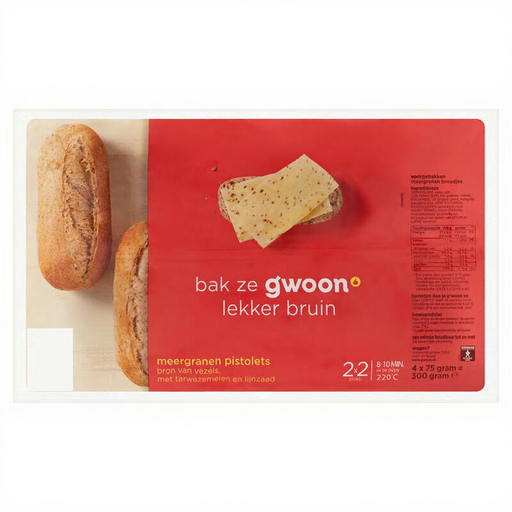 No image available
Four multigrain rolls are a good option if you want to use individual rolls for separate lunches.
Check the packaging for the wholegrain label and allergens; the product information lists gluten-containing grains and sesame.
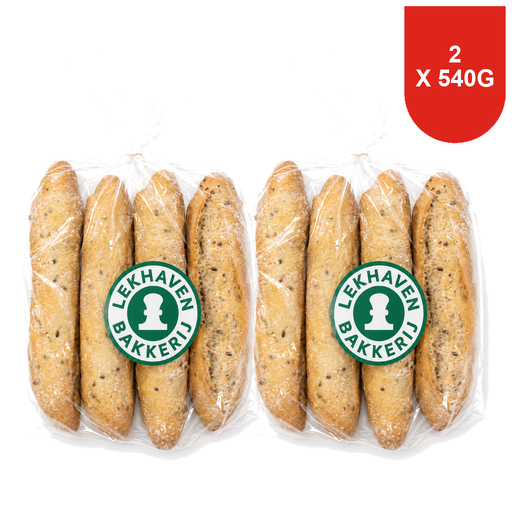 No image available
This size could work if you want to prepare an individual baguette for lunch.
The baguettes need to be thawed and baked. Check the total pack size and the wholegrain label on the packaging.
 No image available
This round multigrain loaf could work if you want slices for several lunches.
The loaf needs to be thawed and baked. The product information lists wheat and sesame; check the label for allergens and if you prefer wholegrain bread.
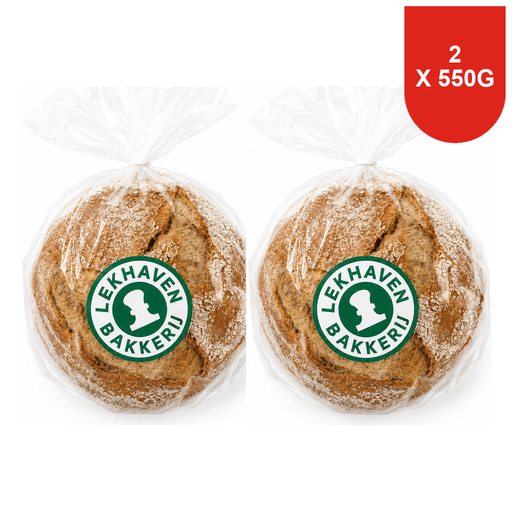 No image available
Two round multigrain loaves could work if you use bread for several lunches and can store both loaves.
They need to be thawed and baked. Consider whether you’ll use the full amount and check the wholegrain label on the packaging.
No. According to the Netherlands Nutrition Centre, multigrain bread contains at least three types of grain, but that doesn’t tell you whether the bread is wholegrain. Look for an explicit wholegrain label and check the ingredients.
An individual roll could be right if you need one portion; a half or whole loaf is more suitable if you’re planning several lunches. Think in advance about how you’ll store any leftover bread, and allow for the preparation time needed with bake-at-home bread.
Yes. According to the NVWA, suppliers of unpackaged food must provide information about 14 allergens. Ask for information about the specific bread before you buy it.
Don’t assume so: multigrain bread can contain gluten-containing grains. Check the ingredients and only choose a product explicitly labelled gluten-free if you need gluten-free bread; check the other allergens too.
You can’t tell from the name ‘multigrain’. Albert Heijn lists iodised salt in AH Boeren donker meergranen heel; check the ingredients list for any other loaf if this is relevant to your choice.