
Campers keeping an eye on fibre
You compare bread for breakfast or lunch based on the fibre content shown. Also check whether the specific bread is labelled wholemeal: the word ‘multigrain’ on its own doesn’t tell you that.


When choosing multigrain bread for a camping breakfast, don’t rely on the name or colour alone. Check whether the bread is labelled wholemeal, how much fibre is listed on the label and which flavours appeal to your group. Fresh bread is a good choice if you can store it according to the packaging and eat it in time. Part-baked bread is an option if you have the necessary equipment and can follow the storage and preparation instructions.
You compare bread for breakfast or lunch based on the fibre content shown. Also check whether the specific bread is labelled wholemeal: the word ‘multigrain’ on its own doesn’t tell you that.
You’re looking for bread your group will enjoy. Choose the flavour and texture you prefer, but don’t judge its nutritional value by its dark colour, seeds or product name; compare the labels instead.
You want to know in advance how to store the bread and whether it can be finished in the oven. Check the packaging for storage and preparation instructions before deciding between ready-to-eat and part-baked bread.
For breakfast or lunch on a camping trip, your choice will depend mainly on whether you want wholemeal bread, which flavours your group likes, and how you can store or finish the bread.
| What to consider | What to check when buying | Who it matters to |
|---|---|---|
| Wholemeal and fibre | Look for a wholemeal label and compare the fibre content per 100 g on the labels. | If you want to keep an eye on wholemeal content and fibre at breakfast, the label is more useful than the colour of the bread. This is the most important consideration for around 40% of consumers. |
| Flavour and texture | Check the type of bread and the ingredients that affect its texture, such as seeds and kernels. | If you’re catering for fussy eaters, what matters most is whether they like the flavour and texture. Around 30% of consumers prioritise this. |
| Storage and preparation | Read the storage instructions and, for part-baked bread, check what equipment you’ll need. | If you won’t be able to shop every day, you’ll want to know whether you can store the bread and prepare it when you’re ready to eat. Camping convenience is the main priority for around 30% of consumers. |
According to the Netherlands Nutrition Centre, multigrain bread contains at least three types of grain, but it can be made with refined flour. So the name doesn’t tell you whether the bread is wholemeal.
Look for a wholemeal label on the specific product and check the ingredients and nutritional information.
The colour, seeds and kernels don’t tell you how much wholemeal flour the bread contains. They may, however, affect the texture you’re looking for or be relevant when checking for allergens.
If wholemeal is important to you, compare the product description and ingredients list.
Part-baked bread needs the equipment specified in the preparation instructions. For example, PLUS wholemeal multigrain baguettes come with instructions for an oven or air fryer.
Before you set off, check the instructions on your pack and make sure the necessary equipment is available at the campsite.
Other allergens still matter. For example, PLUS lists soya for Schär Meesterbakker Mehrkorn and includes warnings for lupin, mustard and sesame.
Check the current allergen information for the specific product every time you buy it.
Albert Heijn has an online category for multigrain and maize bread, with individual product pages.
Jumbo lists multigrain bread and wholemeal multigrain varieties in its online range.
PLUS offers both a wholemeal multigrain loaf and wholemeal multigrain baguettes to finish off at home.
Lidl sells fresh-from-the-oven bread and publishes an ingredients and allergens guide for this range.
These products include individual rolls, separate baguettes and a whole round loaf for a camping meal. Check each product for a wholemeal label and storage or preparation instructions; the word ‘Multigrain’ on its own doesn’t confirm that it’s wholemeal.
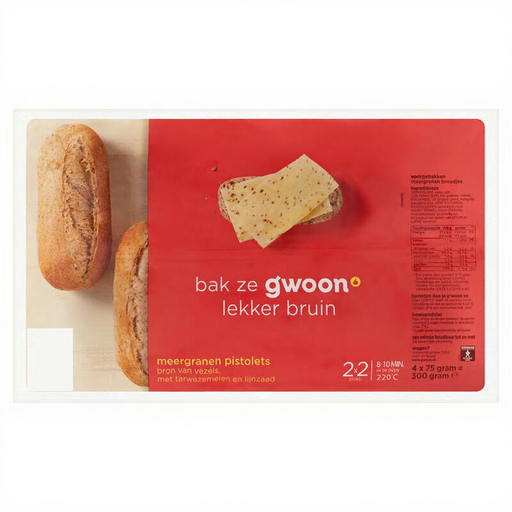 No image available
A handy choice if you want to take individual rolls for breakfast while camping.
Pack of 4. Check the packaging for the latest storage instructions, wholemeal labelling and allergen information.
 No image available
An option if you’d like individual baguettes and have a way to finish them off at the campsite.
Pack of 4 baguettes, each weighing 135 g. Before you set off, check the preparation instructions, the equipment required and whether the product is labelled wholemeal.
 No image available
A good option if you want one round loaf for the group and can plan how to prepare it at the campsite.
Weight: 550 g. Check the packaging for preparation and storage instructions, and make sure the bread is labelled wholemeal if that’s what you’re looking for.
No. According to the Netherlands Nutrition Centre, multigrain bread contains at least three types of grain, but it can also be made with refined flour. So look for a wholemeal label on the specific bread and compare the ingredients and fibre content per 100 g.
Fresh bread is a good choice if you can store it according to the packaging and use it in time; part-baked bread works well if you have the necessary equipment. Check the preparation instructions too: for example, the instructions for PLUS wholemeal multigrain baguettes specify 8–10 minutes in the oven at 220 °C.
You can’t tell from the word ‘multigrain’. Check the ingredients list for the specific bread to see what type of salt is used, such as baker’s salt or iodised salt.
No. PLUS lists soya for Schär Meesterbakker Mehrkorn, along with warnings for lupin, mustard and sesame. So always check the latest allergen information as well as the gluten-free label.