What should you look for when buying?
First, check that the ingredients and allergen information are suitable for your household. Then compare the loaves that fit the bill and decide how much you can freeze straight away.
| What to consider |
What to check when buying |
Who is this important for? |
| Ingredients and taste |
Check whether the bread is labelled wholemeal and which types of flour appear first in the ingredients list. Compare fibre per 100 g. |
If fully wholemeal bread isn’t popular at home, I want to be able to choose a blend without mistaking it for fully wholemeal bread. Around 40% of consumers prioritise making this transition. |
| Storing a supply |
Check the storage instructions and make sure you can freeze your purchase in convenient portions as soon as you get it home. |
When I stock up on several loaves, I want to be able to take out a small amount at a time rather than defrost everything at once. For around 40% of consumers, convenience when stocking up is the main concern. |
| Allergens and labelling |
Read the current ingredients and allergen information for each loaf, and check the packaging again when you buy it another time. |
If an ingredient matters to my household, I need to know exactly what’s in this particular loaf, even if the recipe has changed. For around 20% of consumers, this is the main priority. |
Multigrain products for the freezer
These Joybuy products are multigrain breads and baguettes that can be stored frozen and baked at home later. Check each pack to see whether the ingredients also suit your preference for a blend of wholemeal and white flour. The shape of the bread and pack size vary.
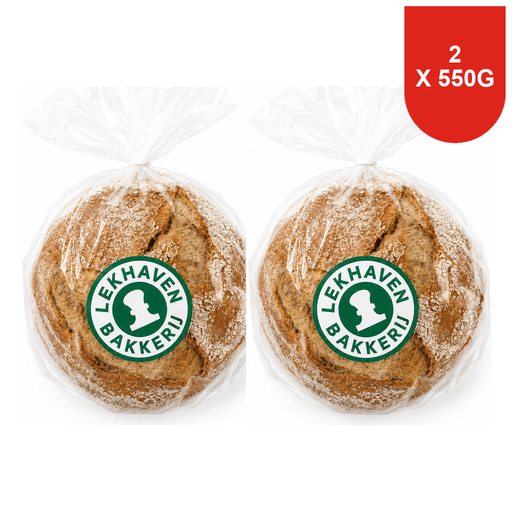 Image unavailable
Lekhaven Bakkerij Multigrain Country Bread Round, 2 × 550 g
Two loaves for anyone who wants to keep bread to bake at home in the freezer. The product description says it can be stored unbaked at −18 °C for up to four months and lists ingredients including wheat flour, sunflower seeds, linseed and sesame. Check the packaging for wholemeal flour, applicable allergens and baking instructions.
View at Joybuy
 Image unavailable
Lekhaven Bakkerij Multigrain Country Bread Round, 550 g
One loaf for anyone who wants to keep a smaller amount of bread to bake at home in stock. The product description says it can be stored unbaked at −18 °C for up to four months and lists wheat flour, sunflower seeds, linseed and sesame. Check the packaging for wholemeal flour, current allergen information and baking instructions.
View at Joybuy
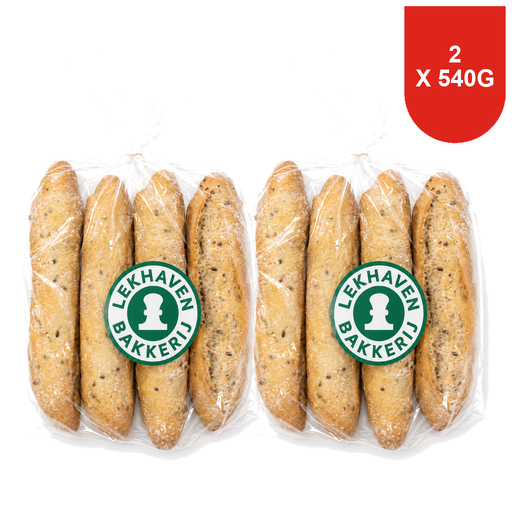 Image unavailable
Lekhaven Bakkerij Multigrain Rustic Baguette, 4 × 135 g × 2
Multigrain baguettes for anyone who wants to store and bake individual portions rather than a whole loaf. The product description says they can be stored at −18 °C for up to four months and lists ingredients including wheat flour, sunflower seeds, sesame and linseed. Check the label for wholemeal flour, allergens, and storage and baking instructions.
View at Joybuy
Frequently asked questions
Is multigrain bread automatically wholemeal?
No. According to the Voedingscentrum, multigrain bread contains at least three different types of grain, but the name alone doesn’t tell you how much wholemeal flour it contains. Check the wholemeal label and ingredients list of the bread you want to buy.
How long can I freeze wholemeal bread for?
The Voedingscentrum recommends keeping wholemeal bread in the freezer for one to three months and freezing it in portions as soon as you get it home. Bread can become drier if stored for longer, so follow any shorter, product-specific instructions on the packaging.
Is the fridge a good place to store a larger supply of bread?
For bread you want to keep for longer, the Voedingscentrum’s storage advice recommends freezing it. Divide the bread into portions as soon as you get it home. If the pack is unopened, also check the date and storage instructions.
Which allergens should I check for in multigrain bread?
It varies by product. The information for a Jumbo wholemeal multigrain bread lists wheat, barley, oats, rye, sesame and lupin, among other ingredients, and says that traces of other ingredients may be present. Don’t use that list for another loaf: always read the label on the current packaging.
Does every multigrain bread contain iodine through baker’s salt?
You can’t tell from the name ‘multigrain bread’. The Netherlands Food and Consumer Product Safety Authority sets out conditions for using iodine compounds in bread through baker’s salt, but that doesn’t confirm what’s in a particular loaf. Check the ingredients list or ask for product-specific information.


