
Budget-conscious shoppers looking for fibre
You’re looking for bread for everyday meals and don’t want to assume that multigrain means wholemeal. Compare the wholemeal labelling, ingredients and nutritional information before you choose.


For a special lunch or brunch, start by choosing a type of loaf that suits the number of people eating and the time you have to prepare it. A crusty loaf could be a good fit if you want to serve it straight away; bake-at-home bread needs preparation if you want to serve it warm. Separately, check whether it is labelled wholemeal, its fibre content per 100 g and the allergens. A dark crust or the name ‘multigrain’ won’t tell you whether it’s wholemeal.
You’re looking for bread for everyday meals and don’t want to assume that multigrain means wholemeal. Compare the wholemeal labelling, ingredients and nutritional information before you choose.
For a special lunch, brunch or meal with soup, the type of loaf, crust and ease of serving all matter too. A crusty loaf or bread that you bake at home could be just right for the meal.
You’ll want to know which allergens are listed for your chosen bread before buying it. For pre-packed bread, read the label; for unpackaged bread, ask for the product information.
First decide whether ingredients, serving a special meal or choosing a suitable size matters most to you. Then compare breads on the features that match your priorities.
| What to consider | What should you check? | Who does this matter to? |
|---|---|---|
| Wholemeal and fibre | Look for wholemeal labelling and compare fibre per 100 g. According to the Voedingscentrum, multigrain means that bread contains at least three types of grain; it doesn’t mean that it’s wholemeal. | If I eat the same bread regularly, I want to know what’s in it rather than judge by its dark colour; this is the top priority for around 40% of consumers. |
| Serving with a special meal | Check whether the bread is ready to serve or needs to be baked at home, and what size suits the meal. | For a brunch, I want to serve bread in a way that suits the meal without underestimating the preparation involved. Around 30% of consumers prioritise this. |
| Size and leftovers | Check the weight, the number of loaves in the pack and the storage instructions. | If only a few people are eating, I want to choose a size that won’t leave too much over; this is the biggest consideration for around 30% of consumers. |
According to the Voedingscentrum, multigrain refers to the number of types of grain, not whether the bread is wholemeal. Its appearance and the seeds on the crust won’t tell you that either.
Look for wholemeal labelling and check the ingredients list and fibre per 100 g.
A whole loaf and a pack of smaller loaves won’t necessarily provide the same number of portions. This matters if you’re buying for a specific number of people.
Check the weight, the number of loaves and what you can do with any leftovers.
According to the Netherlands Food and Consumer Product Safety Authority, allergen information for pre-packed bread appears on the label. For unpackaged bread, information about the specific product is just as important when making your choice.
Read the label or ask at the bakery counter about allergen information before buying.
The Netherlands Food and Consumer Product Safety Authority explains the conditions under which iodine may be present in bread through baker’s salt. This doesn’t mean that every multigrain loaf contains this salt.
Check the ingredients list for the bread you’re considering and ask for product-specific information if needed.
With its Vloerbrood multigrain and Liefde & Passie sourdough loaves, Albert Heijn offers different types of bread to consider for a special meal.
Jumbo offers products including Boeren Donker Volkoren Meergranen and Stevig Meergranen with seeds.
At PLUS, you can compare a whole Korenlanders crusty loaf with multigrain sourdough demi-baguettes that you bake at home.
ALDI describes Luxe vloerbrood multigrain as a pre-sliced loaf with grains and seeds.
Dirk’s range includes products such as multigrain bread, Multikorn wholemeal bread and multigrain crusty loaves.
These round country-style multigrain loaves are a good fit for a shared lunch when you want to bake the bread at home. Choose the pack size to suit the number of people eating and allow time for preparation.
 No image available
For a special lunch when you want to bake the bread at home. Allow time for defrosting and baking, and check the allergen information on the pack.
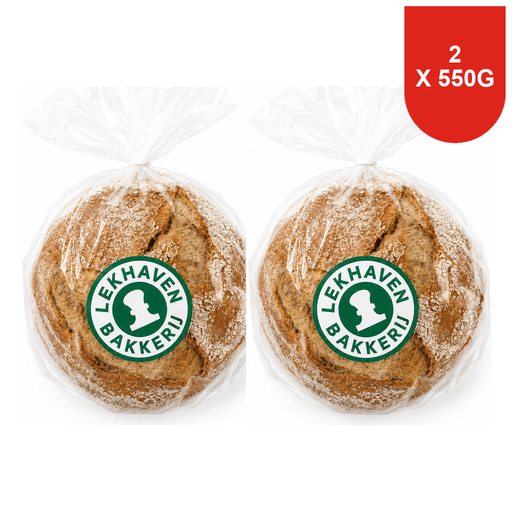 No image available
The pack of two loaves is a good fit for a shared meal when you want to bake the bread at home. Allow time for defrosting and baking, and check the allergen information on the pack.
No. According to the Voedingscentrum, multigrain bread contains at least three different types of grain; that alone doesn’t tell you whether it’s wholemeal. Look for wholemeal labelling and read the ingredients list if the ingredients matter to your choice.
No, this isn’t guaranteed by Dutch regulations. The Netherlands Food and Consumer Product Safety Authority explains that iodine compounds may be present in bread through the addition of baker’s salt, with a maximum of 65 mg of iodine per kg of salt. Check the ingredients list for the individual loaf.
For pre-packed bread, read the allergen information on the label. For unpackaged bread, ask for information about the specific product before buying; don’t rely solely on the name ‘multigrain’ or the seeds you can see.
It depends on the loaf. Albert Heijn says that AH Vloerbrood multigrain can be frozen at home on the day of purchase and should be used within one month. For other crusty, sourdough or bake-at-home bread, follow its own storage instructions.