
Everyday budget-conscious shoppers
If you regularly buy bread to enjoy with your coffee, don’t compare half loaves and whole loaves on price per loaf alone. Check the weight too, and think about how much you’ll actually use.


To find affordable multigrain bread to enjoy with your coffee, compare the price per kilo of similar types of bread and choose a size you can finish. According to the Netherlands Nutrition Centre, ‘multigrain’ does not automatically mean ‘wholemeal’. Check for that description separately, and always read the current label if you have allergies.
If you regularly buy bread to enjoy with your coffee, don’t compare half loaves and whole loaves on price per loaf alone. Check the weight too, and think about how much you’ll actually use.
If you specifically want wholemeal multigrain bread, look for the word ‘wholemeal’ on the packaging. The Netherlands Nutrition Centre distinguishes between the descriptions ‘multigrain’ and ‘wholemeal’.
If you need to avoid certain ingredients, check the current ingredients and allergen information for the exact bread you’re considering. If you want to know whether baker’s salt has been used, check the label for that too.
Start by thinking about how much bread you have with your coffee. Then compare loaves of the same type by weight, description and ingredients.
| What to consider | What should you check? | Who is this important for? |
|---|---|---|
| Everyday cost | Compare the price per kilo or per 100 g for the same type of bread, and check the pack weight too. | If I often have bread with my coffee, I want to know how much different sizes cost for the same quantity of bread. For around 36% of consumers, this price comparison is the most important factor. |
| Wholemeal content and nutritional value | Look for the description ‘wholemeal’ and, if you like, compare the fibre per 100 g on the label. | I want to make an informed choice and pick wholemeal bread, rather than relying on the word ‘multigrain’ alone. Wholemeal content is the most important consideration for around 29% of consumers. |
| Size and storage | Work out how many portions you’ll use and read the storage, freezing or preparation instructions. | If I’m having a small coffee break, I don’t want to be left with more bread than I can use. The right size matters most to around 21% of consumers. |
| Ingredients and allergens | Read the current allergen list. Check separately for a gluten-free description or a mention of baker’s salt if either is relevant to your choice. | If I need to avoid certain ingredients, the right label matters more than size or price. This check is the top priority for around 14% of consumers. |
According to the Netherlands Nutrition Centre, multigrain bread is made with at least three types of grain. The name alone doesn’t mean that the flour is wholemeal.
If wholemeal is a requirement for you, look for the description ‘wholemeal’. Use the ingredients list and nutritional information to compare products further.
Bread sizes vary in weight, so the price per loaf doesn’t tell you how much you’re paying for the same quantity of bread.
For the same type of bread, compare the price per kilo or per 100 g and check the pack weight.
A whole loaf may not be the best choice for small portions if you can’t use or store the rest in time.
Plan your portions in advance. A half loaf, freezing suitable bread or preparing a bake-at-home product one portion at a time may suit the way you use it better. Always check the packaging instructions.
According to the Netherlands Nutrition Centre, bakers don’t have to use baker’s salt. So don’t assume it’s present just because the bread is called ‘multigrain’.
Check the ingredients list for baker’s salt or iodised salt if this information is important to your purchase.
Multigrain bread in a range of varieties, including dark bread with seeds.
Multigrain loaves in a range of sizes, including a wholemeal variety with seeds.
Freshly baked bread, with a separate list of ingredients and allergens.
Multigrain bread, including a half-sized farmhouse wholemeal multigrain loaf.
Multigrain bread and bake-at-home wholemeal multigrain baguettes.
Multigrain bread in a range of varieties, including half and whole loaves.
These Joybuy products include multigrain rolls and loaves in different sizes for enjoying with your coffee. Choose a size to suit your portions, and check the current price per weight when comparing costs.
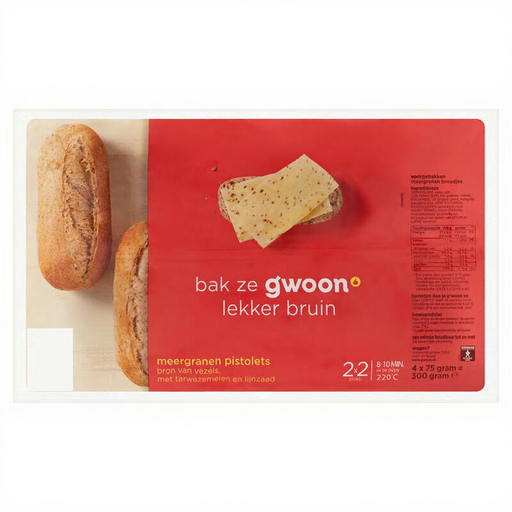 Image unavailable
Four individual rolls are ideal if you prefer a small portion each time you have coffee.
Check the packaging if you’re specifically looking for wholemeal bread. If you have an allergy, read the current allergen information carefully, particularly for sesame.
 Image unavailable
The four individual baguettes are handy if you want to plan portions for several coffee breaks.
Each baguette weighs 135 g. Allow time for defrosting and baking, and follow the packaging instructions. Check the current allergen information too.
 Image unavailable
This round loaf is a good choice if you want several portions from one loaf and can plan how much you’ll use.
The loaf weighs 550 g. Allow time for defrosting, baking and cooling before slicing. Follow the preparation instructions and allergen information on the packaging.
No. According to the Netherlands Nutrition Centre, multigrain bread contains at least three types of grain, while the description ‘wholemeal’ specifically indicates that it is wholemeal bread. If wholemeal is important to you, look for that word on the packaging.
For the same type of bread, compare the price per kilo or per 100 g, rather than just the price per loaf. Also consider how much you’ll actually use before storing or freezing it.
Choose a size that suits how much you use, or freeze the bread if the product instructions allow it. Albert Heijn says that one specific multigrain bread can be frozen on the day of purchase; for other loaves, check the packaging.
No. ‘Multigrain’ does not mean ‘gluten-free’. Only choose a product that is explicitly labelled gluten-free, and check the current label for other allergens too.
No. According to the Netherlands Nutrition Centre, bakers don’t have to use baker’s salt. Check the ingredients list if you want to know whether baker’s salt or iodised salt has been added.