
Budget-conscious shopper buying bread for everyday sandwiches
You’re looking for bread for breakfast or lunch and don’t want to treat a half loaf, a whole loaf and a pack of rolls as if they contain the same amount.


For everyday sandwiches, choose a half or whole multigrain loaf that suits how much you’ll actually use. If you’re planning to serve bread around a Christmas market visit, bake-at-home rolls may be more practical if you have time to prepare them at home. Compare different sizes by weight and check the packaging to see whether the bread is wholemeal, which allergens it contains and how to store it.
You’re looking for bread for breakfast or lunch and don’t want to treat a half loaf, a whole loaf and a pack of rolls as if they contain the same amount.
You want to take bread with you or serve it just before you leave, so you’re considering its size, storage instructions and any baking time required.
You want to check whether a loaf is wholemeal and see which ingredients, allergens and type of salt are listed on the label.
First decide how much bread you use and when you want to serve it. Then compare the weight and read the label for the specific product.
| What to consider | What should you check? | Who is it important for? |
|---|---|---|
| Loaf size | Check whether it’s a half loaf, whole loaf or rolls, and compare the stated weight. | I want to choose a size I can finish for my everyday sandwiches. Around 46% of consumers prioritise finding an amount that suits them. |
| Preparation | Read the storage and preparation instructions. For bake-at-home bread, check what equipment you’ll need and how long it takes. | Just before heading to the Christmas market, I want to serve the bread at a planned time without forgetting to prepare it. For around 36% of consumers, planning is the main priority. |
| Product label | Check the wholemeal claim, ingredients and allergens; if you wish, also look for baker’s salt or iodised salt. | I want to know which grains and allergens the bread contains before choosing a variety. Checking the label is the top priority for around 18% of consumers. |
Rolls can also contain different amounts from one pack to another. The product format alone doesn’t tell you how much bread you’ll take home.
Check the weight and choose a size that suits the number of people eating and when you plan to use the bread.
According to the Netherlands Nutrition Centre, not all bread is made with baker’s salt. The term ‘multigrain’ doesn’t tell you whether it is.
Check the ingredients for baker’s salt or iodised salt. If you need this information for unpackaged bread, ask about its ingredients.
Ingredients vary between multigrain breads. For specific products, Jumbo and PLUS list ingredients including wheat, barley, sesame and soya.
If you have an allergy or need to choose gluten-free bread, check the current ingredients and allergen information on the packaging rather than relying on the name on the shelf.
Albert Heijn offers several multigrain breads, including sliced and whole loaves.
Jumbo offers half multigrain loaves, as well as varieties explicitly labelled wholemeal.
Lidl describes a multigrain bread containing ingredients including wheat, barley and buckwheat.
ALDI offers a sliced, half-size Boeren wholemeal multigrain loaf, among other options.
PLUS offers both everyday bread and wholemeal multigrain baguettes to bake at home.
Dirk offers fresh half and whole multigrain loaves, as well as bake-at-home varieties.
This selection includes round multigrain loaves, bake-at-home baguettes and smaller rolls. Choose a size for everyday use or a planned occasion, and check the packaging for preparation instructions and allergen information.
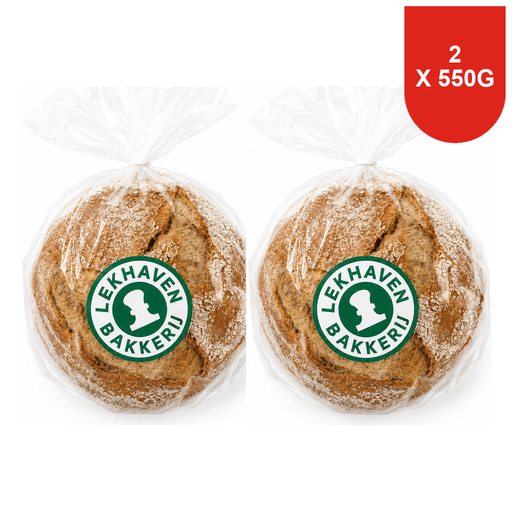 Image unavailable
A round multigrain loaf for anyone planning ahead for a particular occasion. The title lists two 550 g loaves; check the pack contents, as the preparation information describes one loaf.
Follow the packaging instructions for baking and check the label for allergens and any wholemeal claim.
 Image unavailable
A 550 g round multigrain loaf for anyone who wants to serve a whole loaf for a planned occasion.
Check the baking instructions on the packaging and read the label if the wholemeal claim, type of salt or allergens are important to your choice.
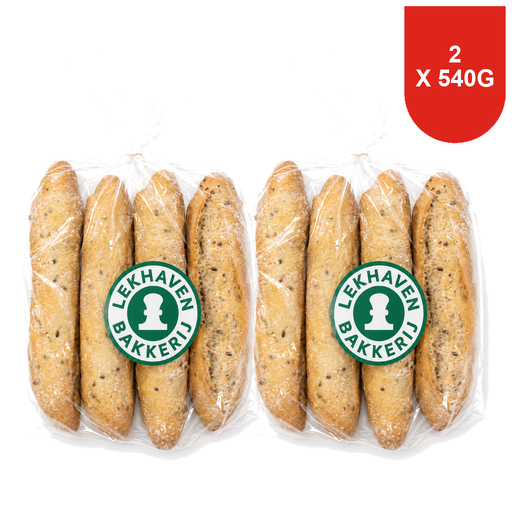 Image unavailable
Multigrain baguettes for a planned occasion, if you have time to defrost and bake them at home. The title lists 4 × 135 g × 2, but check how many baguettes are in the pack.
Follow the preparation instructions on the packaging and check the latest allergen information.
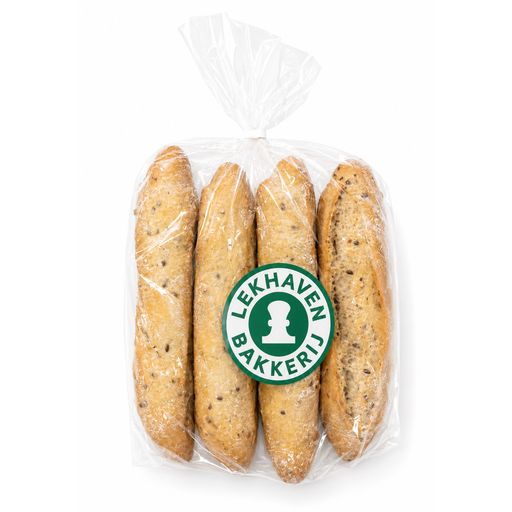 Image unavailable
Four multigrain baguettes, weighing 135 g each, for anyone who wants to bake smaller portions for a planned occasion.
Allow time to defrost them and follow the baking instructions on the packaging. Check the allergen information too.
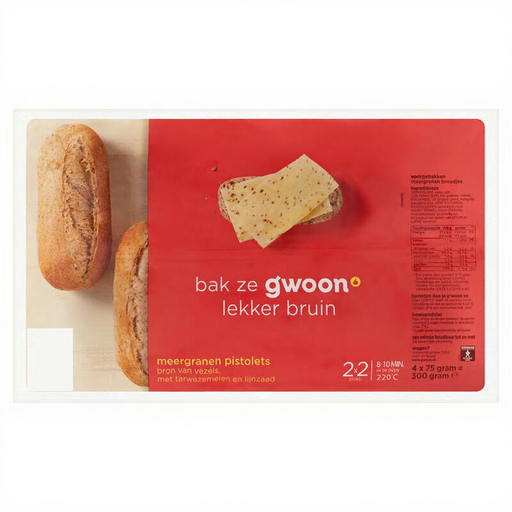 Image unavailable
Four multigrain rolls for anyone who prefers individual portions to a whole loaf.
Before serving them for a planned occasion, check the weight, preparation instructions and allergens on the packaging.
Check the weight and choose a size that suits how much bread you use. A half loaf, a whole loaf and a pack of rolls don’t necessarily contain the same amount.
No. Don’t rely on the word ‘multigrain’ alone. Look for an explicit wholemeal claim and read the ingredients list for the loaf you choose.
No. According to the Netherlands Nutrition Centre, not all bread is made with baker’s salt. Check the label to see whether baker’s salt or iodised salt has been used.
No. ‘Multigrain’ doesn’t mean gluten-free. The Netherlands Nutrition Centre recommends looking for the word ‘gluten-free’ or the Crossed Grain symbol on the packaging. Also check the latest allergen information.
Prepare them at a time that fits in with when you’re leaving, and follow the instructions on the packaging for the rolls you choose. PLUS says its wholemeal multigrain baguettes take 8–10 minutes in an oven at 220 °C or 5–6 minutes in an air fryer at 200 °C; these instructions apply to that specific product.