
Vandaag of morgen in huis

Kwaliteit gegarandeerd

Welkomstaanbiedingen ontgrendelen: GRATIS bezorging | Tot 80% korting | Gratis 30 dagen JoyPlus-proefperiode
Download de app
A multifunctional kitchen machine can replace a stand mixer, food processor, blender and sometimes even a meat grinder. That sounds convenient, but not every appliance performs every task equally well. A large bowl, for example, does not automatically mean that you can process large quantities of dough. And an extensive accessory list means little if the parts are difficult to clean or unavailable separately.
For home bakers, families and cooking enthusiasts, the decision therefore involves more than wattage. Consider the construction, permitted capacity, included accessories and how you plan to use the appliance every day.
Manufacturers sometimes list peak power, while the nominal or continuous power is lower. The Monsga SM100, for example, is described as having 1000 W peak power and 600 W nominal power. So do not compare only the highest figure shown on the packaging.
For heavy dough, the drive system, speed control and recommended maximum quantity are also important. A kitchen machine for kneading should remain stable and consistent at low speed. Always follow the quantities and operating times specified in the manual.
A 6-litre bowl is not entirely available for dough, whipped cream or batter. The Monsga SM100 manufacturer specifies a maximum capacity of 6 litres, but recommends a usable capacity of 5 litres. This difference helps prevent overloading and splashing.
Also consider the material. A stainless-steel bowl is generally practical for batter and dough. Check whether the bowl has a handle, whether it is dishwasher-safe and how much space the appliance occupies on your countertop.
A kitchen machine with accessories may seem appealing, but check exactly what is included. A blender jug, meat grinder or food processor attachment may vary by version. The Honinst is marketed as a 7-in-1 appliance, while the description lists 5-in-1 functions. Always verify the contents of the exact product variant you intend to purchase.
Pay attention to replacement parts and cleaning as well. Blades are sharp, motor housings must not be submerged and some accessories may only be used with specific models.
For everyday mixing and whisking, an adjustable electric kitchen machine is more practical than an appliance with only one setting. According to the product description, the Honinst has a motor rated at up to 1300 W, eight speeds and a pulse function. Based on the listed specifications, the Aucma uses a 450 W copper DC motor with six speeds and pulse.
Higher wattage is not a guarantee of better results. Use low to medium speed for kneading and higher settings for whisking, always within the manufacturer’s guidelines.
Families often benefit more from a 5- to 6-litre bowl than from a compact model. In addition to capacity, check the appliance’s dimensions and weight. A tilting head makes it easier to change between the whisk, beater and dough hook.
Non-slip feet or suction cups can help limit movement during mixing. This is a design feature, not a guarantee that the appliance will remain completely still on every work surface.
First determine which task you perform most often:
An all-in-one appliance saves space, but its accessories still need to be stored and cleaned. If you only make smoothies, a separate blender may be a better choice than a large stand mixer.

Why it’s a good fit: A practical choice for anyone who mainly bakes and wants one appliance for batter, bread dough and pizza dough.
The specifications list a 6-litre bowl, six speeds and pulse. However, check the recommended dough capacity before you begin.
Stainless-steel bowl, tilting head, dough hook, whisk and beater; stated noise level of 68–72 dB at 1 metre.
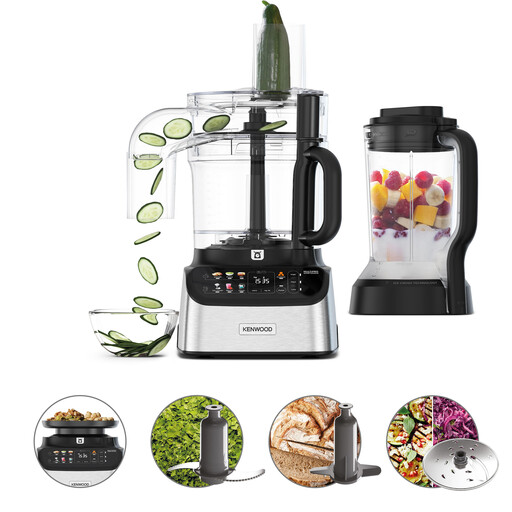
Why it’s a good fit: For those who value chopping, slicing, grating, weighing, blending and kneading in a single food processor.
The functions are specified by component: a 3-litre bowl, 1.5-litre blender, dough hook and integrated scales.
1000 W according to the product specifications and six automatic programmes with OneTouch controls.
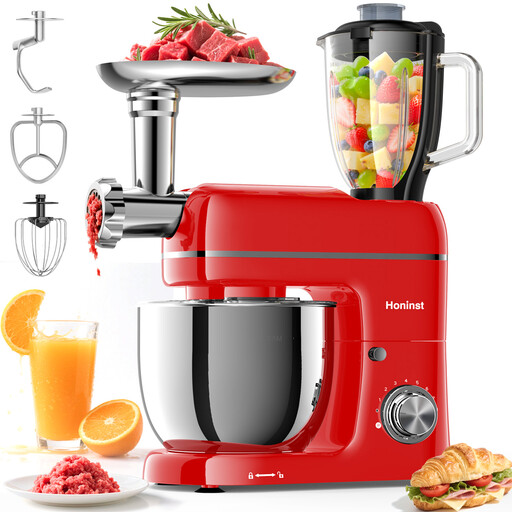
Why it’s a good fit: For families who want to prepare smoothies and minced-meat dishes as well as knead and whisk.
The product information lists a 6 QT bowl, eight speeds, pulse, blender and meat grinder. Check the exact variant and manual.
Up to 1300 W according to the description, tilting head and a safety switch that activates when the head is raised.
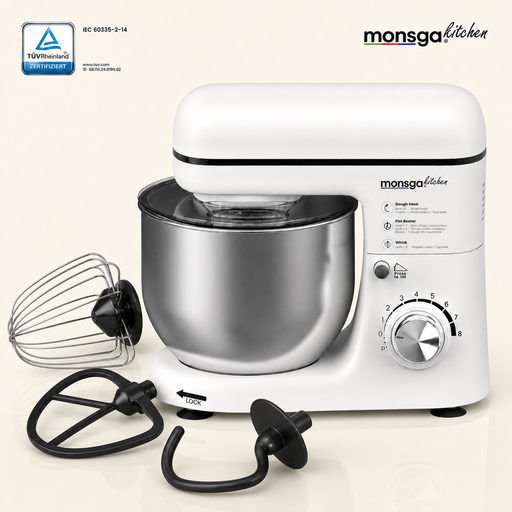
Why it’s a good fit: For cakes, biscuits, bread and whipped cream, using a spacious kitchen mixer with a bowl.
The description distinguishes between the total 6-litre capacity and the recommended 5-litre capacity, and mentions overload protection.
Eight speeds, a 304-grade stainless-steel bowl according to the product description and dishwasher-safe accessories.
Explore our current range of kitchen blenders and mixers, and compare functions, capacity and accessories for your kitchen.
That depends on the model, dough hook, nominal power and permitted dough quantity. When working with heavy dough, use a low or medium setting and do not exceed the maximum quantity. Allow the appliance to rest between batches if the manual specifies this.
Consumption depends on the appliance’s power rating and operating time. A 1000 W appliance theoretically uses 1 kWh per hour at full power, but in practice a mixer usually runs for shorter periods and not continuously at maximum power. To calculate the exact cost, multiply the power in kW by the operating time and your electricity rate.
Service life is influenced by workload, cleaning, storage and compliance with the operating instructions. Choose a model with clearly stated maximum quantities, use only approved accessories and unplug the appliance before cleaning or changing parts. Consumers in the Netherlands also retain their statutory guarantee rights; check the seller’s and manufacturer’s specific terms as well.
