
Vandaag of morgen in huis

Kwaliteit gegarandeerd

Welkomstaanbiedingen ontgrendelen: GRATIS bezorging | Tot 80% korting | Gratis 30 dagen JoyPlus-proefperiode
Download de app
A multifunctional kitchen appliance can chop, blend, mix, knead and sometimes even juice. That sounds handy, but more functions don’t automatically mean you’ll use it often. A large jug takes up space, a powerful model can be noisy and accessories can be tricky to clean.
As a Joybuy Product Recommendation Officer, I focus primarily on verifiable features: power, capacity, materials, accessories, safety features and cleaning. That way you avoid paying for marketing buzzwords.
A 1,200-watt blender sounds more powerful than a 600-watt model, but wattage doesn’t tell the whole story. The blades, jug shape, maximum run time and cooling also affect performance. Always check what the appliance is designed to do. A blender with an ice-crushing function is suitable for hard ingredients, while a simple hand blender is most useful for soups, sauces and small portions.
A 2-litre jug can look appealing for a family, but the usable amount may be lower. Philips, for example, lists a 2-litre jug for the HR3020/20 and a working capacity of 1.5 litres. The maximum fill line matters, especially for hot preparations or ingredients that expand while mixing.
An appliance with lots of accessories can come with multiple loose parts: blades, grating discs, bowls, lids and measuring cups. Check whether these parts are removable and whether they’re dishwasher-safe. Also note the temperature limit. On some models accessories are only dishwasher-safe up to a certain temperature. The motor base must never be submerged in water on any of these appliances.
For smoothies, soft vegetables and sauces, a compact model may be sufficient. If you regularly process nuts, ice, dough or hard vegetables, you’ll benefit more from a higher-rated appliance with suitable accessories. Beyond sheer power, look at the recommended run time and rest time. Some product information advises pausing after about one minute of use.
A powerful blender isn’t always the right choice for dough. For that, a kitchen mixer, dough hook and sturdy mixing bowl are more relevant. A food processor with a chopper and slicing discs is more practical for vegetables, cheese and nuts.
Choose capacity based on your household:
Also check whether the jug is suitable for hot liquids. This varies by product. Philips, for example, states that for the HR3020/20 ingredients hotter than 80 °C must not be placed in the blender. The ochama Food Processor advises not to process boiling liquids above 60 °C.
Think first about the tasks you actually do. A combination with a blender, food processor, chopper, whisk and dough hook can save space, but only if you use the accessories. For everyday chopping and mixing, a hand blender may suffice. If you mainly juice citrus fruit, a compact citrus juicer could suit you better. A dedicated nut milk maker focuses on plant-based drinks and often includes programmes for heating and cleaning.
At a minimum, check for:
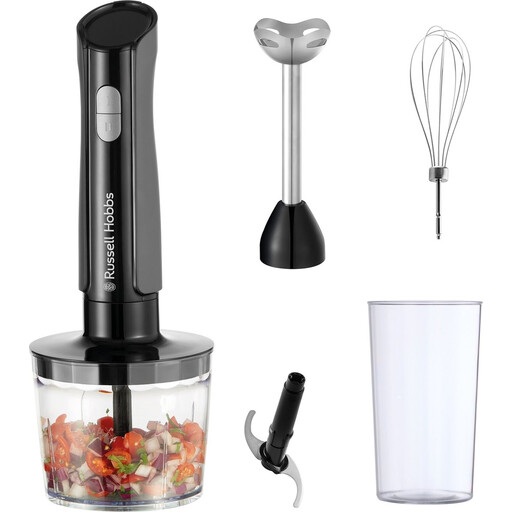
Why it suits this profile: This compact hand blender is ideal for daily small batches such as soup, sauce, whipped cream or a smoothie. Operation stays straightforward with two speeds.
You don’t pay for a big bundle of accessories you might never use. The separate parts are removable and, according to the product information, dishwasher-safe.
500 watts, 600 ml mixing beaker, 500 ml chopper bowl and accessories for blending, chopping and whisking.
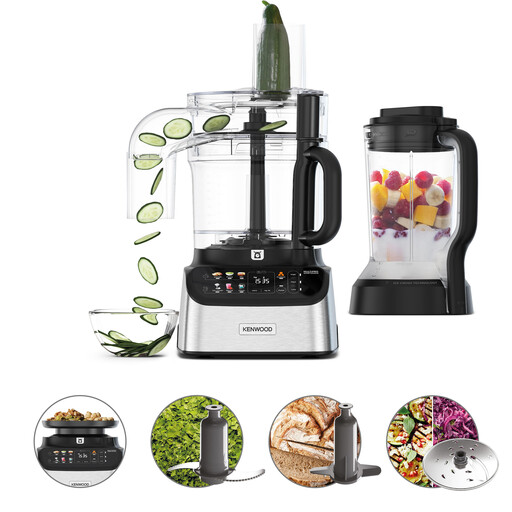
Why it suits this profile: This 2-in-1 system is geared towards comprehensive food prep for cooking enthusiasts and families who want multiple functions in one appliance.
The functions are clearly defined: weighing, mixing, kneading, puréeing, chopping, grating, slicing, blending and crushing ice. That makes it clearer how to use the accessories.
1000 watts, 3-litre bowl, 1.5-litre blender jug, integrated scales and six preset programmes.
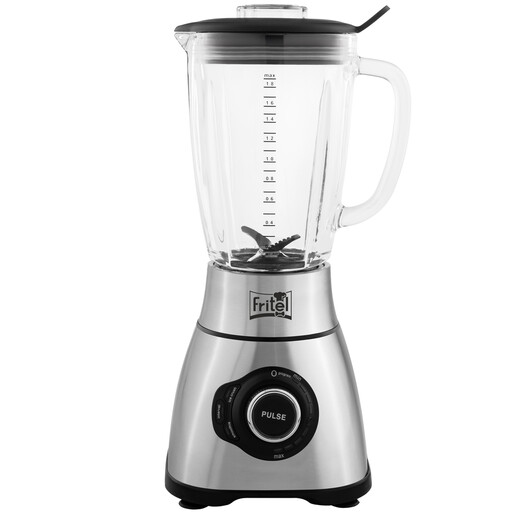
Why it suits this profile: This model is built for large batches of smoothies, sauces, soups and ice-based preparations. The programmes make usage more targeted.
The product information lists a capacity of 1.8 litres, a removable blade set and a dishwasher-safe jug, lid and filler cap. That makes maintenance easier to anticipate.
1.8-litre glass jug, ice-crushing and smoothie programmes, pulse function and automatic switch-off according to the product description.
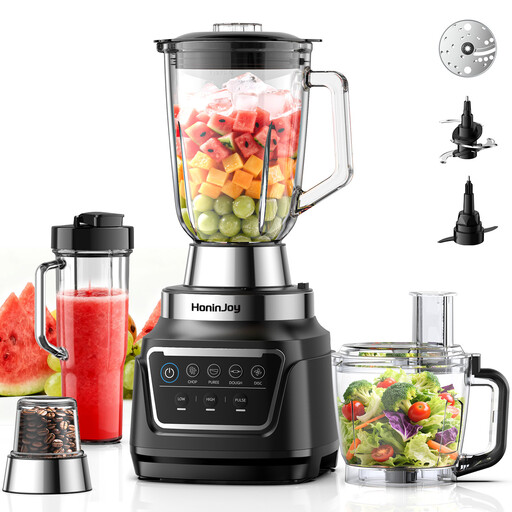
Why it suits this profile: This model combines a blender, food processor, chopper and grinder with a sports bottle. That’s useful when you make different preparations but don’t want to store multiple separate appliances.
The product information specifies the individual capacities: a 1.5-litre jug, a 2-litre food processor bowl, an 80-gram grinder cup and a 24 oz bottle.
Up to 1300 watts maximum power, four preset functions, lid lock and dishwasher-safe detachable parts according to the product description.
We’ve compiled a complete, up-to-date list of products that fully meet these strict selection criteria and comply with current European safety regulations.
A blender usually has a jug and blades designed for liquid mixtures, fruit and vegetables. A food processor is especially handy for chopping, grating, slicing and mixing firmer ingredients. For smoothies and soups, a blender or a kitchen machine designed for smoothies and soups usually makes more sense. If you do both, consider a combo model.
Lifespan depends on usage, maintenance, load and following the prescribed rest times. Don’t process ingredients that aren’t allowed, don’t exceed the maximum fill amount and clean the blades straight after use. Before buying, also check whether parts are replaceable or available separately.
Power consumption depends on wattage and run time. An appliance rated at 1,000 watts would theoretically use 1 kWh in one hour of continuous operation, but kitchen machines typically run for shorter periods. Chopping and blending programmes lasting only a few minutes have a limited impact on overall household electricity consumption. The biggest practical cost may instead be maintenance, accessories or replacement if the appliance is used incorrectly.
