
Vandaag of morgen in huis

Kwaliteit gegarandeerd

Welkomstaanbiedingen ontgrendelen: GRATIS bezorging | Tot 80% korting | Gratis 30 dagen JoyPlus-proefperiode
Download de app
A multifunctional food processor can partly replace a food processor, blender, hand blender, hand mixer or stand mixer. This saves space and can be useful for meal prep, baking and everyday meals. However, an appliance with lots of functions is not automatically suitable for every kitchen.
The biggest buying mistakes usually stem from three misconceptions:
First, consider which preparations you make each week. Someone who mainly chops and grates vegetables has different requirements from someone who kneads bread dough or makes smoothies every day.
A kitchen appliance for chopping and blending is particularly useful when you want to combine several tasks. Look out for the following functions:
Also pay attention to what is not mentioned. Missing information about noise levels, continuous operating time, maximum quantities or spare parts makes comparisons more difficult.
Only compare the stated power within the same product category. A 650 to 900-watt food processor may be suitable for chopping, slicing and grating, while a stand mixer with a different drive system is assessed according to its ability to process dough or batter.
Also check the instructions regarding breaks and maximum quantities. Many motors are intended for household use in short cycles. If overloaded, the appliance may become hot, even when the wattage looks high on paper.
Look at the usable capacity, not just the total capacity stated in the advert. A 1.3-litre bowl is compact and suitable for everyday preparations, while a 2.1-litre jug is better suited to larger portions.
Measure the available space beforehand. Check:
A compact model such as the Kenwood MultiPro Go is designed, according to the product information, for storage on the worktop or in a drawer. This may be relevant for smaller Dutch kitchens.
Check whether loose parts are BPA-free according to the product information and whether the blades lock securely in place. A lid lock prevents some appliances from starting when the bowl is not correctly fitted, but always follow the instructions.
A dishwasher-safe food processor can save time. However, check which parts are actually suitable for the dishwasher. The motor base generally is not and should be cleaned with a slightly damp cloth.
Always hold sharp blades by the plastic hub. Do not process boiling liquids unless the instructions expressly allow it. If in doubt, allow hot preparations to cool first.
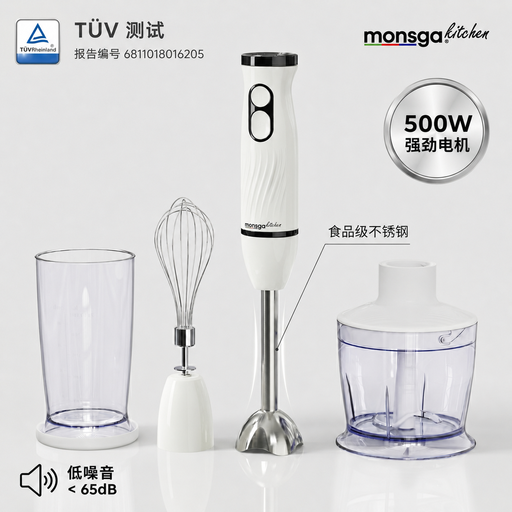
Why it suits this profile: This hand blender combines blending, whisking and chopping in a relatively compact package. It is ideal for beginners who do not want to buy several separate appliances straight away.
The product information lists a blending shaft, whisk, chopper and measuring cup. According to the description, the removable accessories are dishwasher-safe.
500 ml chopper, 500 ml measuring cup, standard and turbo settings, 1.5-metre cable and an extended 36.5 cm housing.

Why it suits this profile: This model combines a food processor with a blender function and is aimed at users who want to prepare different dishes with one main appliance.
The functions and capacities are clearly specified: chopping, slicing, grating, puréeing, kneading and blending. This makes it clearer what the appliance is designed for.
900 watts, seven settings, a 1.3-litre bowl, 360° Express Serve and a 600 ml personal blender with drinking lid.
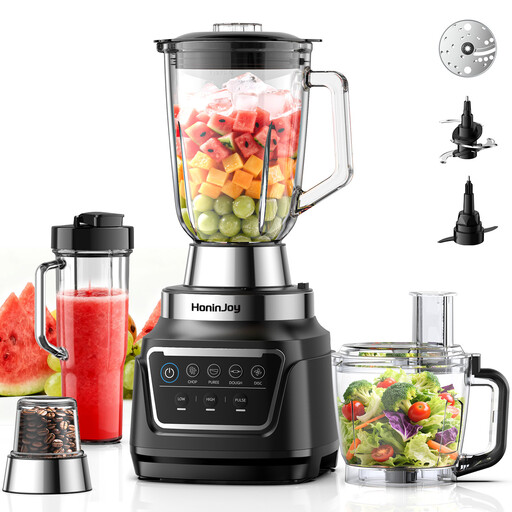
Why it suits this profile: This combination is designed for meal prep and a wide range of preparations, from chopping and grating to blending, grinding and making dough.
The set lists separate bowls and applications, so you can check in advance whether the accessories suit your regular recipes.
According to the product information: up to 1300 watts, a 1.5-litre blender jug, 2-litre food processor bowl, 80-gram grinding cup and dishwasher-safe removable parts.
We've put together a complete, up-to-date list of products that fully meet these strict selection criteria and the applicable European safety regulations.
Before using the appliance for the first time, read which parts may go in the dishwasher and what maximum quantities apply. Cut large ingredients into smaller pieces beforehand and use the pulse setting for short processing tasks. Remove hard stones, bones and shells whenever instructed to do so in the manual.
A chopper is not the same as a blender. A blender generally works with liquid and is intended for puréeing or mixing. A chopper processes smaller quantities of solid ingredients. For dough, you need a dough hook and a bowl; a hand blender or smoothie blender is not automatically suitable for this.
That depends on the stated capacity, motor load and operating time. Choose a model that suits your usual portions and allow the appliance to cool down when instructed to do so in the manual. Daily use is not a reason to exceed the maximum quantities.
Energy consumption depends on the power rating and operating time. A 900-watt appliance uses less energy when running for one minute than it does during prolonged use. Dishwasher-safe accessories can also save time, but always check the recommended dishwasher programme.
Its lifespan is affected by the workload, cleaning, storage and correct use. Keep the blades sharp and undamaged, avoid overfilling the bowls and only use accessories designed for the model. In the European Union, consumers are generally entitled to at least the statutory guarantee; additional rights may apply under national regulations.
