
Vandaag of morgen in huis

Kwaliteit gegarandeerd

Welkomstaanbiedingen ontgrendelen: GRATIS bezorging | Tot 80% korting | Gratis 30 dagen JoyPlus-proefperiode
Download de app
A multifunctional food processor can knead, mix, whisk and grind, and sometimes blend or juice too. That sounds useful, but the differences between models are often about more than the number of accessories. For home bakers, keen cooks and families, the motor, bowl, safety features and ease of cleaning are especially important.
A machine with lots of attachments isn’t automatically suitable for everyday use. So first check which functions you really need and which specifications you can verify.
A listing such as 1300W food processor may catch your eye, but the maximum power consumption doesn’t tell you how long the machine can handle heavy dough or meat. Check the recommended quantities, operating time and the manufacturer’s instructions too. A powerful motor may also produce more noise and heat.
Use your food processor for normal household quantities. Let it cool down when the manual says to, and don’t force hard or oversized ingredients through it.
A stand mixer with a meat grinder, blender and juicer sounds versatile. In practice, individual parts take up space and can be less appealing if they’re awkward to attach or clean. So check:
A food processor with a meat grinder is useful if you regularly want to make mince or sausages. If you only need it for bread dough and whipped cream, you could end up paying for functions you’ll hardly use.
A bowl’s capacity isn’t the same as the maximum amount of dough it can handle. A food processor with a stainless steel bowl of around 6 litres gives you room to prepare larger quantities, but the manual determines how much flour, dough or cream you can process safely.
Check the appliance’s dimensions too. A large stand mixer may sit securely on your worktop, but it won’t always fit under a kitchen cupboard. A tilting head generally makes it easier to fit the bowl and attachments.
For kneading, whisking and mixing, a steady drive is more important than the highest wattage alone. A dough mixer should mix steadily at a low speed and offer enough control for heavier dough. Whipped cream and egg whites need a higher speed.
A food processor with 8 speeds gives you more options than a basic model with three settings. A pulse function can be useful for short bursts, but it doesn’t replace a suitable continuous setting. Also check whether the manufacturer specifies a maximum operating time.
Stainless steel is practical for a mixing bowl because it doesn’t readily absorb odours and is generally easy to clean. Check the actual capacity and the recommended quantity for each preparation. A 6 QT bowl holds around 5.7 litres; product listings may round this figure or display it differently.
A generous bowl can be useful for families making pizza, bread or cake dough. If you usually prepare just one or two portions, a more compact appliance that takes up less worktop space may suit you better.
An electric food mixer should stand firmly and have guards around moving parts. A safety lock that stops the motor when the head is raised is a useful safety feature. Always remove attachments only after unplugging the appliance and making sure all moving parts have come to a complete stop.
Sharp blades are a key consideration with blenders and food processors. Never immerse the motor base in water. Follow the maximum fill line and use only approved accessories. In the Netherlands, new products are also covered by the minimum statutory consumer protection for conformity; additional manufacturer warranties may vary by brand.
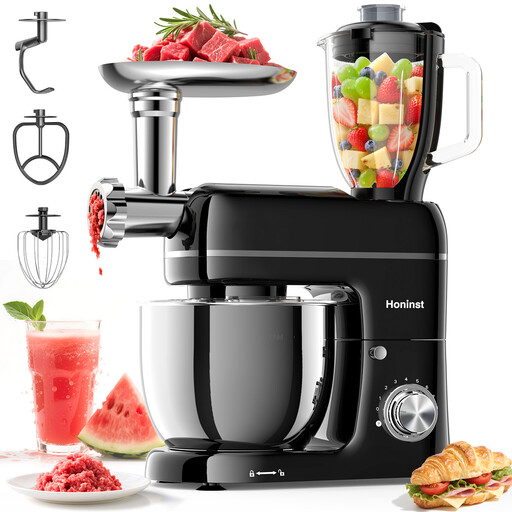
Why it suits this profile: According to the product description, this model combines a stand mixer, meat grinder and blender. It’s suitable for households keen to try different recipes without buying several appliances.
The product listing mentions tool-free assembly, a safety lock and eight speeds. Before buying, check the included parts and maximum quantities in the manual.
According to the product specifications: up to 1300W, a 6 QT stainless steel bowl, tilting head, meat grinder, blender jug and pulse function.

Why it suits this profile: Suitable for households that want to do more than knead, with one system for slicing, grating, blending, grinding and juicing citrus fruit too.
The accessories are clearly listed, including a vegetable slicer, blender, citrus juicer and meat grinder. Check the current packaging, as versions may vary.
According to the product information: a 3.9-litre stainless steel bowl, various slicing discs, a citrus juicer and capacity for larger batches of dough.
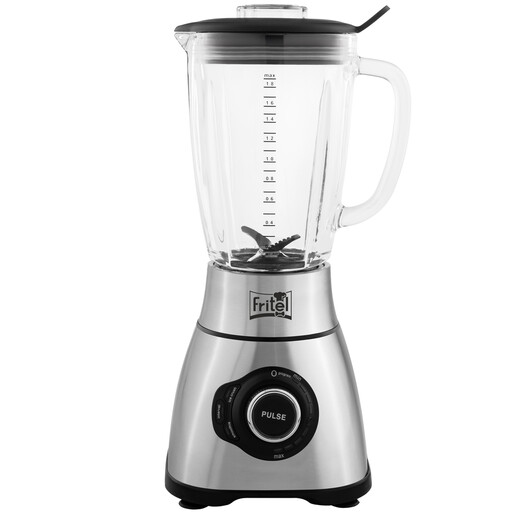
Why it suits this profile: This isn’t a full stand mixer, but a dedicated choice for smoothies, sauces, pesto, purées and drinks with ice.
If blending is your main priority, you won’t need to store unused dough hooks or a meat grinder. The jug, blade and programmes are all designed for blending.
According to the product listing: a 1.8-litre glass jug, 1800W, nine speeds, pulse function, ice function and dishwasher-safe parts.
We’ve put together a complete, up-to-date list of products that meet these strict selection criteria and the applicable European safety regulations.
A multifunctional food processor will keep serving you well if you use it within the stated limits. Bear these points in mind:
A food processor for home use doesn’t need to handle every task. Choose functions that suit your weekly menu. If you make bread dough every day, a stable dough mixer is important; for smoothies and sauces, a separate blender may be more practical. If you want fresh citrus juice, you could also consider a compact citrus juicer.
Yes. Models with a dough hook are designed for this, as long as you follow the maximum quantities and operating time in the manual. Start at a low speed and add the ingredients gradually. A generous bowl is useful for larger batches, but it doesn’t mean you can knead heavy dough without limits.
Power consumption depends on the wattage and how long you use the appliance. A 1300W appliance theoretically uses 1.3 kWh per hour at maximum power, but a food processor usually runs for shorter periods and not constantly at full power. So consider how often you’ll use it and which speed you’ll choose.
It depends on your kitchen space and habits. A combined system may save space and let you prepare a wider range of recipes. Separate appliances can be more practical if you blend often, process large quantities or want to clean accessories quickly. Compare capacity, assembly, storage and maintenance before you buy.
