
Vandaag of morgen in huis

Kwaliteit gegarandeerd

Welkomstaanbiedingen ontgrendelen: GRATIS bezorging | Tot 80% korting | Gratis 30 dagen JoyPlus-proefperiode
Download de app
A multifunctional food processor can chop, knead, mix, purée and blend in one appliance. That sounds practical, but a long list of functions does not automatically mean the appliance is easy to use every day. A small mixing bowl, accessories that are difficult to clean or a motor that needs to cool down frequently can mean that, after a few weeks, the appliance spends most of its time in the cupboard.
For home chefs, families, keen bakers and busy households, choosing the right appliance is therefore not just about the number of accessories. First, consider which functions you will genuinely use, how much food you want to prepare at once and how easy the appliance is to clean.
A food processor with a blender, food processor bowl and chopper can be versatile, but accessories often have different capacities. A 5.5-litre mixing bowl is suitable for larger quantities of dough, while a blender jug or electric chopper holds considerably less.
So pay attention to the capacity of each accessory, not just the largest capacity mentioned in the product title. A bowl holding 500 to 900 ml can be useful for one person. Families will usually benefit more from a food processor of around 1.5 to 2 litres or a stand mixer with a generously sized mixing bowl.
A higher wattage may indicate greater motor power, but it does not tell you exactly how an appliance will cope with heavy dough, raw vegetables or meat. Also check the recommended operating time, speed settings and instructions regarding maximum quantities.
For example, a dough mixer for bread dough needs a sturdy bowl, a suitable dough hook and good stability. For smoothies and soup, a good smoothie blender or hand blender is often more important than a large number of accessories.
Blades, grating discs, beaters and blender jugs come into direct contact with food. Check whether the components can be removed and whether the product information states that they are dishwasher-safe. The motor base must not be immersed in water.
When preparing baby food or raw meat, cleaning the appliance immediately is particularly important. Also check for small seams, cavities or hard-to-reach areas around the blades. Always handle sharp components with care.
Compare the stated wattage with the types of food you prepare. An appliance rated at 350 to 600 watts may be suitable for chopping, puréeing and light preparations. For heavy dough or longer periods of use, a sturdier construction and a suitable dough hook are at least as important.
A stand mixer with multiple speed settings gives you greater control when mixing slowly, whisking and kneading. A pulse function is useful when you want to chop ingredients briefly or avoid overmixing. Always follow the instructions regarding rest periods; several models in this range are designed for short operating intervals followed by a cooling period.
Choose the capacity based on the size of your household:
A larger bowl does take up more space. Measure the available space on your worktop and the height beneath your kitchen cupboards beforehand.
A stainless-steel bowl is generally practical for kneading and mixing. Glass can be useful when you want to see the contents, but it is heavier and needs to be handled with care. Also check that the accessories lock securely into place and that the appliance only starts when the bowl or lid has been fitted correctly.
Look for a CE marking, clear safety instructions and information about the manufacturer or representative responsible within the European Union. A warranty or statutory conformity protection is no reason to overlook maintenance and operating instructions.

Why it suits this profile: According to the product information, this food appliance combines chopping, blending, grating, slicing and grinding in one compact set. That is practical if you want to try out different functions without buying several appliances.
The stated 1.8-litre capacity is clearer than a general claim about a large capacity. The product information also specifies short operating intervals and removable components.
750 watts, 1.8-litre capacity and functions for chopping, blending, grating, slicing and grinding.
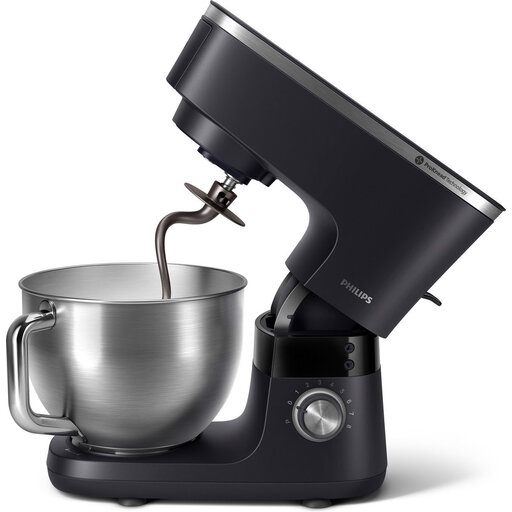
Why it suits this profile: This machine has a 5.5-litre bowl, eight speed settings, a blender attachment and a meat grinder. It is a good fit for households that bake regularly and combine several preparation methods.
The accessories and capacities are specified clearly. The timer with automatic shut-off and splash guard can also make hands-free preparation easier.
1000 watts, 5.5-litre bowl, 1.5-litre glass blender jug and meat grinder.
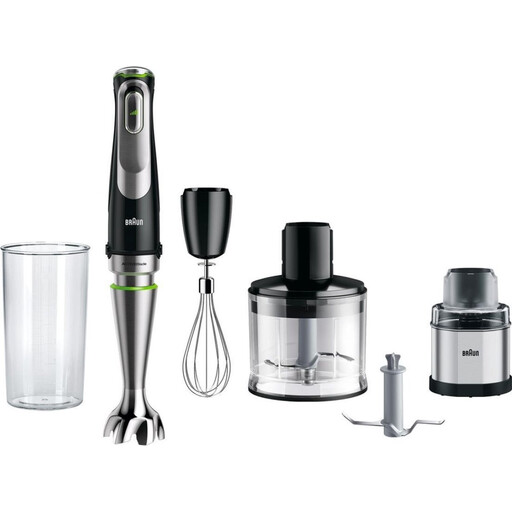
Why it suits this profile: This hand blender is designed for blending, puréeing, chopping, whisking and grinding. The set includes a whisk, chopper, measuring beaker and a mill for coffee and herbs.
The functions are matched to separate accessories. This means you do not have to rely on one universal blade for every type of ingredient.
1200 watts, 600 ml measuring beaker and 500-gram capacity for the mill; some components are dishwasher-safe.

Why it suits this profile: This hand blender includes a whisk, chopper, measuring beaker and blending foot. You can use it to prepare soup, purée, smoothies and small portions of baby food without placing a large appliance on your worktop.
The two speed settings and separate accessories make it easier to use than a large machine with numerous unused components.
600 watts, 500 ml chopper, 800 ml beaker and removable components according to the product description.
We have put together a complete, up-to-date list of products that fully meet these strict selection criteria and the applicable European safety regulations.
For small portions, a compact blender, hand blender or electric chopper is often practical. Look for a small mixing beaker, easy-to-clean components and a clearly stated operating time. Allow prepared food to cool to a suitable temperature before processing it, and follow food safety advice. No appliance automatically makes a recipe suitable for babies; the ingredients and preparation method remain important.
Its lifespan depends on use, maintenance and workload. Do not overfill the bowl, use hard or unauthorised materials, or ignore the motor’s recommended rest periods. Clean blades and accessories immediately after use, and regularly check the cable, locking mechanisms and seals. Statutory protection in the EU generally lasts for at least two years, but this does not replace careful use.
Consumption depends on the wattage and operating time. A 1000-watt appliance theoretically uses 1 kWh after one hour of continuous operation, but a food processor usually runs for only a few minutes per preparation. A lower wattage may therefore be more economical for light tasks, while a more powerful model can be useful for heavy dough. Consider how often you use the appliance rather than looking only at the wattage.
