
Vandaag of morgen in huis

Kwaliteit gegarandeerd

Welkomstaanbiedingen ontgrendelen: GRATIS bezorging | Tot 80% korting | Gratis 30 dagen JoyPlus-proefperiode
Download de app
A multifunctional rice cooker might seem like a simple purchase—until you look at the specifications. Features like ‘low-carb’ settings, steaming, smart controls, and various inner pot materials make the choice complex. The wrong model can end up as an unused appliance in a kitchen cupboard. This article provides a practical overview of the key selection criteria and presents several models based on their specifications, so you can make an informed decision.
Before you start comparing models, it's helpful to map out your own needs. The following points will guide you.
The capacity of a rice cooker is often expressed in litres. A 1-2 litre model is typically sufficient for a household of 1 to 3 people. Larger families or those who do meal prep will benefit more from a capacity of 3 to 5 litres. Also, pay attention to the external dimensions; the appliance needs to fit on your countertop or in your kitchen cabinet.
The inner pot is a crucial component. The choice is often between stainless steel and a pot with a non-stick coating.
The term ‘multifunctional’ refers to the extra programmes beyond cooking standard white rice.
A higher power rating (expressed in Watts) generally means a faster heat-up time. Features like an automatic keep-warm function and a clear LED display enhance usability. Also, check if the inner pot and accessories are dishwasher-safe if you're looking for maximum cleaning convenience.
Below is a selection of three multifunctional rice cookers, each with distinctive features. The selection is based on the product specifications as provided by the manufacturer.
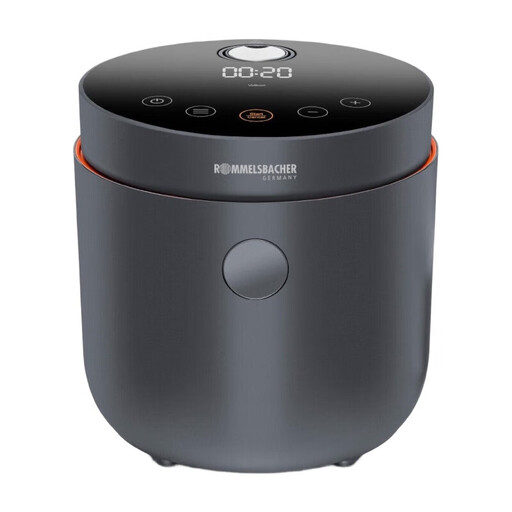
Why this product: This model from Rommelsbacher focuses on versatility in a compact design. The 'low-carb' function, which the manufacturer claims can reduce carbohydrate content by up to a third, is a key feature. The appliance uses a special stainless steel insert for this, which also doubles as a steam basket.
Pros:
Who is this for: This model is a great option for health-conscious individuals or smaller households (1-3 people) looking for a compact appliance with a carb-reducing function and steaming capabilities.
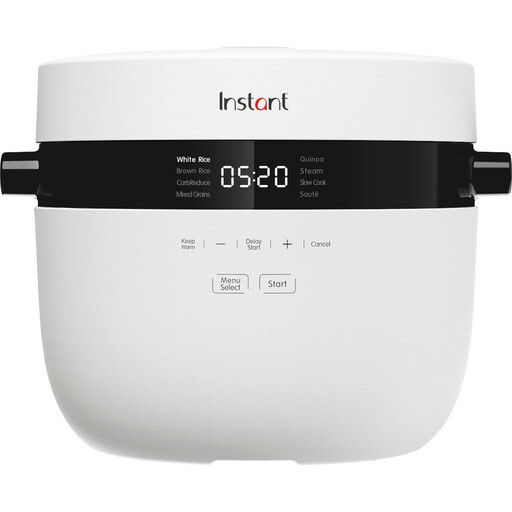
Why this product: The Instant Pot is known for its large capacity and extensive functionality. With a 5-litre volume, this appliance is suitable for larger families. The 'Carb Reduce Technology' is a central selling point; according to Instant Pot, it can reduce carbs and sugars by up to 40%.
Pros:
Who is this for: Ideal for large families, people who often cook for groups, or for meal preppers. The combination of a large capacity, a low-carb function, and dishwasher-safe parts makes it a practical choice for those who prioritise convenience and volume.
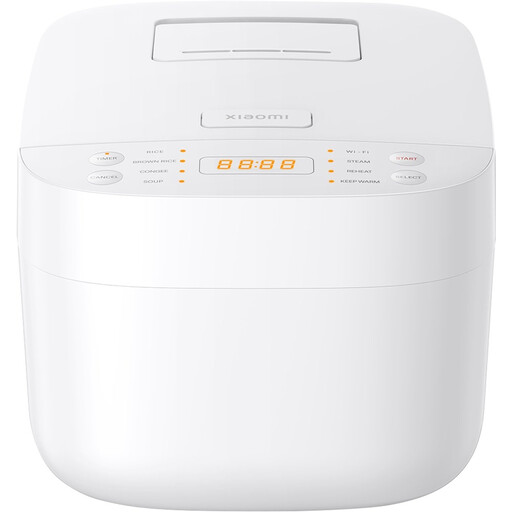
Why this product: This smart rice cooker from Xiaomi integrates technology for added convenience. The appliance can be controlled remotely via the Mi Home app. For example, you can prepare the ingredients in the morning and start the rice cooker from work, so your meal is ready when you get home.
Pros:
Who is this for: This model is particularly interesting for tech enthusiasts and busy professionals who appreciate the added value of smart controls and remote scheduling. The 1-litre rice capacity (3 litres total) is suitable for smaller households.
The models above provide a good overview of the possibilities, but the market offers more variety. Perhaps you're looking for a different capacity, a specific budget, or a model with a ceramic inner pot. For a broader overview of the available models, you can browse our full range.
View our full range of rice cookers.
1. How does a low-carb rice cooker work exactly? A low-carb rice cooker cooks the rice in a perforated inner basket placed inside the main inner pot. During cooking, the water, which is rich in released starch (amylopectin), is collected in the outer pot. This effectively steams the rice rather than boiling it in the starchy water, which, according to manufacturers, lowers the final carbohydrate content.
2. Can I make dishes other than rice in a multifunctional rice cooker? Yes, that is the main advantage of a multifunctional model. Depending on the programmes, you can also prepare quinoa, lentils, soups, stews (chili), oatmeal, or porridge. Models with a steam function are also suitable for steaming vegetables, fish, or dumplings.
3. Is a stainless steel inner pot better than one with a non-stick coating? Neither is objectively 'better'; it depends on your priorities. A stainless steel inner pot is very durable, scratch-resistant, and contains no chemical coatings. It may require a bit more care to prevent sticking. A pot with a non-stick coating offers great convenience for serving and cleaning, but the coating can wear out over time and must be handled with care (no metal utensils).
