
Vandaag of morgen in huis

Kwaliteit gegarandeerd

Welkomstaanbiedingen ontgrendelen: GRATIS bezorging | Tot 80% korting | Gratis 30 dagen JoyPlus-proefperiode
Download de app
A multifunctional oven can bake, grill, reheat, air-fry and sometimes even steam or dry food. However, a long list of functions does not guarantee that an appliance will suit your household. If you only look at the number of programmes or an attractive offer, you could end up with too little space, awkward controls or an appliance that does not fit where you want to place it.
Pay particular attention to the capacity, dimensions, connected load and functions you will actually use. Below, you can find out which pitfalls are common and which models are suitable for different households.
A 30-litre oven may be suitable for pizza, toast and smaller oven dishes, but that does not automatically mean it can accommodate a large roasting tin. In addition to the capacity, check the internal dimensions, baking tray size and available shelf positions. With a freestanding oven, you must also leave space around the appliance for ventilation.
A vertical air-fryer oven can take up relatively little worktop space, while a wider model needs more room but can accommodate larger dishes.
Functions such as grilling, fan cooking, rotisserie and air-frying sound versatile. In practice, however, usability depends on the accessories, temperature control and the functions that can be used at the same time. An oven with a rotisserie, for example, is appealing if you regularly prepare chicken or roasting joints, but less relevant if you mainly warm up bread rolls.
Also note the difference between a combination microwave and an electric oven. A combination microwave often heats up more quickly and combines microwave, grill and fan cooking. An electric oven generally offers more oven space, but takes up more room and may need longer to preheat.
A manufacturer may state that an air-fryer oven uses up to a certain percentage less energy than a traditional oven, for example. According to the relevant brand’s own research, such a comparison depends on the type of cooking, portion size, temperature and usage time. Treat such a claim as an indication rather than a guaranteed saving.
When comparing an energy-efficient oven, look at the energy class, power consumption, preheating time and the amount of food you prepare at once. A small appliance is not automatically more economical if you need to cook several batches.
Choose the capacity based on your usual portions:
An oven with a 30-litre capacity is therefore not simply a smaller version of a 60-litre oven. Also check the weight and where you intend to place the appliance. A metal worktop or heat-resistant surface is usually essential.
An oven with a fan function distributes heat using a fan. This can be useful when baking on several levels, provided the instruction manual allows it. An oven with a grill is suitable for browning and finishing dishes. Check whether the grill can be used separately or together with other heating settings.
An oven with a rotisserie requires sufficient internal space and a suitable spit. So do not just look for the word ‘rotisserie’; also check which accessories are included. With an air-fryer oven, multiple racks are useful if you want to prepare different types of food at the same time.
Check the stated power rating and use a suitable earthed socket. High-powered appliances cannot always be used safely on the same circuit as other high-load kitchen appliances. A gas cooker with an oven must be connected by a qualified installer. Ensure there is adequate ventilation and check that the model is suitable for the type of gas available.
A double oven door, child lock, timer and automatic shut-off can make the appliance more convenient to use. They are not a substitute for supervision: surfaces and accessories become hot during use.
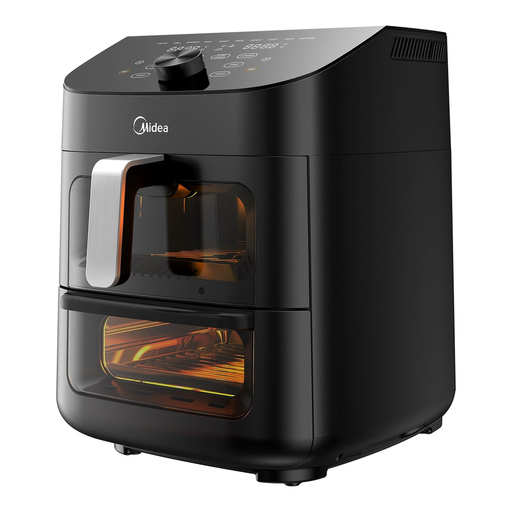
Why it suits this profile: This compact model combines a 6.4-litre air fryer with a 4.4-litre oven compartment. Its vertical design can be useful in a small Dutch kitchen.
The two separate cooking zones make it clear how much space you have for each preparation. However, check beforehand that the capacity is suitable for your portions.
10 automatic programmes, 40–200 °C and a stated power rating of 1850 W. According to the product description, the cooking zones can be adjusted independently.
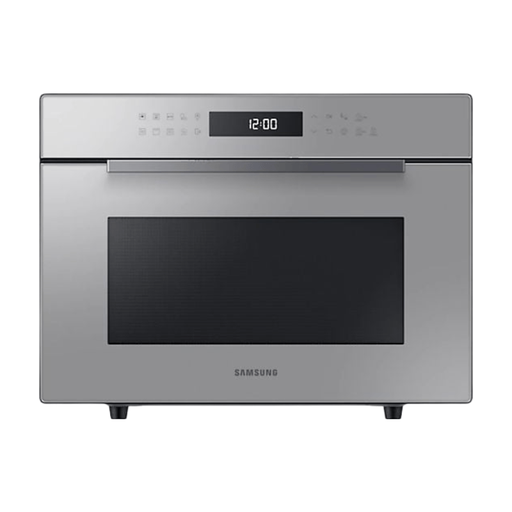
Why it suits this profile: A household that wants to reheat food quickly while also baking and grilling gets several cooking options in one appliance, with a capacity of 35 litres.
The specifications list the microwave, grill and fan functions separately. Before buying, check which combinations are available at the same time.
35-litre capacity, 37 programmes, 900 W microwave power and a grill power rating of 2250 W according to the product information.
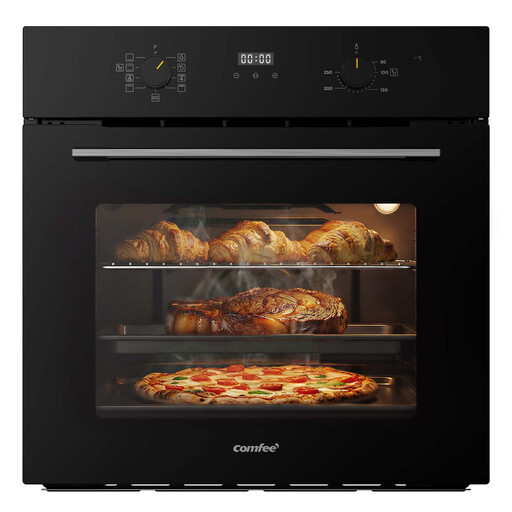
Why it suits this profile: This built-in oven is designed for fitted kitchens and intensive use, with larger oven dishes, multiple levels and a range of cooking methods.
The 70-litre capacity gives you more flexibility than a mini oven. Measure the housing unit carefully and check the required electrical connection.
10 functions, fan-assisted circulation, grill and pizza functions, LED display and AquaClean cleaning according to the product description. The listing states energy label A.
We have put together a complete, up-to-date list of products that fully meet these strict selection criteria and the applicable European safety regulations.
According to some brands’ own research, an air-fryer oven may use less energy than a traditional oven, particularly for small portions and short cooking times. Actual consumption depends on the power rating, temperature, cooking time and amount of food. Always compare the product specifications with your own usage requirements.
For one or two people, 20 to 30 litres may be sufficient. For a family, models of around 35 to 65 litres are often more practical, depending on the size of the oven dishes. If you regularly prepare large meals at the same time, you may want to consider an oven with a capacity of 60 litres or more.
Only if the model is designed for this and the installation manual permits it. A freestanding oven needs space for ventilation. A built-in oven requires a suitable housing unit, the correct electrical connection and sufficient air circulation. Never install a combination microwave or electric oven without checking the specified safety clearances.
