
Vandaag of morgen in huis

Kwaliteit gegarandeerd

Welkomstaanbiedingen ontgrendelen: GRATIS bezorging | Tot 80% korting | Gratis 30 dagen JoyPlus-proefperiode
Download de app
A separate torch, camping light or solar lantern often seems like enough. But it’s only when you’re outdoors, by the roadside or dealing with a power cut that you find out whether a product really suits the situation. A short battery life, fragile casing or unclear charging status can quickly make a purchase less useful.
Multifunctional outdoor lighting also brings together several types of product, from portable LED lights and head torches to rechargeable torches with power banks. A car jump starter with built-in lighting can also fit into this category. So don’t focus only on the number of features. Pay particular attention to the specifications you actually need.
The stated number of lumens gives you an idea of the maximum light output, but not necessarily the battery life, beam coverage or ease of use. A narrow beam, for example, works well for a path or engine bay, while a wide beam is more comfortable in a tent.
So check:
An IP rating is more useful than a general marketing term. IP44, for example, means protection against splashes, but not immersion or powerful jets of water. According to its product specifications, a product with IP54 protection is protected against dust and splashes, but that doesn’t mean it’s fully protected against rain.
So use an outdoor LED light or solar lantern in line with its stated IP rating. Don’t place a splash-resistant lamp somewhere rainwater can collect.
A lamp with a power bank, compressor, SOS mode and jump-start function may seem appealing. But extra features take up space and can make the controls more complicated. In an emergency, a clear battery indicator is more important than a feature you rarely use.
Check the maintenance requirements too. A rechargeable torch needs to be charged regularly. According to the product information for various jump starters, storing one for a long time with a flat battery can affect its jump-start function. So keep emergency equipment charged and check it periodically.
Don’t look at mAh alone; consider how you’ll use the product too. A camping light with a larger battery may run for longer, while a bright head torch will run down more quickly on its highest setting. A USB-C connection is handy if you use the same cable for your phone, power bank and lamp.
A solar lantern is suitable for ambient lighting on a balcony, patio or campsite, but relies on sufficient daylight. A model with USB charging gives you more certainty in cloudy weather.
A lower light setting is often enough for reading in a tent. For changing a tyre or checking under the bonnet, a bright, wide light source is more practical. A head torch keeps both hands free, while a portable LED light usually spreads more light around the area.
Look for:
A compact lamp is easier to carry, but a larger casing may have room for a bigger battery or extra features. Check the weight if you’ll be carrying the lamp while walking or travelling.
For motorists, the connections and capacity are important too. A portable jump starter needs to be suitable for your vehicle type. The stated jump-start capacity, supported engine size and temperature limits are things to check, not a guarantee that it will start every flat or damaged battery.
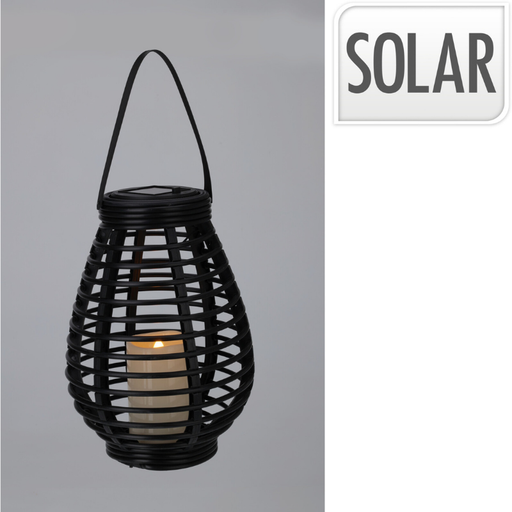
Why it suits this user: This solar lantern provides cordless lighting for your garden, patio or campsite. Its built-in solar cell charges the included 1.2V AA Ni-MH battery during the day.
The product specifications state the battery type, solar function and on/off switch. That gives you a clear idea of what to expect, rather than relying on the vague promise of being “sustainable”.
Solar cell, warm yellow LED light and dimensions of 18 x 18 x 26 cm. Suitable for a permanent outdoor position.
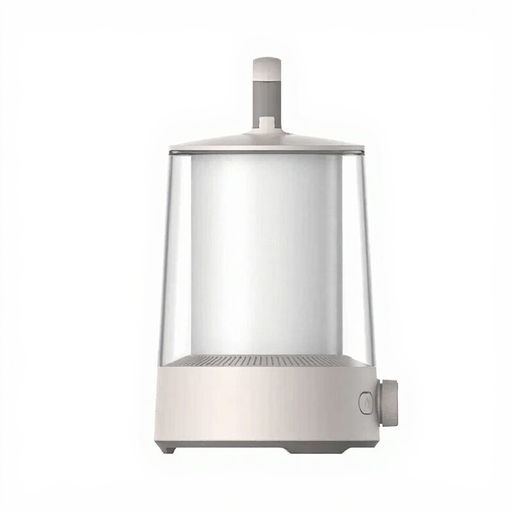
Why it suits this user: A combination of ambient lighting, a detachable second lamp and Bluetooth control makes this a good fit for campers who want one system to cover several lighting needs.
The product description gives a range of 6 to 230 lumens, a separate 120-lumen lamp and IP54 protection. This clearly sets out the light levels and splash protection.
4800mAh battery for the main lamp, 800mAh for the second lamp, RGB and warm/cool light modes, and Type-C charging, according to the product information.
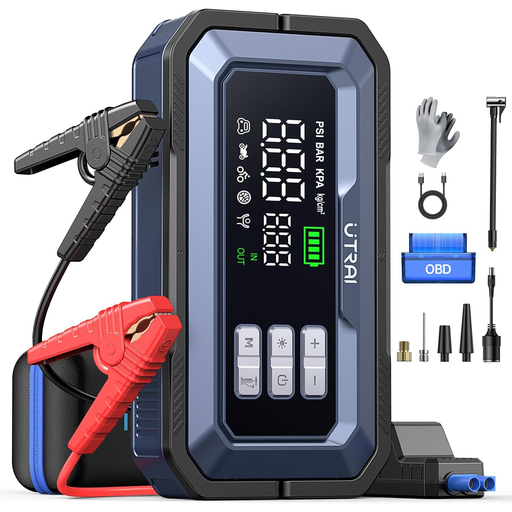
Why it suits this user: For motorists, road-trippers and campers who want to carry a compressor, power bank and 12V output as well as lighting.
The specifications state 150 PSI, automatic shut-off, several pressure units and a display. This makes the compressor function easy to assess, rather than vaguely described.
7000A peak current according to the product description, 2000 lumens of work light, 160W DC output, USB-C PD 18W and four light modes.
We’ve put together a complete, up-to-date list of products that meet these strict selection criteria and current European safety regulations.
It depends on where and how you’ll use it. A camping light with wide beam coverage works well in a tent or under an awning. A head torch is more practical when walking or cooking, as it keeps both hands free. For ambient light on a table, a dimmable outdoor light or solar lantern may be enough.
Battery life varies depending on the battery, light setting and temperature. The highest setting usually uses more power than a dimmed setting. So check the stated battery life for each mode and charge the lamp regularly, even if it hasn’t been used for a while.
Some models have USB outputs for smartphones, tablets or other devices. Check the capacity, connection type and output power. A car jump starter is an emergency aid, not a replacement for a regular power bank if you want to charge several devices every day.
