
Vandaag of morgen in huis

Kwaliteit gegarandeerd

Welkomstaanbiedingen ontgrendelen: GRATIS bezorging | Tot 80% korting | Gratis 30 dagen JoyPlus-proefperiode
Download de app
A multifunctional kitchen slicer can be useful for slicing, grating, chopping and peeling ingredients. However, not every model is suitable for every kitchen. A compact vegetable slicer works differently from an electric chopper, food processor or meat slicer. If you only consider the number of accessories or the power, you could end up buying a product that gets little use or is difficult to clean.
This buying guide helps home chefs, families and keen cooks compare functions, materials, capacity and ease of use objectively.
A model with lots of blades, graters and attachments may seem versatile. In practice, some accessories are mainly suitable for specific ingredients. A vegetable slicer, for example, is designed to produce even slices, while a kitchen chopper divides onions, herbs or nuts into smaller pieces.
Think in advance about what you want to prepare most often:
A large bowl does not automatically mean you will work faster. For a single-person household, a 1.5-litre bowl may take up more space than necessary. Families, on the other hand, can benefit from a larger collection bowl, so ingredients do not need to be emptied halfway through preparation.
As well as the capacity, pay attention to the dimensions. A vegetable slicer with a collection bowl needs to fit beneath a kitchen cupboard and be easy to store in a drawer or cupboard.
Blades with small openings can trap food residue. Check whether the components can be removed and which cleaning method the manufacturer recommends. “Easy to clean” is not a universal guarantee; look for specific information such as removable parts, materials and dishwasher compatibility.
Sharp blades also require a stable holder, a hand guard or a locking system. Never use a slicing aid for ingredients for which the product is not intended.
Stainless steel is a practical choice for blades and graters. The surface is generally easy to rinse and suitable for regular contact with food. Also check the material used for the bowl, collection container and blade holder. Glass can feel sturdy and hygienic, while plastic is lighter and often easier to move.
With manual models, stability is more important than a long list of functions. A non-slip base, sturdy press plate and hand guard make slicing easier to control. A model with multiple blades should also be safe to store.
With an electric chopper, the wattage does not tell you everything about processing performance. Also consider the number of speeds, the blade design and the recommended operating time. A 500 W motor, for example, is a clear product specification, but the result also depends on the quantity and hardness of the ingredients.
A pulse setting gives you more control when chopping onions, herbs and nuts. Some food processors recommend short pulses and a cooling period between heavy loads. Always follow the instructions, particularly when processing hard ingredients, raw meat or large pieces of food.
Compare:
For everyday slicing of cucumber, onion, carrot and cheese, a vegetable slicer with a collection bowl may be sufficient. For sauces, smoothies and chopped ingredients, a multifunctional kitchen chopper with a motor is generally more versatile.
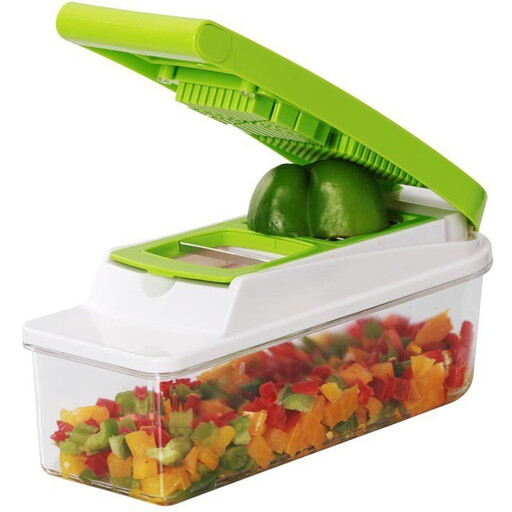
Why it suits this profile: This manual model offers five slicing techniques, a grater and a collection container for everyday ingredients such as cucumber, onion, carrot and cheese.
The functions are clearly described, and the 0.3-litre collection bowl helps keep sliced ingredients together.
Ten parts, stainless-steel blades and a compact size of 31.2 x 11.5 x 14 cm.
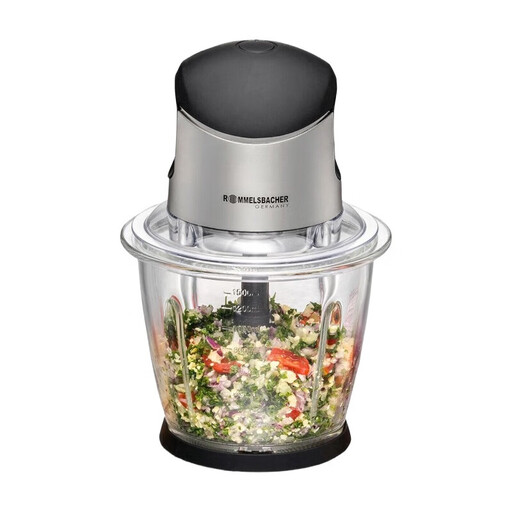
Why it suits this profile: This electric chopper is aimed at people who regularly process onions, herbs, nuts or meat and prefer to use a glass bowl.
The product specifications mention a metal drive, a four-blade stainless-steel knife and an integrated safety system.
500 W of power, a 1.5-litre glass bowl and, according to the product information, dishwasher-safe removable parts.
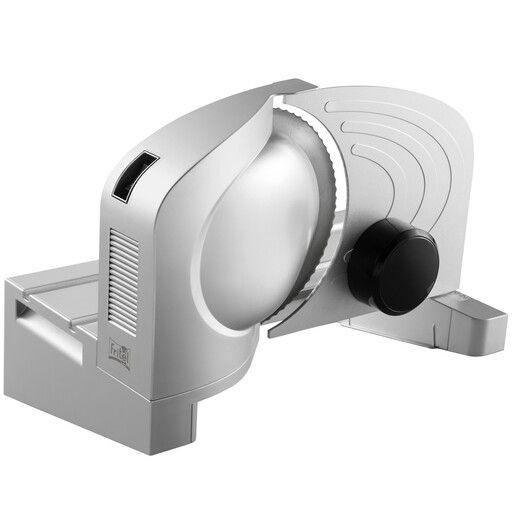
Why it suits this profile: This model is designed to produce even slices of bread, cheese, meat and vegetables, with an adjustable slicing thickness from 0 to 20 mm.
Its purpose is specific: a 17 cm serrated stainless-steel blade and a food holder support controlled slicing.
160 W motor, 15° angled carriage and a choice between momentary and continuous operation.

Why it suits this profile: This food processor combines chopping, blending, grinding, grating and slicing for households that want to carry out several preparation tasks with one appliance.
The functions and usage limits are clearly described, including short pulses, pieces of around 2 cm and a maximum blending cycle of 60 seconds.
750 W of power, 1.8-litre capacity, stainless-steel blades and removable parts for maintenance.
We have compiled a complete, up-to-date list of products that fully meet these strict selection criteria and the applicable European safety regulations.
A multifunctional kitchen slicer remains useful when you use it in accordance with its specifications. Cut large ingredients into smaller pieces first, remove stones, bones and tough skins where the instructions require this, and do not fill a bowl beyond the recommended capacity.
Wash the blades immediately after use and dry them thoroughly before storing them. Only handle cutting blades by the designated handle or plastic hub. With electrical appliances, always unplug them before removing a blade or cleaning the appliance.
Also check the warranty terms when buying. For many consumer products in the EU, the statutory legal guarantee of conformity is at least two years; additional terms may vary by seller or brand.
A multifunctional kitchen slicer often refers to a manual or compact tool for slicing, grating and peeling. A food processor is generally electric and can also chop, blend or grind. Choose based on the tasks you actually carry out and the storage space available.
Energy consumption depends on the power and operating time. A 500 W chopper may be suitable for short preparation tasks, while a food processor combines more functions but may also be used for longer or more intensive periods. Compare power, portion size and frequency of use in particular.
Lifespan varies according to the materials, construction and maintenance. Stainless-steel blades, a sturdy holder and correct use can help ensure long-term performance. Before buying, check whether spare parts, cleaning instructions and warranty information are available.
