
Vandaag of morgen in huis

Kwaliteit gegarandeerd

Welkomstaanbiedingen ontgrendelen: GRATIS bezorging | Tot 80% korting | Gratis 30 dagen JoyPlus-proefperiode
Download de app
A multifunctional kitchen appliance can knead, mix, chop, grate and blend. That sounds useful, but not every appliance is designed for the same jobs. A compact food processor, for example, is ideal for vegetables and sauces, while a stand mixer with a mixing bowl is better suited to bread dough and cake batter.
If you only look at the wattage or the number of accessories, you could easily end up choosing the wrong appliance. Before you buy a multifunctional kitchen appliance, watch out for these common pitfalls.
A 1000-watt kitchen appliance sounds powerful, but wattage doesn’t tell you everything about how it will perform day to day. The drive mechanism, bowl shape, blades, speed settings and maximum operating time all play a part too. A motor with a high stated power rating doesn’t guarantee that the appliance can handle large quantities of heavy dough for long periods.
So, check the following as well:
A kitchen appliance with accessories may seem appealing, but having lots of parts is only useful if you’ll actually use them. A meat grinder, blender, citrus press and grating discs also take up storage space.
Before you buy, make a short list of the jobs you regularly need it for:
If you mainly bake, you’ll get more use out of a sturdy mixing bowl, whisk and dough hook than an extensive blender attachment. If you prepare vegetables every day, look for a food processor with slicing and grating discs instead.
You can’t fill a 5.5-litre mixing bowl right to the brim. You’ll need to leave room for dough, whipped cream and ingredients that increase in volume as they’re mixed. So, check not only the bowl capacity but also the maximum quantity stated by the manufacturer.
A bowl of around 5 litres is practical for a family or someone who bakes regularly at home. For one or two people, a food processor with a 1.3 to 2.1-litre bowl may be enough and easier to store.
For bread dough, a dough hook matters more than simply choosing a high wattage. A planetary mixing action helps incorporate ingredients around the sides of the bowl. Also look for a splash guard, non-slip feet and a low speed for mixing flour and liquid.
According to the product information, the Philips Series 7000 HR7962/21 has a 1000-watt motor, a 5.5-litre bowl and eight speed settings. Philips says its ProKnead technology can knead dough in around three minutes. This is a claim from the brand’s product information, not a guaranteed result for every recipe.
A kitchen appliance with a blender is handy for smoothies, soups and sauces. Check the blender jug’s capacity and material. A glass jug is generally heavier, but can be useful for hot preparations if the instructions say it’s suitable. Never process hot liquids without first checking the safety instructions.
Also check how the blender attaches to the appliance. An attachment that’s difficult to fit is likely to get less use in practice.
For a kitchen appliance with a meat grinder, the blade, mincing plates and cleaning process are important. Check whether the parts are made from stainless steel and whether the instructions specify permitted quantities and operating times. Clean any parts that come into contact with raw meat immediately after use, and follow the manufacturer’s instructions.
A food processor is usually quick and efficient for chopping, slicing, grating and puréeing. A stand mixer with a mixing bowl makes more sense for cake batter, whipped cream and dough. Some models combine both functions, but they often take up more space.
So, measure your worktop and cupboard space. Check the dimensions of the base, not just the bowl capacity. Also consider the weight: a heavier appliance may be more stable, but it’s less convenient to store.
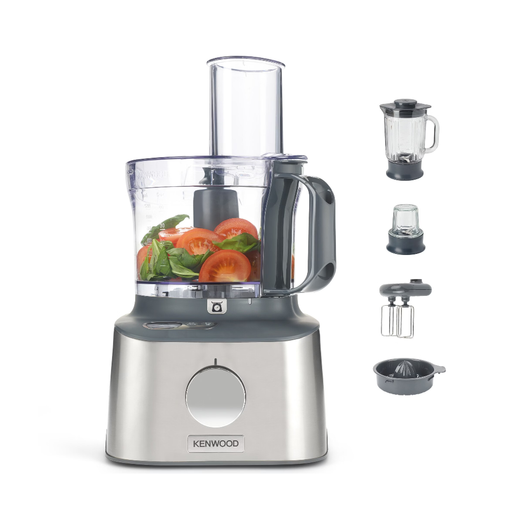
Why it suits this profile: This compact model combines everyday food processor functions with a blender and built-in scales. The 2.1-litre bowl is a good fit for smaller households and everyday portions.
The functions are clearly defined: 800 watts, two speeds plus a pulse setting, a 2.1-litre bowl and a 1.2-litre glass blender. That means you won’t automatically pay for extras you don’t use.
Built-in scales, glass blender, multi-mill and dishwasher-safe removable parts, according to the product information.
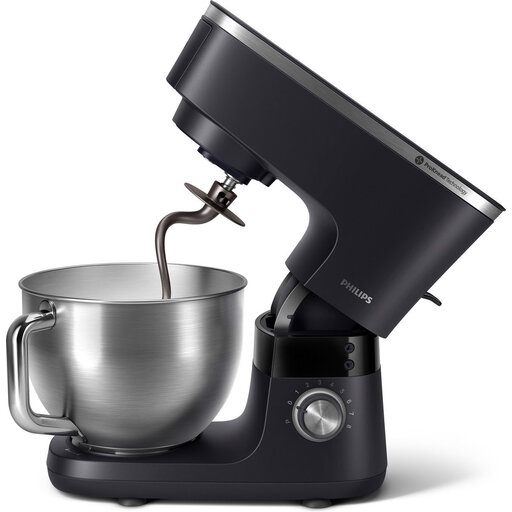
Why it suits this profile: The generous mixing bowl, blender and meat grinder make it a good choice for home bakers and families who want to prepare a range of dishes with one base appliance.
The key specifications are easy to check: a 5.5-litre bowl, 1000 watts, eight speeds and a splash guard. Be sure to check the maximum quantities in the instruction manual.
1.5-litre glass blender, meat grinder, LED timer with automatic shut-off and automatic bowl lighting, according to the product description.
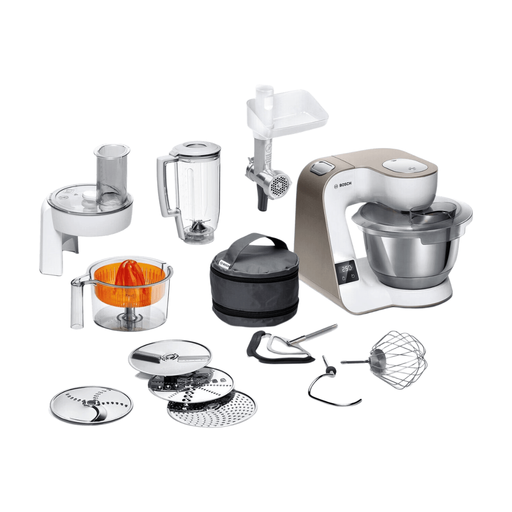
Why it suits this profile: This model is aimed at people who want a baking mixer that can also weigh, mix, grate, blend and grind.
The product information specifies a maximum dough quantity of 2.7 kg and seven speeds. Before buying, check that all the attachments you want are included with the version you’ve chosen.
1000 watts, integrated scales, timer, planetary mixing action, 1.25-litre blender jug and included accessories such as a meat grinder, according to the product details.
We’ve put together a full, up-to-date list of products that meet these strict selection criteria and the applicable European safety regulations.
Sharp blades, grating discs and meat grinder parts need to be handled with care. Always unplug the appliance before changing or cleaning attachments. Don’t immerse the motor unit in water, and check that all parts are securely locked in place before switching it on.
Electricity costs depend on the power rating and how long you use the appliance. A 1000-watt appliance running for ten minutes theoretically uses around 0.167 kWh. In practice, a kitchen appliance often runs for less time and not continuously at full power. So, focus on preparation time, rest periods and cleaning time. Dishwasher-safe parts can make everyday use easier, but always check the instruction manual.
Look for a sturdy dough hook, a generous mixing bowl, stable feet and a motor for which the manufacturer specifies a maximum dough quantity. A model with a blender or meat grinder is only worthwhile if you’ll use those functions too.
Its lifespan depends on how hard it’s used, how well it’s maintained and stored, and whether you follow the recommended operating times. Don’t overfill the bowl, let the motor cool down after heavy-duty use, and clean blades and attachments straight after use. In the European Union, consumers are entitled to a minimum two-year legal guarantee; additional rights may apply under national law.
No. A food processor is usually designed for chopping, slicing, grating and puréeing. A multifunctional kitchen appliance may also work as a stand mixer for cake batter and dough. Before buying, check which functions and accessories are actually included with each model.
