
Vandaag of morgen in huis

Kwaliteit gegarandeerd

Welkomstaanbiedingen ontgrendelen: GRATIS bezorging | Tot 80% korting | Gratis 30 dagen JoyPlus-proefperiode
Download de app
A multifunctional kitchen appliance can mix, knead, chop, blend and sometimes juice. That sounds handy, but not every appliance is designed for the same tasks. A food processor with a blender, for example, isn’t automatically suitable for heavy bread dough. And a powerful smoothie blender won’t necessarily replace a food processor or stand mixer.
Most costly mistakes come down to three marketing traps:
Power is usually measured in watts. A 450W kitchen machine may be suitable for everyday mixing and kneading, while a 1200W or 1300W blender may be better suited to hard ingredients and ice. So only compare wattages within the same type of appliance.
More important is how long you can use the appliance without a break. The AUCMA stand mixer, for example, says you shouldn’t use it continuously for more than six minutes without a pause. Compact blenders often have an even shorter recommended cycle. So if you regularly make heavy bread dough, a clearly specified dough hook, a stable drive system and a suitable running time matter more than a high wattage alone.
A 6-litre bowl sounds roomy, but check the maximum amount of dough or batter it can hold too. For a family or keen home baker, a stainless steel bowl can be practical: it’s sturdy, less likely to retain odours and generally easy to clean.
For smoothies and sauces, jug capacity is key. A blender with a 1.5 to 2.1-litre jug is better suited to making several portions than a personal cup. Check the maximum fill line too. Don’t fill a jug right to the brim, especially when making foamy or hot mixtures.
Start by making a list of the tasks you actually do:
Then check whether the parts are dishwasher-safe. Never immerse the motor base in water. Remove and clean sharp blades with care. A lid lock, overheat protection and non-slip feet are useful safety features for everyday use.
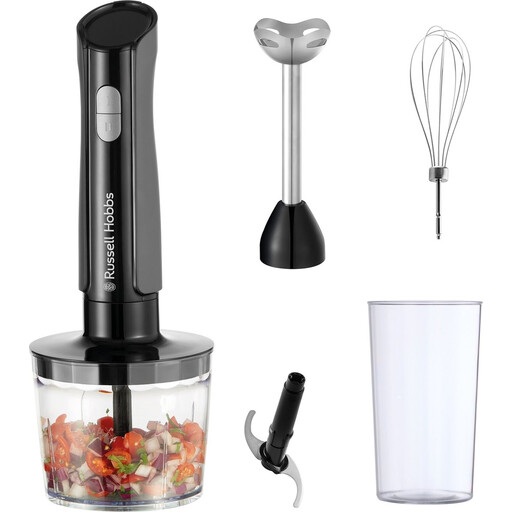
Why it suits this profile: A hand blender takes up little space and combines blending, chopping and whisking for smaller portions.
Each function comes with a specific accessory: a 600 ml beaker, a 500 ml chopping bowl and whisking attachments.
500W power, two speeds and removable, dishwasher-safe parts.
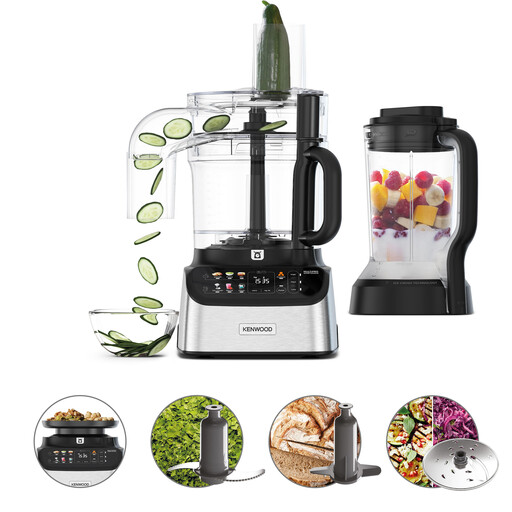
Why it suits this profile: Ideal for households looking for one system for weighing, chopping, grating, kneading and blending.
The included accessories spell out exactly what it can do: a 3-litre bowl, a 1.5-litre blender, a dough hook, a slicing and grating disc, and built-in scales.
1000W motor, six pre-set programmes and digital weighing function.

Why it suits this profile: A practical choice for home cooks and keen bakers who often make batter, bread, pizza or pasta.
The 6-litre stainless steel bowl, dough hook, whisk and flat beater make it clear that this is primarily a stand mixer for baking, rather than an all-in-one appliance without a clear focus.
450W motor, six speeds with pulse function, tilting head and non-slip suction feet.

Why it suits this profile: Designed for smoothies, frozen drinks and larger portions, without separate food processor attachments.
The product information specifies a 2.1-litre jug, a 700 ml cup, 14 manual speeds and four programmes.
1200W power, pulse function and an automatic BlendSense function, according to the product description.
We’ve put together a full, up-to-date list of products that meet these strict selection criteria and current European safety regulations.
That depends on the functions you choose and the maximum running time. Check the instruction manual for permitted quantities, breaks between demanding tasks and suitable ingredients. For everyday use at home, easy-to-clean parts, a stable base and a clear safety lock are important.
Consumption depends on the motor power and running time. A 1000W appliance theoretically uses 1 kWh if it runs continuously for one hour. In practice, blenders and mixers usually run for just a few minutes per task. So don’t look at wattage alone: consider how long you’ll actually use the appliance for.
Some combinations come close, but each function has its limitations. A stand mixer is mainly designed for mixing and kneading, while a food processor excels at chopping, slicing and grating. A kitchen machine with a blender can save space, but check in advance that the accessories and capacities you need are actually included.
