
Vandaag of morgen in huis

Kwaliteit gegarandeerd

Welkomstaanbiedingen ontgrendelen: GRATIS bezorging | Tot 80% korting | Gratis 30 dagen JoyPlus-proefperiode
Download de app
A multifunctional food processor can replace a blender, food processor, mixer and sometimes even a meat mincer. That sounds convenient, especially in a smaller Dutch kitchen. However, one appliance is not automatically suitable for every task. If you only look at the wattage or the number of accessories, you could end up with a machine that takes up too much space, is difficult to clean or lacks sufficient capacity for everyday use.
A higher wattage does not automatically mean that every ingredient will be processed faster or better. The practical result also depends on the blade design, bowl, drive system and recommended operating time. As well as checking the power rating, look at the capacity, speed settings and any breaks required between operating cycles.
A compact hand blender rated at 600 to 800 watts can be perfectly suitable for soup, sauces and small portions. For heavy dough, large quantities or a food processor with a meat mincer, a stable base with a spacious bowl is usually the more sensible choice.
A food processor with accessories may seem versatile, but check what is actually included. A blender jug, chopper, whisk, dough hook and meat mincer each serve a different purpose. Also check whether all the parts fit the same motor unit and whether replacement accessories are available.
If you are buying a separate accessory, such as a food processor attachment, you should also check whether it fits your specific food processor. An accessory designed for a Kenwood low-speed connection is not universally compatible.
An appliance with lots of parts can save time every day, but it can also create more washing-up. Look for removable parts, dishwasher-safe components and a safe way to store the blades. Also measure the space available on your worktop and in your cupboards.
A large 5.5-litre bowl is practical for families and keen bakers, but less suitable if you have to move the appliance after every use. A hand blender set is more compact, but usually comes with smaller chopping bowls.
Look at the stated power in watts and the number of speed settings. Multiple settings give you more control when working with soft ingredients, whipped cream, dough or hard vegetables. A pulse setting is useful for short bursts, such as chopping or coarse grinding.
Always check the manual for the maximum operating time. Product information for several models states a limit of around one minute per cycle, followed by a cooling period. This is relevant if you are looking for a powerful blender for smoothies and soup or regularly process hard ingredients.
For one or two people, a 600 to 800-millilitre mixing beaker may be sufficient. Families often benefit more from a 1.5-litre blender jug or a food processor bowl holding around 1.8 to 2 litres. When baking, the mixing bowl is particularly important. The Philips HR7962/21, for example, has a 5.5-litre bowl, while the blender attachment holds 1.5 litres.
Bear in mind that the maximum capacity is not always the same as the usable capacity. With liquids and dough, you need to leave room to prevent splashing or overflowing.
A stainless-steel blending shaft can withstand frequent use and can be detached easily for cleaning. Glass blender jugs feel sturdy, but are heavier and can break if dropped heavily. Plastic parts are lighter; where stated in the product specifications, it is preferable to check that they are BPA-free.
Important safety features include a locking mechanism, a stable base and overheating protection. Do not process boiling liquids unless the manual expressly allows it. Several of the models mentioned specify a limit of 60 °C. Always unplug the appliance before changing blades or accessories. Blades and grating discs are sharp and must not be touched by hand during cleaning.
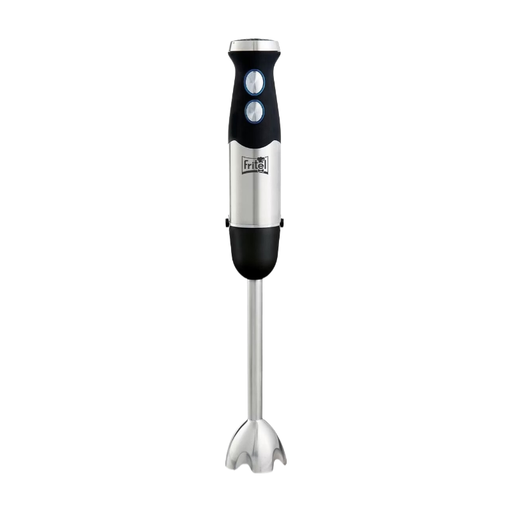
Why it suits this profile: This hand blender set combines a stick blender with a chopper, measuring beaker and two whisks. With 800 watts and a 25 cm blending shaft, it is suitable for everyday soups, sauces, purées and smaller baking tasks.
The functions are clearly defined, and the product information states a maximum continuous operating time of 60 seconds. This helps prevent overloading caused by prolonged blending.
800 watts, a 25 cm stainless-steel shaft, two speeds and a weight of 900 grams.
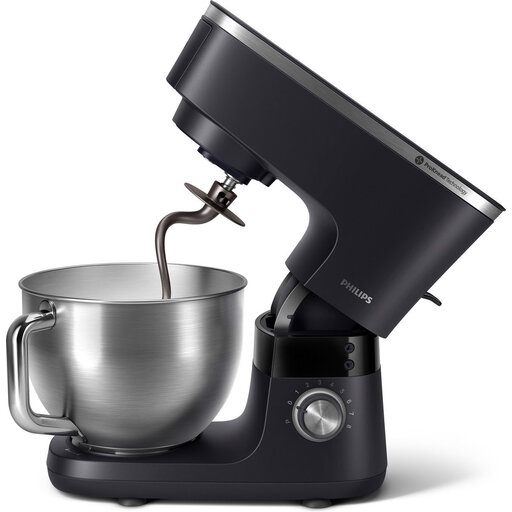
Why it suits this profile: A spacious food processor for dough and baking, with blender and meat mincer attachments. The 5.5-litre bowl is well suited to families and consumers who want to prepare a range of recipes using one base appliance.
The included accessories and capacities are clearly specified. However, check beforehand how much storage space you have for the bowl, jug and meat mincer.
1000 watts, 8 speeds, a 5.5-litre bowl, a 1.5-litre glass blender and a smart timer with automatic switch-off, according to the product information.
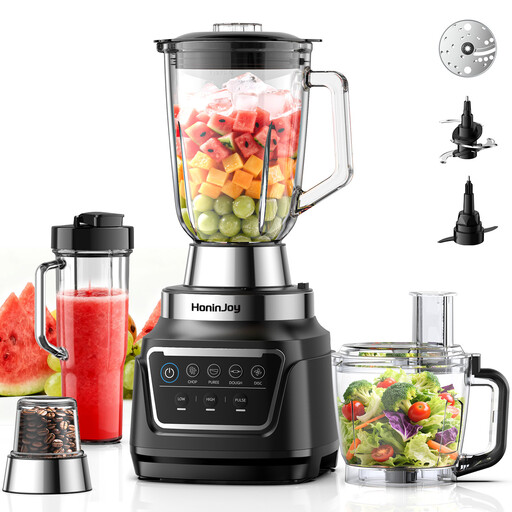
Why it suits this profile: This all-in-one blender and food processor is designed for meal preparation, including blending, chopping, grinding, slicing, grating and dough preparation. The combination of a blender jug and a separate food processor bowl supports different portion sizes.
The accessories are listed by function, so you can check whether you genuinely need them. The manufacturer also specifies a cooling period after operating cycles; follow the instructions in the manual.
Up to 1300 watts according to the product description, a 1.5-litre blender jug, a 2-litre food processor bowl and dishwasher-safe detachable parts according to the manufacturer.
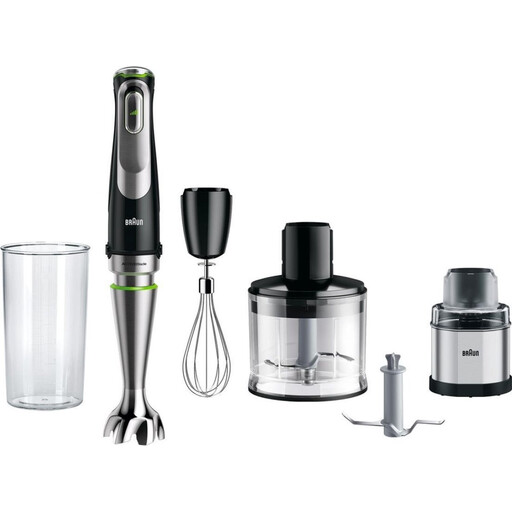
Why it suits this profile: This hand blender set takes up very little space and includes a whisk, chopper, mixing beaker and an accessory for coffee and herbs. It is ideal for everyday small portions and limited worktop space.
The set clearly defines its expanded functionality, with stated capacities of 600 ml for the beaker and 500 grams for the grinder. This lets you estimate portions in advance.
1200 watts, multiple accessories, a safety lock and dishwasher-safe parts according to the product information.
We have put together a complete, up-to-date list of products that fully meet these strict selection criteria and the applicable European safety regulations.
That depends on the dishes you regularly prepare. For soup, smoothies, sauces and small quantities, a hand blender with a chopper is often sufficient. For families, bread dough and larger quantities, a food processor with a blender or a food processor with accessories is a better fit. Before you buy, make a list of the functions you use at least once a week.
Some models combine both functions, but performance and capacities can vary. A blender is primarily designed for liquid preparations and smooth mixtures. A food processor is generally more practical for slicing, grating, chopping and coarser preparations. Check the capacity of both bowls, along with the blades or discs supplied.
Power consumption depends on the wattage and operating time. A 1000-watt appliance theoretically uses 1 kWh when operated continuously for one hour, but food processors usually run for shorter periods with breaks in between. More important factors in the overall cost are durability, the warranty, the availability of spare parts and how many separate appliances you actually replace.
