
Vandaag of morgen in huis

Kwaliteit gegarandeerd

Welkomstaanbiedingen ontgrendelen: GRATIS bezorging | Tot 80% korting | Gratis 30 dagen JoyPlus-proefperiode
Download de app
A multifunctional food processor can knead, chop, purée, grind and blend. That sounds convenient, but not every appliance genuinely replaces several kitchen tools. A food processor with a blender, for example, is not automatically suitable for heavy dough. And a food processor with a meat grinder requires different considerations from a stick blender for soup or baby food.
The right choice therefore starts not with the number of functions listed on the packaging, but with the types of dishes you prepare each week.
A product may be marketed as “7-in-1”, while the product description lists just five main functions, for example. So check exactly which components are included: a dough hook, beater, whisk, blender jug, chopper, meat grinder or slicing discs.
Also check compatibility. Accessories are not universal. Only use components that the manufacturer specifies for the model in question.
Motor power is a useful indication, but it does not tell you everything. The construction, drive system, maximum quantity and permitted operating time also help determine whether an appliance is suitable for heavy dough or hard ingredients.
A 600-watt blender may be perfectly suitable for fruit and sauces, but that does not mean it can process ice, nuts or large pieces of food without limits. Always follow the maximum fill line and the instructions in the manual.
A kitchen appliance with accessories can save space if it replaces several separate appliances, but the components still need to be washed and stored. So check whether the parts are removable and dishwasher-safe. The motor base should generally not be immersed in water.
Sharp blades, rotating whisks and hot liquids require extra care. Allow hot preparations to cool first as instructed in the manual, and unplug the appliance before changing accessories.
For a mixer used for dough, the combination of motor power, overheating protection and permitted quantity is particularly relevant. A stand mixer with multiple speeds gives you more control when mixing, beating and kneading gently. A pulse function is useful for short bursts of processing, for example when chopping or preventing overmixing.
Do not look only at the highest wattage. Also check:
A 3.8-litre bowl can be practical for smaller portions and takes up relatively little space. For families or keen home bakers, a bowl of around 6 litres may be more convenient. However, a large bowl does not mean that you can always use its maximum capacity.
For smoothies and sauces, pay attention to the capacity of the blender jug. A smoothie blender with a 2.1-litre jug is suitable for larger quantities, while a 600 to 800-millilitre cup is convenient for a single portion.
A stainless-steel mixing bowl is generally practical for kneading and mixing. Glass blender jugs may appeal to those who consider the material important, but they are heavier than plastic. Always check that the blades, lids and bowls lock securely into place.
For appliances used in the Netherlands, a suitable mains voltage of 220–240 volts, clear safety instructions and information about the responsible seller or importer are relevant checks. A minimum statutory warranty of two years applies under EU consumer rules, although additional rights may apply depending on the circumstances and national legislation.
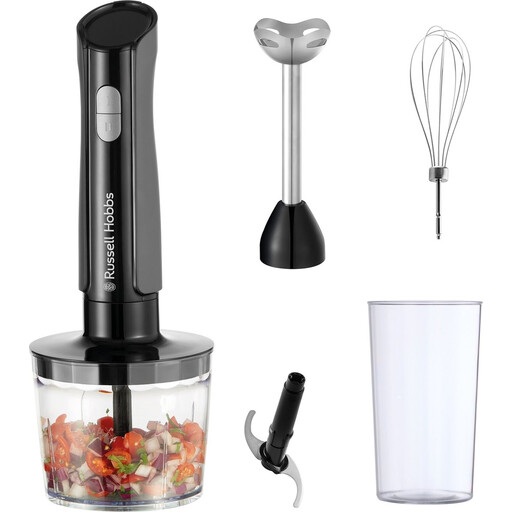
Why it suits this profile: This compact stick blender is suitable for everyday, smaller preparations such as mixing, chopping and whisking. The set takes up less space than a large stand mixer.
The functions are clearly specified: mixing, chopping and whisking. With two speeds and removable parts, it is straightforward to operate.
500 watts, a 600 ml mixing beaker, 500 ml chopping bowl and dishwasher-safe removable parts.

Why it suits this profile: This stand mixer is designed for baking and everyday mixing, with a whisk, beater and dough hook included.
The product information specifies a bowl capacity of 3.8 litres and maximum quantities for dough and batter. This makes the operating limits easier to check.
700 watts, 3D Planetary Mixing Technology, non-slip feet and dishwasher-safe accessories.
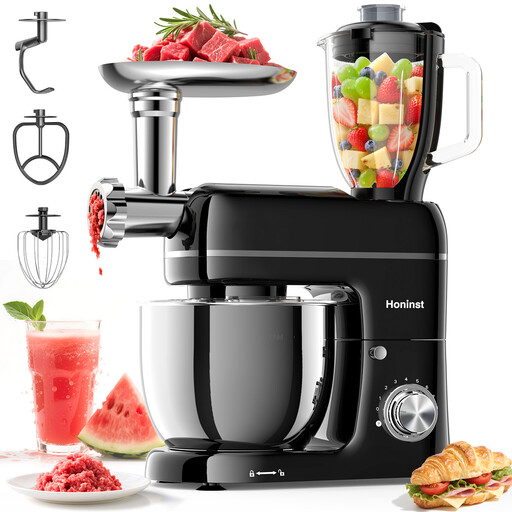
Why it suits this profile: If you bake regularly and are also looking for a food processor with a meat grinder and blender, this appliance combines several functions in one.
The product information mentions a tilt-head, safety lock, eight speeds and a pulse function. Before buying, check which accessories are included with the version you have selected.
Up to 1300 watts, a 6 QT stainless-steel bowl, blender jug and mincing attachment, according to the product description.
We have put together a complete, up-to-date list of products that fully meet these strict selection criteria and the applicable European safety regulations.
That depends on the model. Check the stated maximum dough weight, motor protection and recommended operating time. Never use more ingredients than the manual permits, and allow the appliance to cool down when instructed.
Consumption depends on the power rating and operating time. A 1200-watt appliance theoretically uses a maximum of 1.2 kWh in one hour, but food processors usually run for shorter periods and not continuously at maximum power. So, when it comes to energy costs, how often and how long you use the appliance are the most important factors.
It can be, particularly when you regularly use several functions. However, compare the included accessories, capacity, cleaning requirements and available storage space. An all-in-one appliance is not automatically cheaper if you rarely use some of its functions.
