
Vandaag of morgen in huis

Kwaliteit gegarandeerd

Welkomstaanbiedingen ontgrendelen: GRATIS bezorging | Tot 80% korting | Gratis 30 dagen JoyPlus-proefperiode
Download de app
A multifunctional electric cooking pot can be handy for ramen, soup, hotpot, pasta, steaming and one-pot meals. However, these appliances vary considerably in capacity, controls and ease of cleaning. A compact pot for one person needs different features from a large 5-litre pot for a family.
Marketing copy often emphasises “multifunctional” or “cooks quickly”, but that doesn’t always tell you enough. Look out for these common pitfalls.
A capacity of 5 or 7 litres sounds generous, but you can’t always fill a cooking pot to the brim. Boiling liquids and frothy ingredients need extra room. So check the recommended fill level in the instruction manual too.
For one or two people, a compact cooking pot with a capacity of 1.6 to 2.4 litres may be more practical. Models with a capacity of 5 litres or more are better suited to families, dinner parties and hotpot.
A non-stick wok may have a coating made from various materials. “Teflon-free” doesn’t automatically mean PFAS-free. If you’re specifically looking for a PFAS-free wok, check that this is stated explicitly in the product details.
A stainless steel or carbon steel wok without a synthetic coating takes a little more know-how to use. With a stainless steel wok, preheating it with oil helps prevent food from sticking. Carbon steel usually needs seasoning and must be dried thoroughly after washing.
A multicooker with a pressure-cooking function, slow cooker, steam function and air fryer lid offers plenty of options, but it also takes up more space. Check whether you’ll actually use these functions. For ramen, noodles and soup, an electric hotpot with two heat settings may be enough. For stews and meals you want to prepare in advance, a slow cooker or multicooker makes more sense.
Consider the capacity and power together:
A higher wattage doesn’t automatically mean every dish will be ready sooner. The amount of food, the lid and the temperature control all play a part too.
Compatibility matters when choosing a separate wok. An induction wok needs a flat, magnetic base. Also check whether the pan is suitable for gas, electric and ceramic hobs. An electric cooking pot doesn’t need an external hob, but it should still be placed on a stable, heat-resistant surface.
A wok with a lid is handy for simmering and stewing. Electric hotpots often have glass lids, so you can keep an eye on the cooking without letting heat escape.
Check whether the inside of the pot is dishwasher-safe. Many models are best washed by hand to help the coating last longer. Use wooden or silicone utensils with a non-stick coating, and stop using the pot if the coating is damaged.
Never immerse the heating base of an electric appliance in water. Unplug it before cleaning and let the pot cool completely. With a pressure cooker, wait until all the pressure has been released before opening the lid.
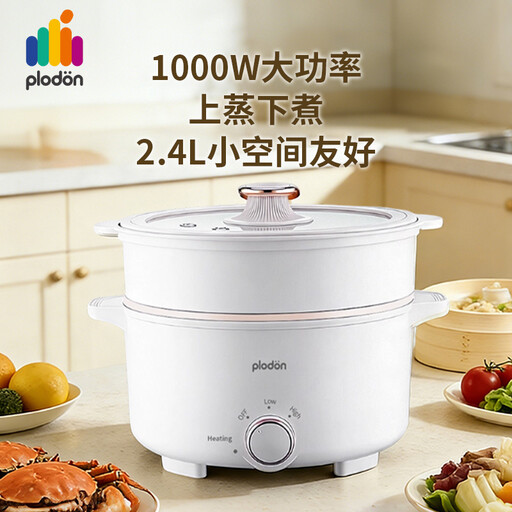
Why it suits this user: Its 2.4-litre capacity and compact size make it a good fit for students, couples and small kitchens. You can cook and steam in the same appliance.
The specified capacity and dimensions make it clear that this is a model for smaller portions, not a large family cooking pot. The two heat settings keep the controls straightforward.
2.4-litre capacity, 1,000 watts of power, removable steamer and non-stick coating, according to the product information.
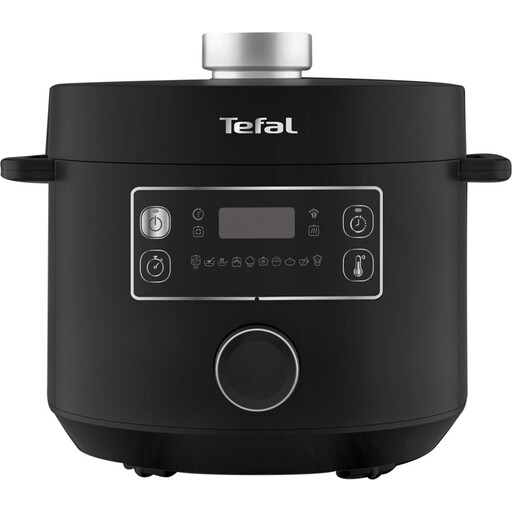
Why it suits this user: This model is designed for people looking for one appliance that can pressure cook, steam, make soup and keep food warm.
The product information lists a 5-litre capacity, automatic programmes, manual controls and dishwasher-safe parts.
5-litre capacity, 10 automatic programmes according to the product description, keep-warm function and overheat protection.

Why it suits this user: Ideal for larger households and anyone looking to combine pressure cooking, slow cooking, steaming and air frying in one appliance.
Its features are clearly specified: 7.6-litre capacity, two lids and separate programmes for moist and crispy cooking. That makes its larger size worthwhile.
11 functions according to the product description, 7.6-litre capacity and a ceramic-coated air fryer basket that is BPA-, PFOA- and PTFE-free, according to the manufacturer.
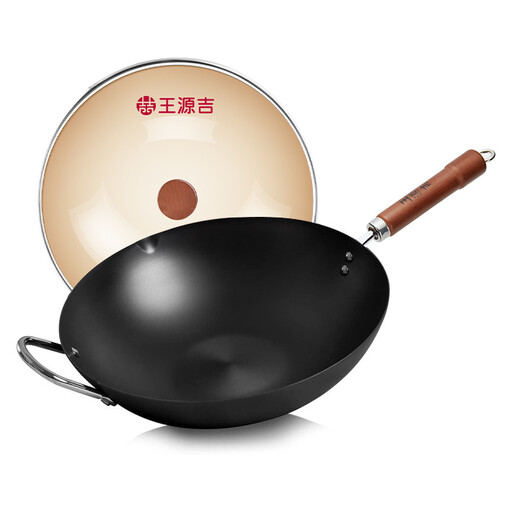
Why it suits this user: This wok is designed for stir-frying on gas, induction and electric hobs. It’s a good choice for cooks who prefer a separate pan to an electric cooking pot.
The pan has no synthetic non-stick coating, but it does need seasoning, hand-washing and drying. That means its care requirements are clear from the outset.
Flat base, suitable for induction, gas and electric hobs, plus a glass lid and two handles according to the product information.
We’ve put together a complete, up-to-date list of products that meet these strict selection criteria and the applicable European safety regulations.
For one person, 1.6 to 2.4 litres is usually more practical. Models with a 5-litre capacity are more versatile for families. Choose 7 litres or more if you regularly cook for larger groups. Leave room for boiling and steam to build up.
Consumption depends on the wattage and how long you use the appliance. A 1,000-watt appliance running for half an hour theoretically uses 0.5 kWh. In practice, the thermostat may switch off or reduce the heat from time to time. Compare the energy label, wattage and cooking time before you buy.
It depends on how you use, heat and care for the pot. Don’t use sharp metal spatulas, avoid abrasive scourers and follow the cleaning instructions. If the coating is visibly damaged, it’s safer to replace the appliance rather than continue cooking with it.
