If you usually make stock for one, compare the usable capacity, cooking method and space the appliance takes up. The stated pot capacity alone won’t tell you whether it’s suitable for a small batch. Choose pressure cooking only if you’re happy to follow the model-specific filling and pressure-release instructions. A larger pot is most useful if you’re making extra portions to store. Check the exact model and its CE marking before you buy.
Who is this buying guide for?
Solo cook with limited space
You usually make a small amount and want to know whether the pot and appliance are unnecessarily large. The models listed have different stated capacities, but that doesn’t guarantee that a particular small batch will be suitable.
Cook who likes to vary the cooking method
You sometimes want to pressure cook and sometimes prefer to let your stock simmer gently. Check which features the exact model has and read the instructions for each one.
Batch cook with room in the freezer
You deliberately make several portions and can make use of a larger pot, provided you have space to cool and store the extra stock promptly.
What should you look for when buying?
For a small batch, the key things to consider are how much you can actually cook, your preferred cooking method and what you plan to do with any leftovers.
| What to consider |
What to look for when buying |
Who is this important for? |
| Small batches and available space |
Compare the capacity with the filling instructions and the dimensions of the appliance and lid. |
If I usually cook just for myself, I don’t want a pot that’s impractically large for my portion. Around 33% of consumers put small portions and limited space first. |
| Pressure cooking or a gentle simmer |
Check the features and manual for the full model; if you plan to use pressure cooking, also check the filling and pressure-release instructions. |
If you want to choose between gentle cooking and pressure cooking, focus on the controls and the relevant instructions. Around 27% of consumers make the cooking method or pressure controls their top priority. |
| Cleaning and everyday use |
Check the manual to see which parts are dishwasher-safe and what cleaning steps are required. |
If I use the appliance often, I want to know in advance how to clean the pot and other parts. Around 20% of consumers give cleaning and ease of use top priority. |
| Storing extra stock |
Decide whether you want to freeze extra portions and follow the filling limits for your chosen model. |
If you prefer to make several portions at once, consider the pot’s capacity and whether you can store leftovers safely. Around 20% of consumers prioritise batch cooking. The Netherlands Nutrition Centre advises refrigerating leftovers within two hours and says stock will keep for two days in the fridge or three months in the freezer. |
Common buying mistakes
-
Assuming the pot capacity guarantees a portion for one
The stated capacity doesn’t tell you the smallest amount of stock you can make according to the instructions. When pressure cooking, the amount of liquid and the filling limits matter too.
Compare the filling instructions for the exact model with your recipe. A larger pot is most practical if you deliberately want to make extra portions.
-
Assuming a soup programme means the appliance can pressure cook
A model with a soup programme doesn’t automatically have a pressure-cooking function as well. These cooking methods have different operating requirements.
Check the features against the full model number and read the manual if pressure cooking is important to you.
-
Taking a similar product title as proof that it’s the same model
For one Instant Pot Classic Mini listing we checked, the product description gave a different model name from the title. So the title alone doesn’t confirm which version you’ll receive.
Before you buy, check the model name and version on the specific product page, and check the appliance’s CE marking.
Brands to consider
Instant Pot
The 3.8 L Classic Mini is designed for anyone looking for a relatively compact appliance with pressure-cooking and slow-cooking functions. Instant Pot lists both features for this model.
- The combination of pressure-cooking and slow-cooking functions gives you a choice of methods.
- 3.8 L is the stated capacity and doesn’t prove that every small quantity is suitable. Also check the CE marking on the exact version.
Russell Hobbs
According to Russell Hobbs, the Cook@Home 21850-56 has a 5 L pot and includes soup and slow-cook programmes.
- The manufacturer lists a removable pot and a soup programme; an EU declaration of conformity has been published for model 21850-56.
- The pot may be quite large for one small portion. Don’t take a soup programme as proof of a pressure-cooking function; check the manual if you need that feature.
Philips
Philips lists a 6 L capacity and automatic pressure release for the 3000 Series HD2616/70.
- Automatic pressure release is a listed operating feature. An EU declaration of conformity has been published for model HD2616/70.
- A 6 L pot may be larger than you need for one portion. Follow the filling and operating instructions for this model.
Tefal
Tefal lists pressure-cooking, slow-cooking and steaming programmes, a dial and a non-stick pot among the features of the Turbo Cuisine CY754830.
- The listed features let you explore different cooking methods within one product range.
- Before choosing it, check the features, operating instructions and CE marking for the exact version.
Products for small batches and stock
This selection includes small electric cooking pots, a slow cooker and a multicooker with pressure-cooking and slow-cooking functions for soup or small portions. The NVWA states that CE marking is mandatory for electrical products; check the marking and exact version before you buy.
 No image available
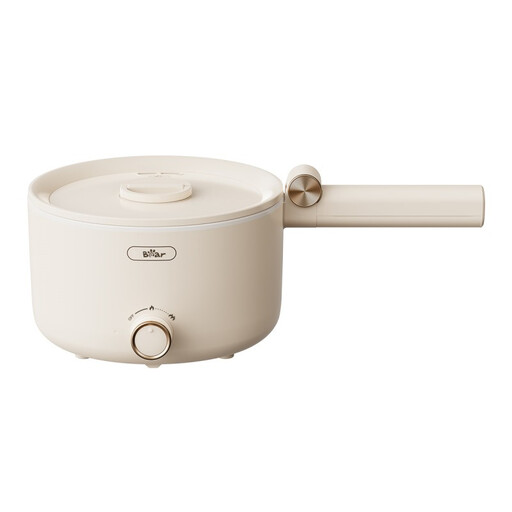
Bear DRG-C16Z1 electric cooking pot, 1.6 L
The listed capacity and soup-cooking function make this a good fit if you want to make a small amount for one person.
Capacity: 1.6 L. The product description mentions soup cooking.
View at Joybuy
 No image available
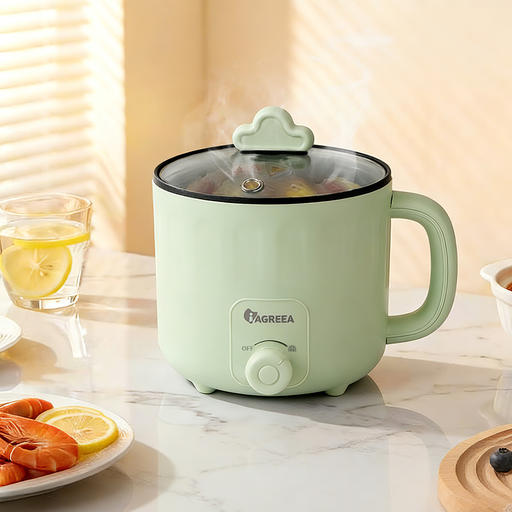
IAGREEA electric cooking pot, 1.6 L
The stated soup-cooking function and capacity are worth considering if you’re looking for a small amount for solo use.
Capacity: 1.6 L. The product description mentions soup, stewing and boiling.
View at Joybuy
 No image available
IAGREEA slow cooker, 2.6 L, 1000 W
This slow cooker is a good option if you want to let vegetable stock simmer gently rather than pressure cook it.
Capacity: 2.6 L. The product description lists three heat settings, soup cooking and a removable non-stick pot. High-heat frying is not recommended, to protect the non-stick coating.
View at Joybuy
 No image available
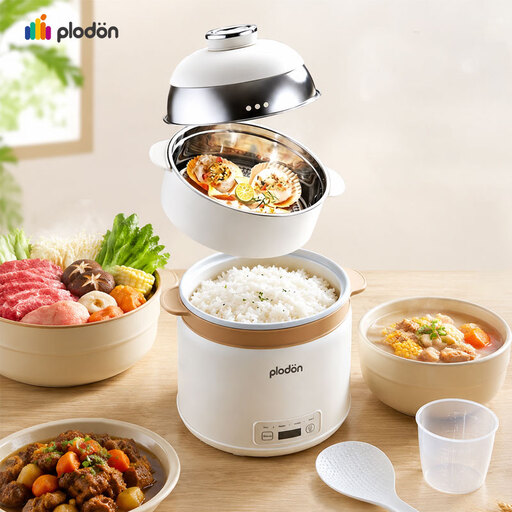
plodon One Touch Multi Cooking Pot, 2.3 L
The stated capacity for 1–3 people and the soup function make this model worth considering for small portions.
Capacity: 2.3 L. The product description lists a steamer basket, keep-warm function and automatic shut-off.
View at Joybuy
 No image available
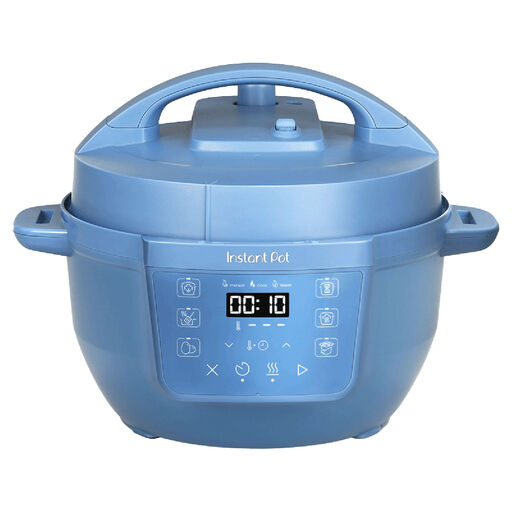
Instant Pot Classic Mini 3.8L 7-in-1, Daydream Blue
This model combines pressure-cooking and slow-cooking functions, so you can switch between the two methods.
Capacity: 3.8 L. For pressure cooking: use at least 250 ml of liquid, observe the filling limits and don’t open the lid until the pressure has fully released.
View at Joybuy
Frequently asked questions
Can I use the stated capacity as the amount of stock I can pressure cook?
No. The stated capacity doesn’t automatically tell you how much stock you can pressure cook. The Instant Pot Duo manual says to fill the pot to no more than two-thirds full, or no more than half full when using ingredients that expand during cooking. For other models, follow their own filling instructions. The stated capacity also doesn’t prove that the appliance will work well with a very small amount.
How should I open and maintain a pressure multicooker?
Don’t open the pot until the pressure has fully released. The Instant Pot Duo manual we consulted also says to check the valves for blockages before use. Always follow the instructions for your exact model when releasing pressure and cleaning the appliance.
How long can I store extra stock?
The Netherlands Nutrition Centre says stock will keep for two days in the fridge or three months in the freezer; its quality may deteriorate after that. Cool leftovers quickly and store them covered in a cool place. The Netherlands Nutrition Centre advises putting leftovers in the fridge or freezer within two hours.
What product safety requirements and shopping rights apply in the Netherlands?
According to the Netherlands Food and Consumer Product Safety Authority, CE marking is mandatory for electrical products. Check the marking and the identity of the specific version. For online purchases from a business, the Dutch government says you generally have a 14-day cooling-off period, although there are exceptions. Any manufacturer’s warranty is in addition to your statutory rights if a product is faulty.


