
Cook with limited worktop space
You usually make a small amount of stock and want to know whether the appliance, its open lid and your storage space will all fit.


Start by considering how much space you have and how much stock you want to make at a time: a pan’s nominal capacity is not the same as its permitted fill level when pressure cooking. A compact pressure multicooker may suit smaller portions, while a larger pan takes up more space. Only choose pressure cooking if you want to use that function and can follow the filling and opening instructions.
You usually make a small amount of stock and want to know whether the appliance, its open lid and your storage space will all fit.
You want to make several portions at once and compare the usable fill capacity with the space the appliance takes up.
You want to prepare other dishes as well as stock, and compare pressure cooking, soup, slow cooking and sauté functions.
First compare the space available for the appliance with the amount of stock you want to make. Then consider which cooking method you actually need.
There are four main things to consider when making vegetable stock in a small kitchen. Each row focuses on one key buying consideration.
| What to consider | What to look for | Who this matters to |
|---|---|---|
| Worktop space | Measure your worktop and storage space, including the clearance needed for the lid; compare these measurements with the dimensions of the exact model. | If my worktop is small, I want to know whether the appliance will be practical with the lid open, too. Around 36% of consumers give this space consideration top priority. |
| Usable pan capacity | Compare the portion you want to make with the fill markings and instructions for the exact model. For pressure cooking in the Instant Pot Duo, the pan must be filled to no more than two-thirds, or half full when using ingredients that expand, such as dehydrated vegetables. | If you want to make several portions to store, look beyond the figure stated on the pan. Around 29% of consumers prioritise the usable amount of stock. |
| Cooking method | Check whether the exact model has a pressure-cooking, cooking, slow-cooking or soup programme, and read the instructions for releasing pressure and opening the lid. | If I want to choose between simmering and pressure cooking, I want to know which functions the specific model actually has. Around 21% of consumers make the cooking method their main consideration. |
| Cleaning and aftercare | Check the cleaning instructions for the pan, lid and any accessories, and read the terms of any additional cover. | For consumers who place more importance on cleaning and aftercare than on other buying considerations, it matters what happens after cooking and if something goes wrong; around 14% prioritise this. |
For pressure cooking, the Instant Pot Duo manual sets a maximum fill level of two-thirds. For ingredients that expand, including dehydrated vegetables, the maximum is half full.
Work out the amount you want to make with both the vegetables and the liquid in mind, and check the fill markings and manual for your exact model.
The lower fill limit may mean you need more batches than you expected from the nominal capacity.
Tefal describes a test conducted in 2022 using potatoes; it does not show how long it takes to prepare vegetable stock from start to finish.
Compare the cooking method you plan to use, including the time needed to build and release pressure, and don’t treat a test result as a guide to stock-making time.
The Russell Hobbs Cook@Home 21850-56 specification we consulted lists soup and slow cooking, but does not confirm a pressure-cooking function for this model.
Check the functions against the full model number. Only choose pressure cooking if it is listed for that model and you want to use it.
The Duo 3L Mini is a compact pressure multicooker worth comparing if you usually make small batches of stock.
The Turbo Cuisine CY7548 is worth comparing if you’re considering a larger pan with pressure-cooking and slow-cooking functions.
The Cook@Home 21850-56 is worth comparing if a soup programme and slow cooking are all you need.
The Philips 3000 Series HD2616/70 is a larger pressure multicooker worth comparing if automatic pressure release is important to you.
This Joybuy selection includes compact electric cooking pots for soup and stock. Check which cooking methods and functions you need for each model; the product names do not all confirm a pressure-cooking function.
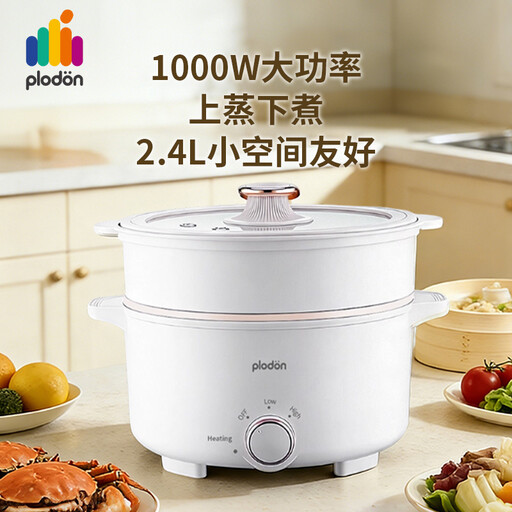 No image available
Worth considering if you’re looking for a compact electric cooking pot for soup. The product name lists 1.000 W, two power settings and a steamer.
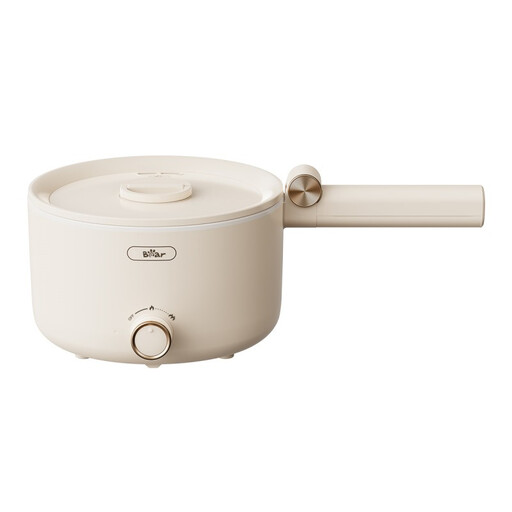 No image available
A compact capacity to consider if you mainly want to make a small amount of soup.
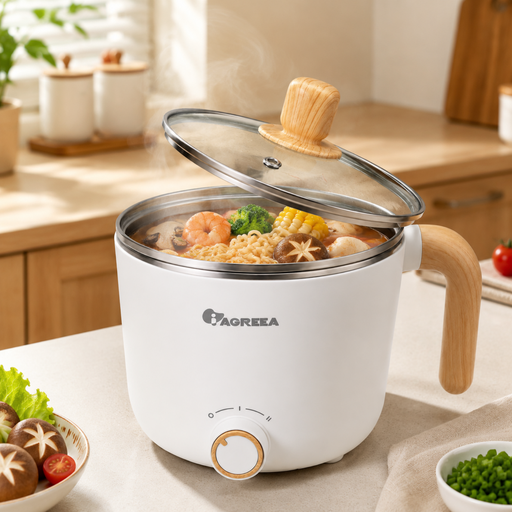 No image available
A small-capacity option if you want to make a limited amount of soup. The product name lists a stainless steel inner pot and 300 W and 600 W power settings.
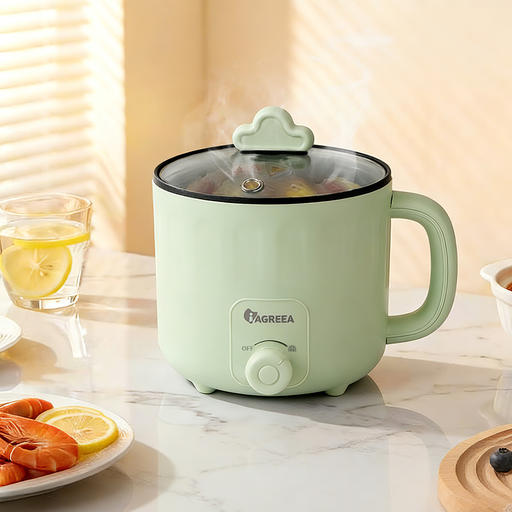 No image available
An option if you want to make soup in a compact cooking pot. The product name lists a non-stick coating, adjustable power and boil-dry protection.
 No image available
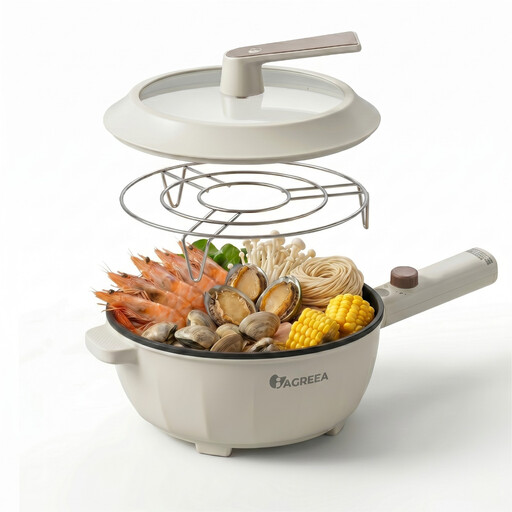
The larger capacity may suit you if you want to make more soup at a time and have space for the appliance. The product name lists 1.600 W, a non-stick coating and adjustable power.
No. Follow the fill limit for the exact model. The Instant Pot Duo manual specifies a maximum of two-thirds full, or half full when using ingredients that expand, such as dehydrated vegetables. Only open the cooker as instructed for pressure release, once the pressure has dropped completely.
Cool leftovers quickly and store them covered; according to the Netherlands Nutrition Centre, cooked leftovers should be refrigerated or frozen within 2 hours. It recommends keeping stock for 2 days in the fridge or 3 months in the freezer. Also follow its general guidance on storing cooked leftovers when keeping homemade stock.
Not necessarily. According to the Dutch Government, there is no fixed statutory warranty period in the Netherlands; the expected lifespan depends on the product. Read the terms of any paid cover and check whether it genuinely offers anything beyond your legal rights.
CE marking is mandatory for products covered by the Dutch Electrical Equipment Decree. For the underlying Low Voltage Directive, the Netherlands Food and Consumer Product Safety Authority specifies a nominal AC voltage of 50 V to 1.000 V. Check the markings and documentation for the exact model; general product information does not automatically confirm the status of every model.