
Cook with limited worktop space
You want to make stock without leaving several appliances permanently on the worktop. Compare how much space the appliance takes up while cooking and when opening it, and think about where you’ll store it afterwards.


If you usually make small batches of stock, a compact pressure multicooker with a stock programme could be a good fit. If you want to make more at once, compare a larger pot too. If you prefer slow cooking and don’t need a pressure function, consider a model with a slow-cook function. As well as measuring the space for the pot, check how much room you need to open the lid and read the filling instructions for the model you choose.
You want to make stock without leaving several appliances permanently on the worktop. Compare how much space the appliance takes up while cooking and when opening it, and think about where you’ll store it afterwards.
You want to make more stock in one cooking session. Bear in mind that the stated capacity isn’t always the same as the permitted fill level for the programme you choose.
You want to choose between pressure cooking and slow cooking. Check that the exact model has the function you want.
Suitable if: you usually make smaller quantities and want pressure and stock programmes.
Consider: you can’t use the full capacity for pressure cooking. The manual may also specify a lower fill limit for ingredients that expand.
Suitable if: you want to make more stock at once and a larger pot matters more than the smallest possible size.
Consider: check that the appliance, including the pot and lid, fits in the space available for using and opening it.
Suitable if: you mainly want to stew or slow cook and don’t need a pressure function.
Consider: don’t assume it can pressure cook just because it’s called a multicooker. Check the functions of the exact model.
For each option, first check that the appliance fits on your worktop, then compare the portion size and cooking method you want.
| Consideration | What to look for when buying | Who is this important for? |
|---|---|---|
| Space for use and storage | Compare the external dimensions with your worktop and check the space above and around the lid too. | If space is limited, you’ll want to know whether you can place the appliance, open it and store it. Around 36% of consumers prioritise space. |
| Usable amount of stock | Check the fill markings and the model-specific fill limit for the programme you want to use. | If you want to make more stock per cooking session, the permitted fill level matters more than the capacity stated on the label alone. Around 29% of consumers prioritise yield. |
| Pressure cooking or slow cooking | Check whether the exact model has a pressure function, a slow-cook function or both, and read the instructions. | If you want to use a particular cooking method, you’ll want to see that function on the appliance. Around 21% of consumers choose their cooking method first. |
| Cleaning and maintenance | Read the cleaning instructions and check which parts or seals come with the exact model. | If you use the appliance often, you’ll also want to know what needs cleaning and storing after cooking. Around 14% of consumers prioritise maintenance. |
There are fill limits for pressure cooking. The Instant Pot Duo manual specifies a maximum of two-thirds full, or half full for ingredients that expand during cooking.
Read the filling instructions for the exact model and programme before deciding how much veg and water to use.
A lower fill limit may mean making smaller batches more often than you planned.
The Tefal RK8121 is described as having cooking and slow-cooking functions, among others. Information about the CY505E separately mentions pressure cooking.
Look specifically for a pressure function in the information for the model you’re considering.
Some models have separate lids or accessories that also need space during use and storage.
Measure the space where you’ll use the appliance and think about where its parts will go after cooking.
Extra parts may need more storage space and take longer to clean.
Instant Pot’s Dutch product page describes the Duo Mini as a 3-litre model with a soup and stock programme.
The models mentioned have different functions: Tefal describes the CY505E as having a 6-litre pot and pressure- and slow-cooking functions, while the RK8121 offers cooking, stewing and slow cooking, among other functions.
Philips describes the HD2616/70 from the 3000 Series as a 6-litre model with programmes for soup, pressure cooking and slow cooking, among other things.
This selection includes compact electric cooking pots for smaller quantities and a 6-litre pressure cooker for anyone looking for more capacity. Check that each model’s functions and dimensions suit the way you cook and the space available.
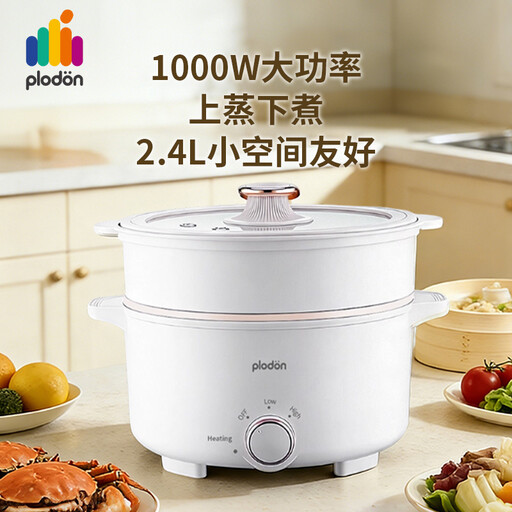 No image available
An option to consider if an electric soup pot suits the quantity you want to make.
Capacity: 2.4 litres. Power: 1000 W. Non-stick coating.
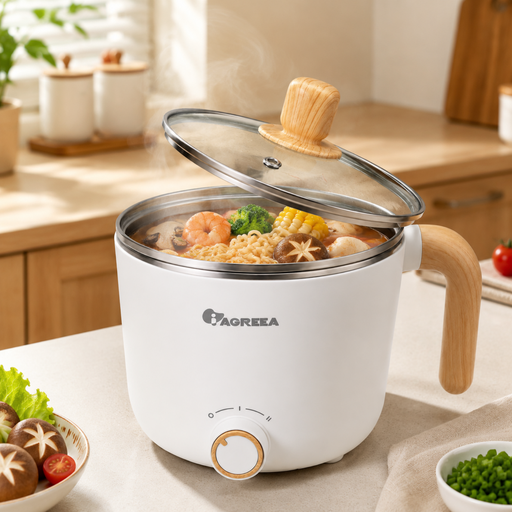 No image available
The 1-litre capacity may suit a small portion of soup; compare it with the amount you usually make.
Capacity: 1.0 litre. Power: 300 W/600 W. Stainless steel inner pot.
 No image available
A slow cooker to consider if you’d rather cook stock slowly than under pressure.
Capacity: 2.6 litres. Power: 1000 W. Three manual heat settings.
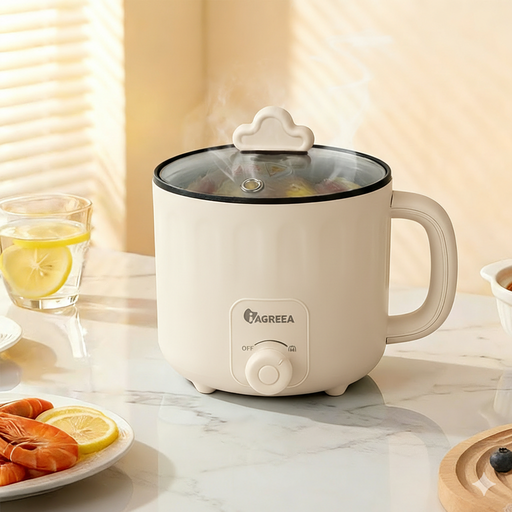 No image available
The 1.6-litre capacity may suit a small amount of soup or gentle cooking.
Capacity: 1.6 litres. Power: 600 W. Automatic shut-off and overheat protection.
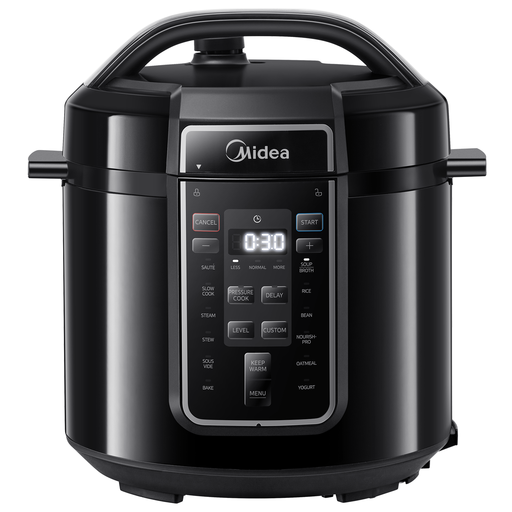 No image available
A larger capacity to consider if you want to make more stock per cooking session, but be sure to check the space available.
Capacity: 6 litres. Power: 1000 W. 14 cooking functions. Stainless steel inner pot.
No. The Instant Pot Duo manual specifies a maximum of two-thirds full, or half full for ingredients that expand during cooking. For other models, follow the manual supplied with the appliance.
Follow the pressure release instructions for the exact model. The Instant Pot Duo manual warns you not to force the lid open and to wait until the internal pressure has been fully released.
Cool leftovers quickly and refrigerate or freeze them in a covered container within two hours. The Netherlands Nutrition Centre recommends a fridge temperature of 4 °C; its storage guidance for stock says two days in the fridge and three months in the freezer.
In the Netherlands, the retailer must provide a solution if a product is faulty, according to the Dutch government. An additional warranty is only worthwhile if its terms give you more rights than you already have.
CE marking is compulsory for electrical products covered by the Dutch Commodities Act Decree on Electrical Equipment. For the applicable low-voltage rules, the Netherlands Food and Consumer Product Safety Authority gives a nominal AC voltage range of 50 V to 1000 V. Check the specifications of the particular appliance before deciding whether the rules apply.