
Solo cook who gets home late
You get home after your evening class and want to heat cooked beans with flavourings, without needing a large pan. According to the Netherlands Nutrition Centre, tinned pulses only need to be heated through.


For tinned white beans, a multicooker with a sauté function and a setting for gentle heating or simmering is usually all you need; there’s no need to pressure-cook the beans themselves. A compact model is ideal for smaller portions, while extra capacity is useful if you also cook larger meals. Don’t leave a dish containing opened beans unrefrigerated while waiting for a delayed start.
You get home after your evening class and want to heat cooked beans with flavourings, without needing a large pan. According to the Netherlands Nutrition Centre, tinned pulses only need to be heated through.
You want to fry vegetables or herbs, then let the beans simmer in the same inner pot, so there’s less washing up.
You make several portions and want to store leftovers safely. The Netherlands Nutrition Centre advises not leaving leftovers out of the fridge for more than 2 hours.
First, check whether you can sauté and then gently heat the food in the same pot. Next, compare the capacity, cleaning requirements and options for planning ahead.
| What to consider | What to look for | Who is this important for? |
|---|---|---|
| Getting a meal ready quickly | Check whether the model can sauté and then gently heat or simmer. | I mainly want to eat quickly after my evening class; around 26% of consumers prioritise quick heating for this meal. |
| Cooking everything in one pot | Look for both a sauté or sear setting and a simmer setting. | I want to fry flavourings in the same pot and then let the beans simmer; around 21% of consumers prioritise one-pot cooking. |
| Planning ahead safely | Only consider a timer as part of a plan that keeps ingredients and leftovers safely stored. | If I cook before my class, I don’t want to leave food unrefrigerated while I’m out. Around 21% of consumers prioritise safe meal planning. |
| Portions and space | Compare the usable capacity with the portion you usually make, and measure the space where you plan to keep the appliance. | I usually cook a small portion and want the pot to fit in my kitchen; around 16% of consumers prioritise portion size and space. |
| Cleaning | Check the manual to see which parts can be removed and are dishwasher-safe. | After a late meal, I want to wash as few parts as possible by hand; around 16% of consumers make easy cleaning their top priority. |
Tinned white beans are already cooked. According to the Netherlands Nutrition Centre, tinned pulses only need to be heated through.
For this meal, choose sauté and heat or simmer functions. A pressure-cooking function is only relevant if you also want to use it for other dishes.
For the Tefal CY505E, Tefal lists a bowl capacity of 6 L and a usable capacity of 3,8 L.
Check the usable capacity of the exact model against the amount you usually cook, and follow the filling instructions.
A timer doesn’t keep food cold. The Netherlands Nutrition Centre advises not leaving leftovers out of the fridge for more than 2 hours.
Prepare the dish after you get home, or cool a dish you’ve made earlier promptly and store it in the fridge.
The Duo 3L Mini is a compact range with functions including sautéing, slow cooking, keeping food warm and pressure cooking. The Pro 7,6L is a separate, larger range.
According to Tefal, the CY505E combines slow cooking and pressure cooking. The RK8121 is a separate rice cooker and multicooker with stewing and reheating functions.
According to Russell Hobbs, the Good to Go has searing, simmering and keep-warm functions, with no pressure-cooking function listed.
According to Philips, the HD2616/70 is a 6 L multicooker with functions including sautéing, slow cooking, reheating and pressure cooking.
This selection includes multicookers and a multifunctional electric pot with listed functions for gentle heating, simmering or searing first. Capacity and functions vary by model; a product listing alone doesn’t tell you whether it’s suitable for every meal.
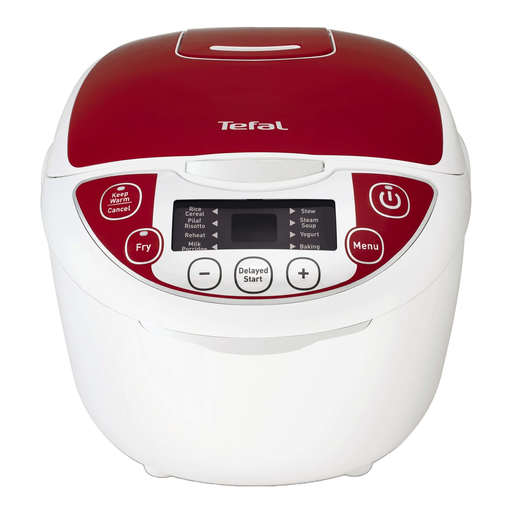 No image available
The listed slow-cook and keep-warm functions are suitable for gently heating cooked beans.
The product title gives a capacity of 1,8 L. The description says the inner pot is dishwasher-safe.
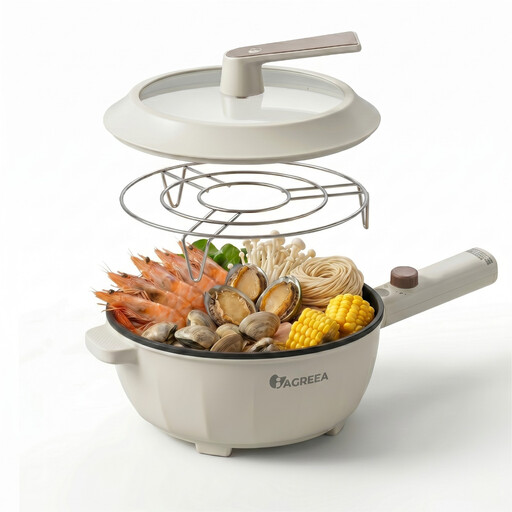 No image available
The description lists sautéing and slow cooking, so you can fry flavourings first and then heat everything gently.
The stated capacity is 2,3 L; the description lists portions for 1–3 people, three heat settings and a non-stick coating. This is a multifunctional electric pot, not a product described as a multicooker.
 No image available
The listed sauté and slow-cook functions are suited to preparing flavourings first and then heating everything gently.
The stated capacity is 7,1 L, for up to 10 portions. The description says the inner pot and lid are dishwasher-safe; this size may be more than you need for a small meal.
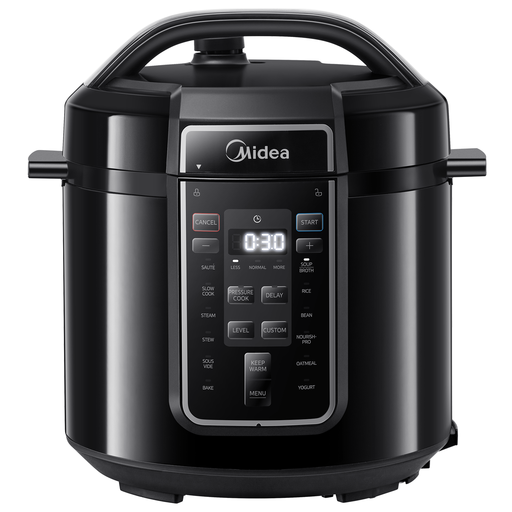 No image available
The description lists stewing and slow cooking; the title mentions automatic keep-warm. The stated capacity is for 6–8 people, which may be more than you need for a small meal.
When pressure cooking, follow the MAX and half-fill markings for beans or grains, along with the pressure-release instructions.
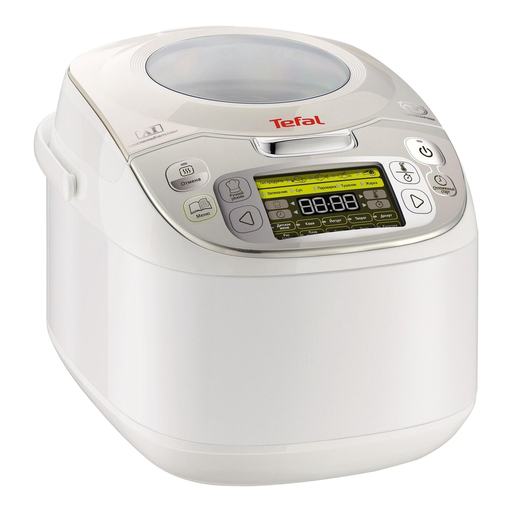 No image available
The description lists stewing, slow cooking and keeping food warm, as well as manual time and temperature settings.
The stated capacity is 5 L; the description says it can cook up to 10 cups of rice, which may be more than you need for a small portion.
No. According to the Netherlands Nutrition Centre, tinned pulses only need to be heated through. Choose a pressure-cooking function only if you also need it for other dishes.
Don’t use a delayed start instead of keeping food chilled. The Netherlands Nutrition Centre advises not leaving leftovers out of the fridge for more than 2 hours. Cook the dish when you get home, or cool a dish you’ve made earlier promptly and store it in the fridge.
Compare the usable capacity with the amount you usually cook, and consider how much space you have on your worktop. For example, Tefal lists a bowl capacity of 6 L and a usable capacity of 3,8 L for the CY505E; these figures aren’t the same.
Follow the fill markings and instructions for the exact appliance. The Midea pressure cooker description warns users to follow the MAX and half-fill markings for beans or grains when pressure cooking, as well as the pressure-release instructions.
CE marking is required for electrical products. The Netherlands Food and Consumer Product Safety Authority states that the Low Voltage Directive applies to electrical equipment with a rated AC voltage of 50–1000 V. Check the marking and documentation for the specific appliance; a brand or product listing alone doesn’t prove compliance.