
Student who wants to heat up a single portion quickly
They mainly want to know whether they need another appliance for already-cooked tinned beans. Voedingscentrum says that tinned pulses only need reheating.


You don’t need a multicooker for a tin of butter beans: according to Voedingscentrum, tinned pulses are already cooked and only need reheating. A multicooker could be useful if you also want to make rice, soup or other dishes in the same small kitchen. If so, compare the programmes you’ll use, the space it takes up and how easy it is to clean. For a specific appliance, check the product safety information applicable to the exact model.
They mainly want to know whether they need another appliance for already-cooked tinned beans. Voedingscentrum says that tinned pulses only need reheating.
They want to make other dishes as well as beans, so need to weigh up the capacity against the worktop and storage space available.
They want to combine beans with rice or soup, for example, and compare the programmes and cleaning instructions for the exact model. Tefal and Instant Pot product information, for instance, describes these kinds of cooking functions.
| What to consider | What to look for | Who is this most relevant to? |
|---|---|---|
| Avoiding unnecessary functions | First, consider whether your existing pan or microwave will do the job. If you’re comparing multicookers, look for a reheating or sauté function that suits what you actually want to cook. | If I only heat up a tin of butter beans now and then, I don’t want to pay for functions I won’t use; around 36% of consumers say avoiding unnecessary functions is their top priority. |
| Size and capacity | Measure your worktop and storage space, and check the dimensions of the exact model. Don’t confuse the stated capacity with the usable filling capacity. | In a small kitchen, I want to know whether the appliance will fit on my worktop or in my cupboard; around 29% of consumers prioritise limited space and a suitable capacity. |
| Cleaning | Read the cleaning instructions for the inner pot and removable parts of the exact model. | If I use the appliance regularly, I want to know in advance how to clean the pot; around 21% of consumers make ease of cleaning their main consideration. |
| Other meals | Think about which dishes you genuinely want to make besides beans, then check the programmes listed for the full model number. | If you want to make rice, soup or other dishes as well as beans, you may want to factor in additional programmes; around 14% of consumers put versatility first. |
According to Voedingscentrum, tinned pulses are already cooked and only need reheating. A pressure-cooking programme isn’t a necessary step for preparing them.
First think about the dishes you actually want to make, then compare any extra functions.
The Tefal RK7051 has a removable non-stick inner pot, but the manual doesn’t recommend washing it in the dishwasher.
Before buying, read the cleaning instructions for the exact version.
The 3.8-litre Instant Pot Classic Mini isn’t the same model as the 3-litre Duo Mini, so their specifications and instructions aren’t necessarily interchangeable.
Before comparing models, check the full model name, capacity and version.
The RK7051 is a rice multicooker with a separate reheating setting and a stated capacity of 1.8 litres.
The 3-litre Duo Mini is worth considering if you want to sauté or pressure cook as well as reheat food.
According to the manufacturer, the Cook@Home Multi Cooker 21850-56 has a capacity of 5 litres and a keep-warm function. That capacity may be useful for larger quantities.
The products below are compact cooking appliances for anyone who wants to make rice, soup or other hot dishes as well as heat up beans. Check the exact functions, dimensions and applicable product safety information for each model.
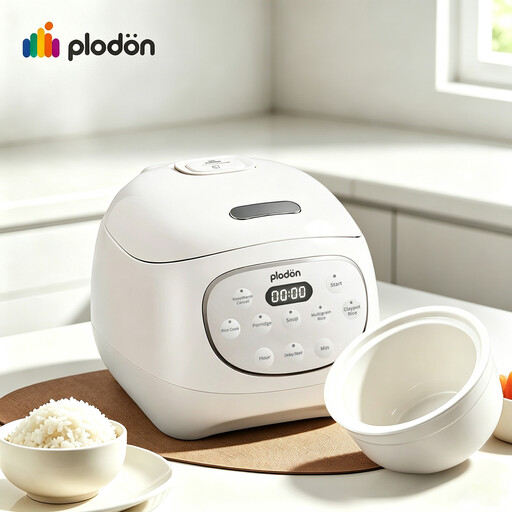 No image available
The stated capacity and suitability for 1–2 people make it a good fit for small portions.
The product description lists five cooking menus, keeping food warm for up to 8 hours and a timer with a delay of up to 23 hours.
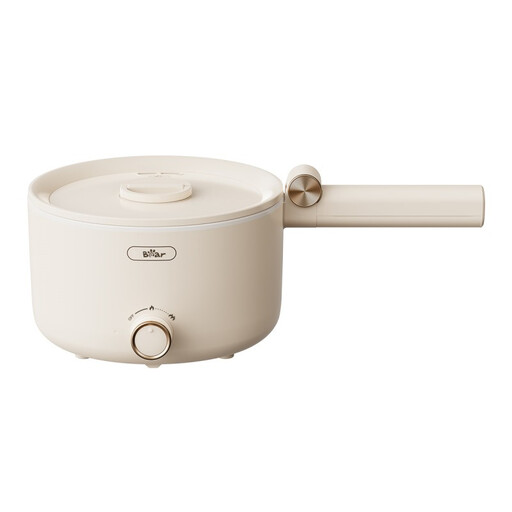 No image available
The product description says it’s suitable for individual meals and student accommodation.
It lists boiling, stewing and steaming, with two power settings.
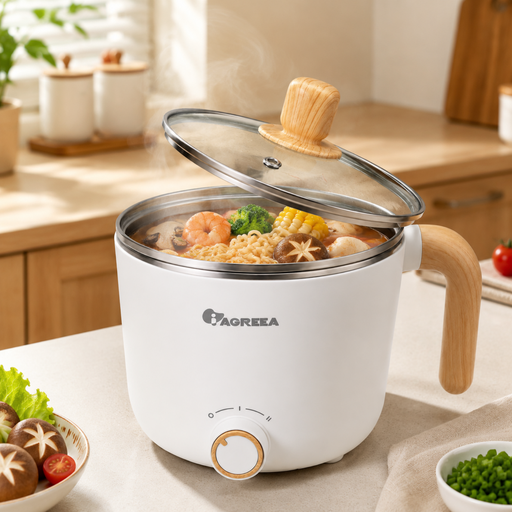 No image available
The product description says it’s suitable for 1–2 people and small spaces.
It lists cooking, rice and soup settings, with two power levels.
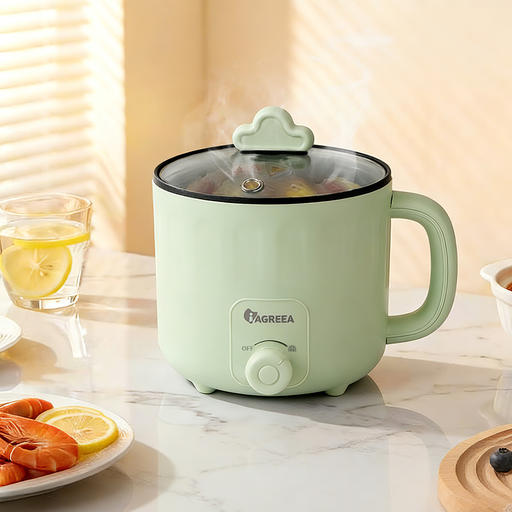 No image available
The product description lists students and use in a halls of residence room as possible scenarios.
It lists boiling, stewing and simmering, as well as a non-stick coating and automatic shut-off.
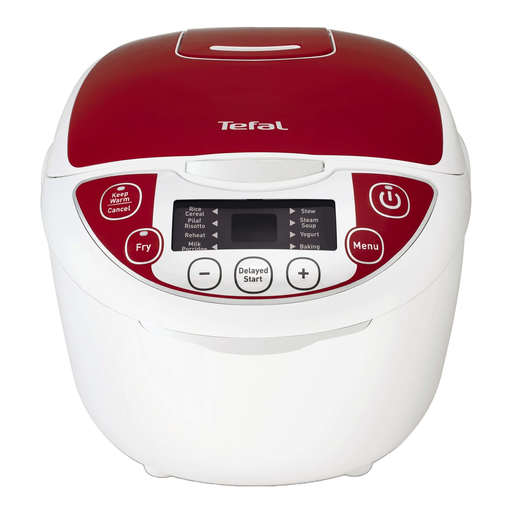 No image available
This model could be a good fit if you want to cook rice or soup as well as heat up beans.
The manufacturer lists 12 cooking programmes; the manual includes ‘Reheat’ and ‘Steam/Soup’. It doesn’t recommend washing the inner pot in the dishwasher.
No. Voedingscentrum says that tinned pulses are already cooked and only need reheating, following the instructions on the packaging. This doesn’t automatically apply to dried beans.
Leave leftovers to cool within 2 hours, then keep them in the fridge. When you use them, heat them thoroughly until steaming hot, stirring them as you go; Voedingscentrum advises against reheating them a second time.
Stay nearby while cooking and don’t plug extension leads into one another. Brandweer Nederland gives this advice for student accommodation; it isn’t model-specific installation guidance.
For electrical appliances sold on the Dutch market, Ondernemersplein, the Dutch government’s business information portal, explains the applicable European safety requirements, CE marking and EU Declaration of Conformity. Check these for the exact model. ACM ConsuWijzer explains that under the statutory guarantee, the retailer must offer an appropriate free solution if a product breaks sooner than you could reasonably expect during normal use.
In many cases, distance purchases come with a 14-day cooling-off period. The Dutch government advises checking the applicable exceptions and the information provided by the retailer.