
Cook making portions to store
Wants to make oxtail stew for future meals in one cooking session, so needs to focus on the usable pot capacity and how to portion the food safely.


For large batches of oxtail stew, a multicooker with pressure-cooking, sauté and slow-cooking functions is useful if you want to choose between cooking methods. If you have time to let it simmer gently, you could also consider a model without a pressure function. Check the usable capacity rather than relying on the stated litre capacity alone: the Instant Pot Duo manual limits filling to two-thirds for pressure cooking, or half for ingredients that expand. Remember to allow time to portion and store leftovers safely, too.
Wants to make oxtail stew for future meals in one cooking session, so needs to focus on the usable pot capacity and how to portion the food safely.
Wants the option of pressure-cooking oxtail and considers the full cooking time, including pressure release, rather than just the set cooking time.
Can plan for a longer cooking time and make an informed choice between slow cookers with and without a pressure function.
| What to consider | What should you check? | Who should pay particular attention? |
|---|---|---|
| Usable capacity | Compare the amount of meat, vegetables and liquid with the fill line in the manual for the exact model. The Instant Pot Duo manual specifies a maximum fill of 2/3 for pressure cooking and 1/2 for ingredients that expand. | If I want to make several portions at once, I need to know how much will fit below the permitted fill line; around 36% of consumers prioritise usable pot capacity. |
| Total cooking time | Check whether the appliance pressure-cooks and how the manual or recipe says to release the pressure. The set cooking time is not the total cooking time. | If I want to make a stew after work, I also need to allow for the time it takes to build up and release pressure; around 29% of consumers prioritise cooking time. |
| Cooking methods | Check whether each version has pressure-cooking, slow-cooking and sauté functions. Don’t assume a multicooker has these features just because it is called a ‘multicooker’. | If I want to brown ingredients before cooking them slowly or under pressure, I want the flexibility to do both in one appliance; around 21% of consumers prioritise cooking methods. |
| Cleaning and storage | Check which parts can be cleaned according to the manual, and plan for sealable portions and enough fridge or freezer space. The Netherlands Nutrition Centre advises cooling leftovers within 2 hours and storing them in a sealed container. | If I want to tidy up quickly after cooking and store portions, I pay attention to cleaning instructions and storage steps; around 14% of consumers prioritise ease of cleaning. |
The Instant Pot Duo manual does not allow you to fill the pot to the brim when pressure-cooking. Bones, vegetables and liquid all take up space.
Before deciding on batch size, compare the quantity of ingredients with the fill line in the manual for the exact model.
According to Instant Pot, the Duo 7.6L combines pressure-cooking, slow-cooking and sautéing for anyone looking for several cooking methods and a higher stated pot capacity.
According to Philips, the Philips HD2616/70 has a 6 L pot, pressure-cooking, slow-cooking and sauté functions, and automatic pressure release.
The Turbo Cuisine CY7548, which Tefal identifies by the reference CY754830, combines pressure-cooking, slow-cooking and stir-frying, among other functions.
According to Russell Hobbs, the Good to Go is a 6.5 L multicooker with slow-cooking and roasting functions, among others. It may suit you if you don’t necessarily want to pressure-cook.
This selection features multicookers with pressure-cooking and slow-cooking functions, for anyone who wants to choose between these methods when batch cooking.
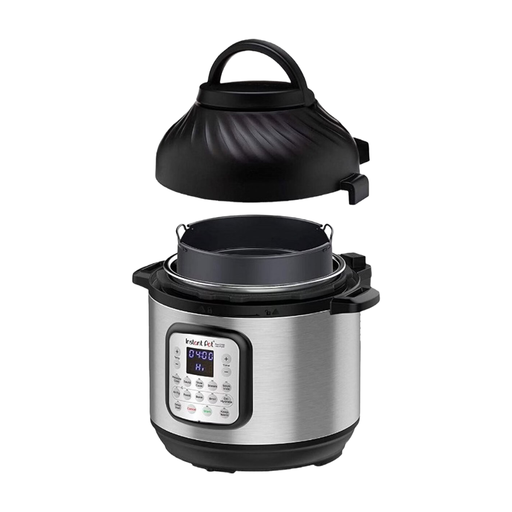 No image available
The stated capacity and pressure-cooking, sauté and slow-cooking functions suit anyone who wants to cook several portions at once.
Capacity: 7.6 L. The description lists pressure-cooking, sautéing and slow-cooking, plus two lids for pressure-cooking and air-frying. Allow the pressure to release completely and wait for the float valve to drop before opening.
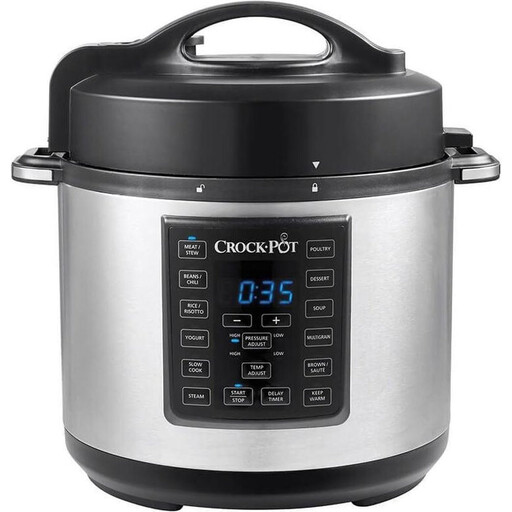 No image available
The pressure-cooking and slow-cooking functions suit anyone who wants to make several portions and choose between these cooking methods.
Capacity: 5.6 L. The product lists 1000 W, 12 programmes, a timer, and pressure-cooking and slow-cooking functions. Keep to the MAX line and don’t force the lid open while the float valve is raised.
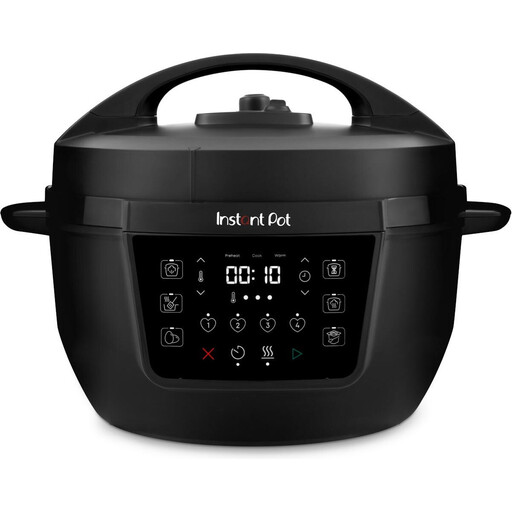 No image available
The stated pot capacity and cooking functions suit batch cooking when you want the option to brown ingredients, pressure-cook or slow-cook.
Capacity: 7.1 L. The description lists pressure-cooking, sauté and slow-cooking functions, as well as a stainless steel inner pot.
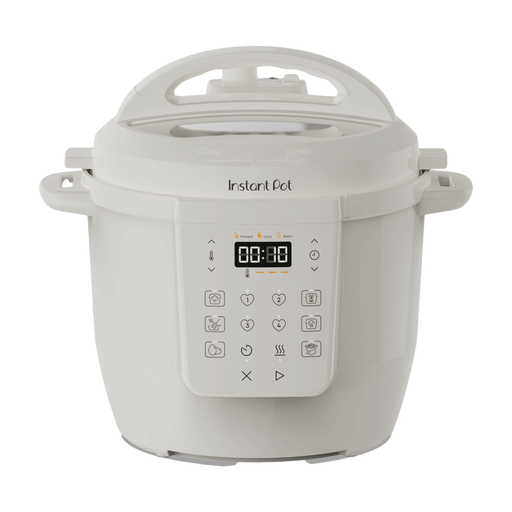 No image available
The combination of pressure-cooking, slow-cooking and sautéing suits anyone who wants to carry out several steps of a stew recipe in one appliance.
Capacity: 5.7 L. The description lists seven functions and 12 programmes, including pressure-cooking, slow-cooking and sautéing. Keep to the maximum fill line and only open the lid once the pressure has been released.
 No image available
The stated capacity and pressure-cooking and slow-cooking functions suit anyone who wants to make a larger batch of stew.
Capacity: 7.6 L. The product lists 12 programmes and pressure-cooking, slow-cooking, stir-frying and steaming functions. Keep to the MAX line and use the 1/2 line for ingredients that expand; don’t open the lid while the appliance is under pressure.
No. The Instant Pot Duo manual specifies a maximum of 2/3 capacity, or 1/2 for ingredients that expand during cooking, such as rice or dried vegetables. For another model, follow the fill line and instructions in its own manual.
Follow the manual for the exact version when filling the pot, handling the lid and valves, and cleaning the appliance. The Instant Pot Duo manual warns against forcing the lid open before the pressure has fully released, and advises checking that the valves are not blocked before use.
According to the Netherlands Nutrition Centre, cool leftovers within 2 hours and store them in a sealed container in the fridge or freezer. The Storage Guide recommends keeping them for 2 days in the fridge or 3 months in the freezer; reheat each portion until piping hot all the way through.
Yes. According to the Netherlands Food and Consumer Product Safety Authority (NVWA), CE marking is required for electrical products sold on the Dutch market. The NVWA says that testing is not mandatory for this product group, so CE marking is not the same as proof of an independent product test.
No, not to benefit from your statutory guarantee rights. According to the Government of the Netherlands, you should contact the seller if there’s a problem with a product. An extended warranty is only worthwhile if its terms give you more rights than the statutory guarantee.