
Cooking to a set mealtime
You want to make broth for others, but you don’t always have hours to prepare. Compare the pressure-cooking function, sauté function and pressure-release steps.


Choose based on how much broth you need and when you plan to start. A multicooker with a pressure-cooking function offers a quicker way to cook, while slow cooking suits you if you can start well in advance. A model with both functions lets you choose between the two methods. Also check the maximum fill level, the sauté function and the pressure-release instructions. Instant Pot, Tefal and Russell Hobbs list these features for specific models, but this is not an independent taste comparison for mushroom broth.
You want to make broth for others, but you don’t always have hours to prepare. Compare the pressure-cooking function, sauté function and pressure-release steps.
You start earlier in the day and prefer a gentle cook or the option to check on your broth as it cooks. Compare the slow-cook and cooking functions on each model.
You make smaller and larger batches at different times. Compare the pot capacity with the permitted fill level for soup, as well as the space the appliance takes up.
First decide how much broth you want to make and when you’ll start. Then choose a cooking method and check how easy the appliance is to use.
A good fit if: you sometimes start shortly before mealtime, but on other days want to let the broth cook slowly in advance.
Bear in mind: you can only open the pot once the pressure has been released according to the instructions. The stated capacity is not necessarily the permitted fill level for pressure cooking.
A good fit if: you can start well in advance and want to cook, sauté or slow-cook without using pressure.
Bear in mind: you won’t have the quicker pressure-cooking option. Check the functions of the exact model.
A good fit if: you regularly cook for a larger group and are considering a model with automatic pressure release.
Bear in mind: the pot capacity is not the same as the permitted amount of broth for pressure cooking. Check the external dimensions too.
| What to consider | What to look for | Who is this important for? |
|---|---|---|
| Serving on time | Check whether the exact model has a pressure-cooking programme and a sauté function. Read the pressure-release instructions in advance. | If I only start shortly before mealtime, I want to know which cooking options the model offers and when I can open the pot. Around 36% of consumers prioritise being able to serve on time. |
| Enough usable broth | Compare the pot capacity with the fill markings and the model-specific instructions for pressure cooking. | If I’m cooking for a group, I want to make enough broth without exceeding the permitted fill level. Around 29% of consumers prioritise having enough usable capacity. |
| Slow cooking | Check whether the model has a slow-cook function and read the instructions for using it. | If I start well in advance, I want to let the broth cook gently without planning a pressure-cooking session. Around 21% of consumers prioritise cooking without pressure. |
| Controls and cleaning | Look at how the appliance is operated, which parts can be removed and how they should be cleaned. | After a meal with family and friends, I want to fit using and cleaning the appliance easily into my routine. Around 14% of consumers prioritise ease of use after cooking. |
The capacity in litres doesn’t tell you how much liquid you can put in the model you’ve chosen when pressure cooking.
Check the fill markings and the instructions for the exact model before deciding how much broth to make.
If the permitted amount is too small for your group, you may need to cook in several batches.
The Russell Hobbs Good to Go 28270-56 lists slow cooking and cooking among its functions, but not pressure cooking; the Instant Pot Pro does list it.
Check the functions of the exact model before planning your cooking time.
A keep-warm function is no substitute for advice on cooling leftovers quickly and storing them in the fridge.
Follow the Voedingscentrum’s storage advice for any leftover broth.
The Duo and Pro offer different combinations of soup, pressure-cooking, slow-cooking and sauté functions. Check the version you’re considering.
According to Tefal, the Turbo Cuisine CY7548 combines several cooking methods and is operated using a dial.
The Good to Go 28270-56 is worth considering if you don’t need a pressure-cooking function.
The Philips 3000 Series HD2823/80 may be worth considering if you’re looking for a larger pot and several cooking methods.
These products include multicookers with pressure-cooking and slow-cooking functions, as well as a slow cooker for anyone who wants to start in advance and cook gently. Check the fill instructions and available functions for each model.
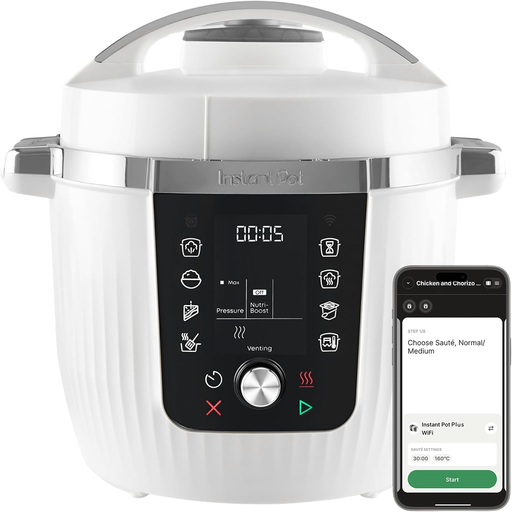 No image available
An option if you want to switch between pressure cooking and slow cooking, and sauté ingredients in the same pot.
Stated capacity: 5,7 L; the description lists a stainless steel inner pot and a dishwasher-safe pot and accessories.
Allow the pressure to release fully before opening the lid, and don’t exceed the MAX mark.
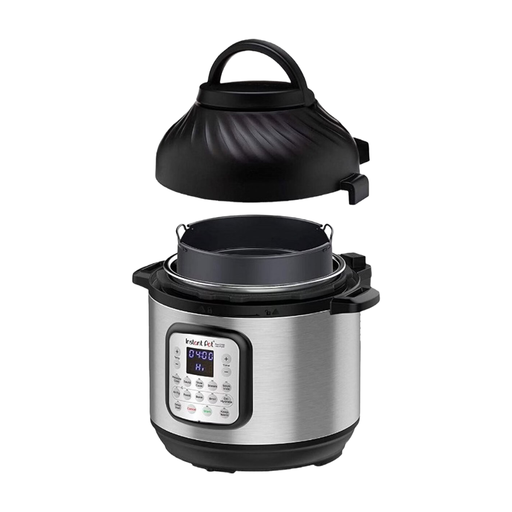 No image available
An option if you want to use pressure cooking, slow cooking and sautéing in one appliance.
Stated capacity: 7,6 L; according to the product description, this model has two lids, including one for pressure cooking.
The pot capacity is not the same as the permitted amount of broth for pressure cooking. Allow the pressure to release fully before opening the pot.
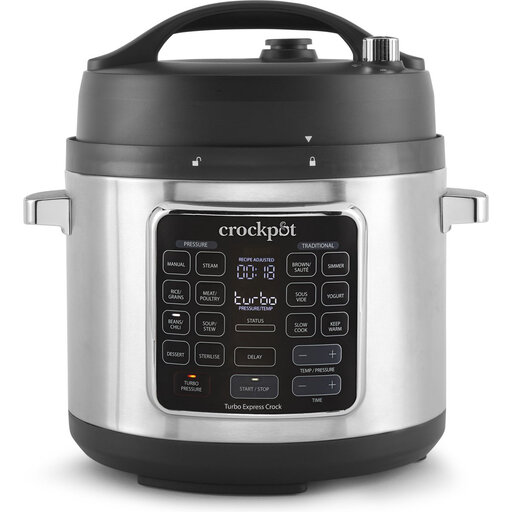
 No image available
An option if you want to combine pressure cooking and slow cooking for a meal with family and friends.
Stated capacity: 6 L; the product description lists a stainless steel inner pot and dishwasher-safe parts.
Don’t open the pot while it’s under pressure, and don’t exceed the MAX mark.
 No image available
An option if you start in advance and want to let the broth cook slowly without needing a pressure-cooking function.
Stated capacity: 5,6 L; the product description lists digital controls, a timer and a dishwasher-safe pot.
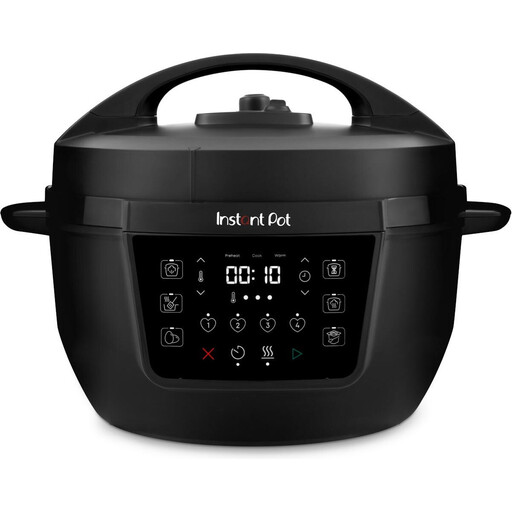 No image available
An option if you want to combine pressure cooking, slow cooking and sautéing for a larger meal.
Stated capacity: 7,1 L; the product description lists a stainless steel inner pot and a wide inner pot.
Allow the pressure to release fully before opening the pot, and follow this model’s fill markings.
No. The stated capacity is the pot capacity. For pressure cooking, follow the fill markings and instructions for the exact model. Instant Pot advises filling its pots no more than two-thirds full for most foods, but this isn’t a universal limit for all brands.
On the Instant Pot models covered by the instructions cited, slow cooking doesn’t use pressure and the steam release switch should be set to venting. For other models, follow their own instructions.
According to the Voedingscentrum, cool leftovers and put them in the fridge or freezer, well covered, within two hours of cooking. The Voedingscentrum recommends keeping your fridge at 4 °C and storing leftovers in the fridge for no more than two days. For specific dishes, also check the Bewaarwijzer.
No. According to the Dutch government, there is no fixed statutory warranty period in the Netherlands. What you can expect from a product depends, among other things, on the product itself and the information provided at the time of sale. If there’s a problem, contact the seller; a manufacturer’s guarantee is separate from this statutory right.
For electrical products covered by the relevant regulations, the Netherlands Food and Consumer Product Safety Authority states that CE marking is mandatory. A CE marking on its own doesn’t prove that an individual item being offered for sale has been checked here.