
Cook with limited worktop space
You want to prepare small portions in one pan without taking over your work surface. Also allow room to use the lid safely; check the manual for the model you choose.


For minestrone with tinned beans, a multicooker with a sauté function and a standard cooking or simmering setting is usually enough; there’s no need to pressure-cook the beans for a long time. If you’re short on worktop space, focus on the appliance’s external dimensions, the space needed to open the lid and how much soup you’ll actually make at once. A pressure-cooking function may be worth considering if you’d also use it for other dishes.
You want to prepare small portions in one pan without taking over your work surface. Also allow room to use the lid safely; check the manual for the model you choose.
You want to sauté the vegetables in the same pan first, then add the rinsed beans to the soup. The Voedingscentrum describes this method in a quick bean soup recipe.
You want to make more soup at a time and are weighing up a larger pan against the space available. Cool leftovers quickly and store them in a tightly sealed container, as advised by the Voedingscentrum.
Start with the space available and the portion size you need. Then check that the exact model can both sauté vegetables and gently cook or simmer the soup.
| What to consider | What should you check? | Who is this important for? |
|---|---|---|
| Worktop space | Measure the external dimensions of the exact model and check how much room is needed to open or remove the lid. | If I have a small kitchen, I want to keep enough worktop space free and be able to use the lid safely. Around 36% of consumers say available space is their main priority when choosing. |
| Cooking in one pan | Check whether the model has a sauté or sear function, as well as a cooking, simmering or soup setting. | If you want to sauté vegetables in the same pan before cooking the soup, you won’t need to allow for a separate pan for those steps. Around 29% of consumers say one-pot cooking is their main priority. |
| Amount of soup | Compare the portions you want to make with the usable fill limit for your chosen cooking method, not just the stated capacity. | If I want to make several portions at once, I weigh up the extra capacity against the space the appliance takes up. Around 21% of consumers prioritise the amount they can cook at a time. |
| Pressure-cooking function | Decide whether you also want to pressure-cook other dishes; the beans in the recipe described don’t need a long pressure-cooking stage. | If you mainly want a pressure-cooking function for other meals, you can factor it into your choice without treating it as essential for this soup. Around 14% of consumers prioritise versatile pressure cooking. |
The stated capacity isn’t the same as the permitted fill level. The Instant Pot Duo manual consulted gives a limit of two-thirds full, or half full for ingredients that expand during cooking.
Compare your portions with the fill limit and instructions for the exact model and cooking setting.
In the Voedingscentrum’s quick bean soup recipe, rinsed beans are simmered for another 5–10 minutes after the vegetables have been sautéed. A long pressure-cooking stage isn’t needed for this example.
Choose a pressure-cooking function mainly if you’ll also use it for other ingredients or dishes.
The Duo Mini is a compact pressure-cooking option with a stated capacity of 3 litres. Instantpot.nl lists sauté, soup and pressure-cooking functions.
The RK8121 offers frying, cooking and stewing, as well as manual temperature and time settings. This product range hasn’t been shown to offer a full pressure-cooking option.
The Good to Go 28270-56 is a non-pressure-cooking option with searing, cooking and slow-cooking functions. Russell Hobbs lists a 6.5-litre pan.
According to Philips, the HD2616/70 is a pressure-cooking multicooker with a stated capacity of 6 litres and settings for soup, sautéing and manual cooking.
This selection includes cooking pots for smaller portions of soup and larger batches, with sauté and simmering functions as well as a compact pressure-cooking option.
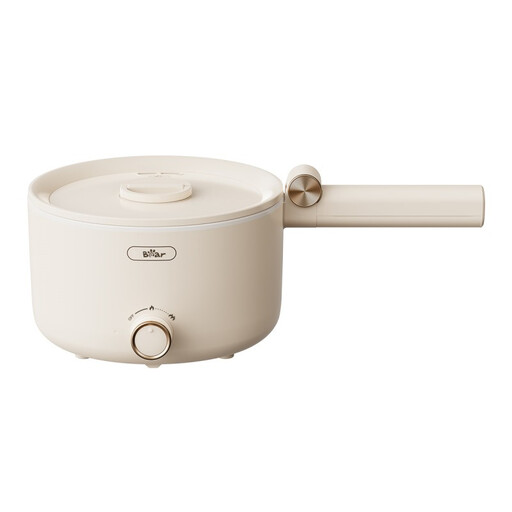 Image unavailable
An option for cooking a smaller amount of soup or letting it simmer gently.
Capacity: 1.6 litres. The description lists cooking, stewing and steaming in the same pot.
 Image unavailable
A larger pot to compare if you want to make more soup at a time and have room for the appliance.
Capacity: 7.1 litres; the description lists up to 10 portions and sauté, slow-cooking and steaming functions. According to the product description, the inner pot isn’t suitable for use on a hob or in an oven.
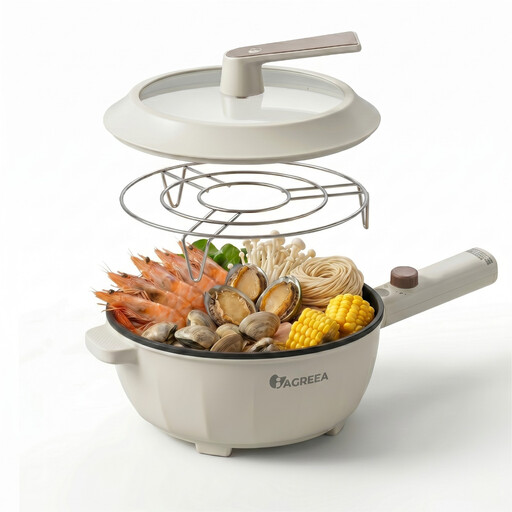 Image unavailable
A cooking pot to consider for smaller meals when you want to start by sautéing vegetables, then cook the soup.
Capacity: 2.3 litres; power: 1600 W. The description lists three adjustable power settings, sautéing and slow cooking, and gives a capacity of 1–3 people.
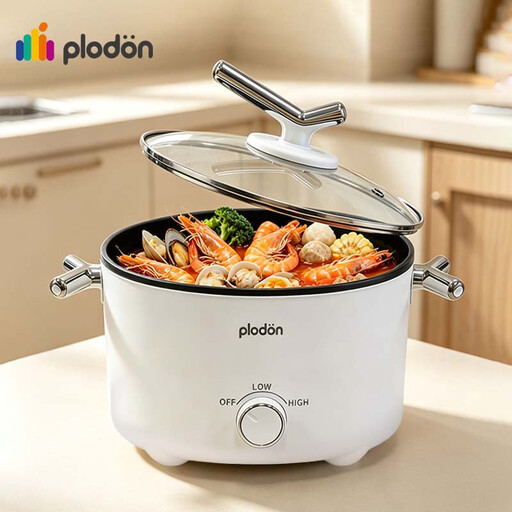 Image unavailable
A small cooking pot to compare if you’re looking for a simple cooking or simmering setting for soup.
Capacity: 2.0 litres; power: 1000 W. The description lists two heat settings and a glass lid.
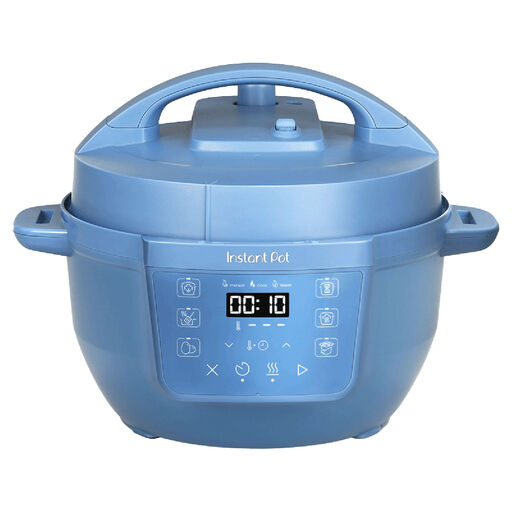 Image unavailable
A compact pressure-cooking option to compare if you’d also like to use pressure cooking for other dishes.
Capacity: 3.8 litres. The description lists sautéing, slow cooking, steaming and pressure cooking, with capacity for up to four portions. When pressure cooking, observe the fill limit and don’t open the lid until the pressure has been fully released.
No, not in the Voedingscentrum’s quick bean soup example: rinsed beans are simmered for another 5–10 minutes after the vegetables have been sautéed. This is an example from a recipe, not a fixed cooking time for every ingredient in minestrone.
Follow the manual for the exact model. The Instant Pot Duo manual consulted gives a maximum fill level of two-thirds, or half full for ingredients that expand during cooking. Don’t force the lid open; wait until the pressure has been fully released.
Cool leftovers quickly and store them in a tightly sealed container in the fridge or freezer. The Voedingscentrum advises not leaving leftovers out of the fridge for more than 2 hours; storage time depends on the soup and the conditions.
For consumer purchases, the seller is responsible for the statutory guarantee; the ACM describes repair or replacement as possible solutions when a product is faulty. When you buy online from a business, a statutory 14-day cooling-off period after delivery generally applies, with some exceptions.
The NVWA outlines statutory safety requirements for electrical appliances and the obligations of manufacturers and market operators. This doesn’t in itself mean that a specific model on sale has been checked individually.