
Cook who uses dried chickpeas
You want to cook dried chickpeas for stews regularly, so you’re weighing up pressure cooking against conventional cooking. The Netherlands Nutrition Centre says dried pulses need to be cooked for a long time.


If you often use dried chickpeas, choose a multicooker with an explicit pressure-cooking function. For a stew made with chickpeas that are already cooked, sautéing and simmering may be enough. Also compare the usable filling capacity and pressure-release instructions: the stated pot capacity does not automatically tell you how much you can use for pressure cooking.
You want to cook dried chickpeas for stews regularly, so you’re weighing up pressure cooking against conventional cooking. The Netherlands Nutrition Centre says dried pulses need to be cooked for a long time.
You come home from the market with vegetables and use chickpeas that are already cooked. In that case, being able to brown and simmer in one appliance matters more than having a pressure-cooking programme. The Netherlands Nutrition Centre says pulses from a jar, tin or pouch only need to be heated through.
You make a larger batch or cook ahead, and want to match the pot capacity to the permitted fill level for pressure cooking. The Instant Pot manual warns that dried pulses must not exceed the model-specific fill line.
A good fit if: you regularly use dried chickpeas or want to cook under pressure as well.
Bear in mind: pressure release and the fill limit for ingredients that expand; the set cooking time is not necessarily the total preparation time.
A good fit if: you usually use chickpeas that are already cooked and mainly want to brown and simmer your ingredients.
Bear in mind: don’t assume it can pressure cook unless this function is listed for the exact model.
A good fit if: you regularly make several portions and have enough room for a larger appliance.
Bear in mind: base portion sizes on the fill limit in the manual, not just the stated capacity.
| What to consider | What should you check? | Who is this important for? |
|---|---|---|
| Dried chickpeas | Check whether the exact model has a pressure-cooking programme, and follow the instructions for dried pulses. | If I often cook dried chickpeas, I want to know whether my appliance has a suitable cooking setting. Around 36% of consumers put this first when choosing. |
| Browning and stewing | Look for a sauté or browning setting, as well as a simmer or stew setting. | If I want to make a stew straight after coming back from the market, using chickpeas that are already cooked, I mainly look for the ability to brown and simmer in the same pot. Around 29% of consumers put this need first. |
| Room for portions | Compare the amount you want to cook with the fill markings and manual for the exact model, and consider how much space you have in your kitchen. | If I want to cook several portions or prepare food to store, the permitted fill level needs to suit my recipe. Larger portions are the deciding factor for around 21% of consumers. |
| Cleaning and maintenance | Check which parts the manufacturer says are dishwasher-safe and whether a suitable sealing ring is available. | If I want to keep washing up to a minimum after cooking, I check which parts of the pot and lid are easy to clean. Around 14% of consumers put cleaning and maintenance first. |
A multicooker may have cooking and simmering settings without a pressure-cooking programme. That distinction matters if you want to cook dried chickpeas.
Check the functions of the exact model and choose one with an explicit pressure-cooking function if you need it.
For ingredients that expand, such as dried pulses, the manual may specify a lower fill limit. The stated pot capacity alone therefore doesn’t tell you how much you can cook under pressure.
Check the fill markings and instructions for the model you choose before deciding how much to use in your recipe.
Cooking-time guidance may depend on the settings and conditions. An energy comparison for a different dish doesn’t necessarily tell you anything about chickpea stew.
Compare the stated functions and follow the cooking instructions for your appliance and ingredients.
The Duo 5.7 L and Pro 7.6 L are described as multicookers with pressure-cooking functions. The Duo is also listed with sautéing and a bean programme.
Philips describes the 3000 Series HD2616/70 as a 6 L model with pressure cooking, sautéing and slow cooking among its functions.
Tefal describes the All-in-One CY505E as a 6 L model with pressure-cooking, stewing, simmering and browning programmes.
The Good To Go 28270-56 is described as a 6.5 L multicooker with functions including searing, simmering, boiling and keeping food warm.
This selection includes multicookers for stews, with models that offer pressure cooking and others designed for sautéing and simmering. Check that each appliance’s functions and permitted fill level suit your ingredients.
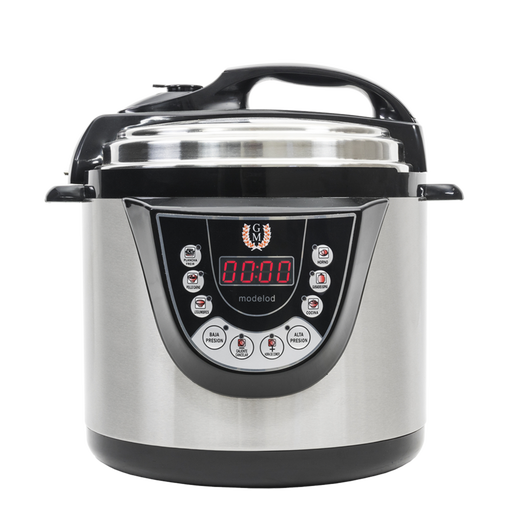 No image available
An option to compare if you’re looking for a programmable pressure cooker for stews.
The product title lists a 6 L capacity, 9 cooking menus and 2 pressure settings. The product information also gives a usable capacity of 5 litres; compare this with the amount your recipe requires.
The product title also mentions a frying function and voice control.
 No image available
A good fit if you’re looking for a larger pot for browning and slow cooking. Check separately whether it has a pressure-cooking function if you need one for dried chickpeas.
The product title lists 7.1 L, 4-in-1, sautéing and steaming, and says it serves 10 portions.
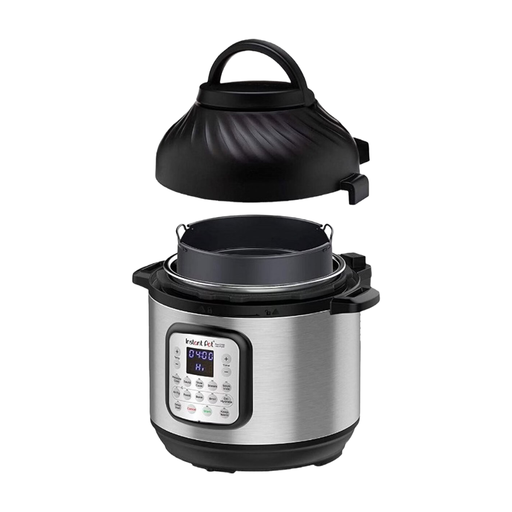 No image available
A larger pressure multicooker to compare if you want to prepare several portions. Follow the model-specific fill limit for ingredients that expand.
The product title lists 7.6 L, 11-in-1, an electric pressure cooker and air fryer, and two lids.
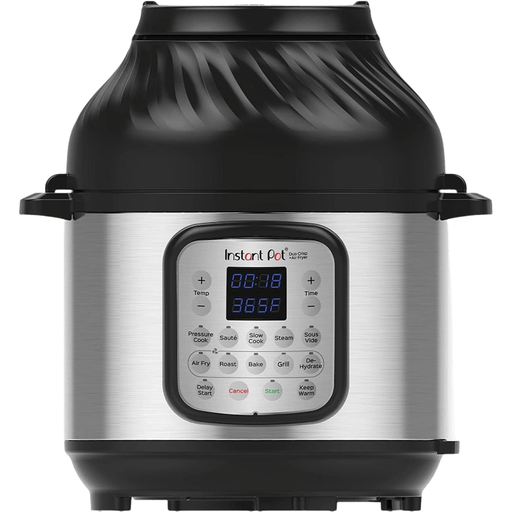 No image available
Worth considering if you want pressure cooking and sautéing in one appliance. Follow the instructions for your chosen model and ingredients.
The product title lists 5.7 L, 11-in-1, an electric pressure cooker and air fryer, and two lids.
 No image available
A larger pressure cooker to compare if you want to cook dried pulses. Check the instructions and fill limit for the exact model.
The product title lists 7.6 L, 9-in-1 and 12 pre-set programmes. Check that the listed cooking settings suit your recipe.
No, not if you’re using cooked chickpeas from a tin, jar or pouch; the Netherlands Nutrition Centre says these only need to be heated through. Dried chickpeas need to be cooked until thoroughly tender. Pressure cooking is one possible way to do this, but it isn’t essential for every stew.
No. For the Instant Pot 5.7 L model consulted, the manual says not to fill the pot above the ‘1/2’ line when using ingredients that expand, such as dried beans. For other models, follow their own manuals and fill markings.
Leave leftovers to cool, then put them in an airtight container in the fridge or freezer within two hours. The Netherlands Nutrition Centre advises keeping covered leftovers in the fridge for no more than two days.
No. According to the Dutch government, the Netherlands has no fixed statutory guarantee period. You’re entitled to a product that works as it should, depending on what you can reasonably expect. Discuss any fault with the seller; any manufacturer’s guarantee offered is separate from this.
CE marking may be required for electrical and electronic equipment covered by applicable harmonised EU rules. According to Your Europe, the manufacturer uses the mark to indicate that the product meets the applicable requirements; it is not an independent quality mark. Check the marking and documentation for the exact appliance.