
Cooking for a crowd of neighbours
You want to know whether the stew will fit within the permitted fill level in one go, or whether you’ll need to plan several cooking batches.


First, decide how much stew you want to make in one go, then check the fill limit for your chosen model: the stated capacity of the pot isn’t necessarily the amount you can prepare safely. If you want to cook dried chickpeas in the appliance, choose a model with a pressure-cooking function. If you’re using tinned or jarred chickpeas and can plan ahead, a slow cooker may be enough. Before buying, also check the manual and CE marking for the specific appliance on offer; the NVWA states that CE marking is compulsory for electrical products.
You want to know whether the stew will fit within the permitted fill level in one go, or whether you’ll need to plan several cooking batches.
You’re comparing a pressure-cooking function with a method that involves cooking the chickpeas separately first.
You’re using cooked chickpeas, planning the stew around serving time and thinking ahead about how to store any leftovers.
Choose this option: if you want to cook dried chickpeas in the same appliance and also sauté or stew.
Bear in mind: the fill marking and the instructions for building and releasing pressure on the specific model.
Choose this option: if you’re using tinned or jarred chickpeas, or cooking dried chickpeas separately in advance.
Bear in mind: a slow-cooking setting isn’t the same as a pressure-cooking function, so dried chickpeas may need extra preparation.
| What to consider | What to look for | Who is this most relevant to? |
|---|---|---|
| Usable pot capacity | Work out the quantity using your own recipe, then check the model’s fill marking and manual. If necessary, plan to cook in several batches. | I want to make enough stew for the group without filling the pot above the permitted level; around 36% of consumers prioritise usable capacity. |
| Dried chickpeas | Check whether the exact model has a pressure-cooking function and follow the instructions for liquid and filling. The Voedingscentrum states that dried pulses need to be cooked for a long time, while tinned or jarred chickpeas only need to be heated through. | If I want to cook dried chickpeas in the same appliance, I focus mainly on the cooking function; around 29% of consumers give this priority. |
| Planning around mealtimes | Check which settings the model offers for your recipe, and allow for every preparation step in your plans, not just the cooking time. | I want to serve the stew on time, so I factor in the preparation too; around 21% of consumers prioritise serving time above all else. |
| Cleaning and storage | Check which parts can be removed, how they should be cleaned and how much space the appliance and any lids will take up. | After the neighbourhood dinner, I want to clean the pot easily and put the appliance away; around 14% of consumers prioritise maintenance and storage space. |
The stated capacity doesn’t tell you how much you can prepare at once using your recipe. Ingredients that expand may need a lower fill level.
Start by deciding on your recipe and the number of people you’re serving, then compare the quantity you need with the fill marking and manual for the exact model.
If the quantity won’t fit into one permitted cooking batch, an extra batch could push back your serving plans.
A slow-cooking function doesn’t mean the appliance can also cook under pressure. This matters if you want to cook dried chickpeas in the same appliance.
Look for a pressure-cooking function specifically in the information and manual for the exact model. If it doesn’t have one, you can cook dried chickpeas separately, following suitable cooking instructions.
A keep-warm function on its own doesn’t tell you how to store leftovers safely after serving.
Plan how you’ll portion and chill the leftovers too. The Voedingscentrum advises putting them in the fridge within 2 hours of cooking.
The product ranges listed offer different ways to cook. Choose according to your recipe, the quantity you need and the manual for the exact model. The NVWA states that CE marking is compulsory for electrical products newly offered on the Dutch market; check the marking on the specific appliance.
According to Instant Pot, the 7.6 l Duo combines pressure cooking, sautéing, slow cooking and keeping food warm. The 7.1 l Superior 4-in-1 is designed for functions including slow cooking and doesn’t list a pressure-cooking function.
Philips describes the HD2823/80 as an 8 l multicooker with a stated capacity, pressure cooking, stewing and a bean programme.
According to Tefal, the All-in-One CY505E combines pressure cooking, slow cooking and sautéing in a pot with a stated capacity of 6 l.
The OL750EU is a multicooker with several programmes, including slow cooking.
This selection includes slow cookers for stews made with cooked chickpeas, as well as appliances whose product information lists a pressure-cooking function. Check the CE marking and manual for each specific appliance on offer, and follow the model-specific fill limit when pressure cooking.
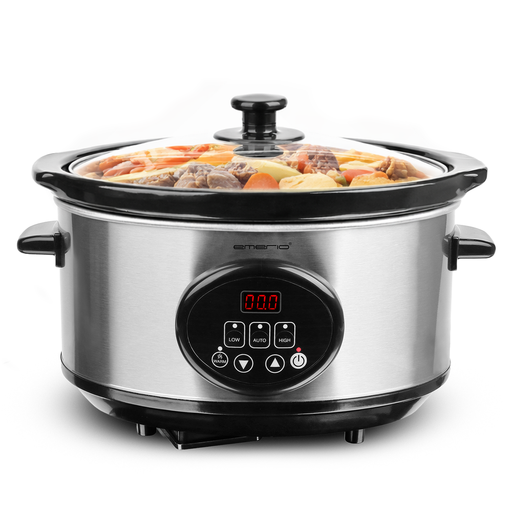 No image available
An option for stews using chickpeas that are already cooked; the product title lists a keep-warm function.
The product title lists a capacity of 3.5 l, a digital display and a ceramic inner pot. The inner pot and exterior get hot; use oven gloves and don’t place the inner pot on a hob or in an oven.
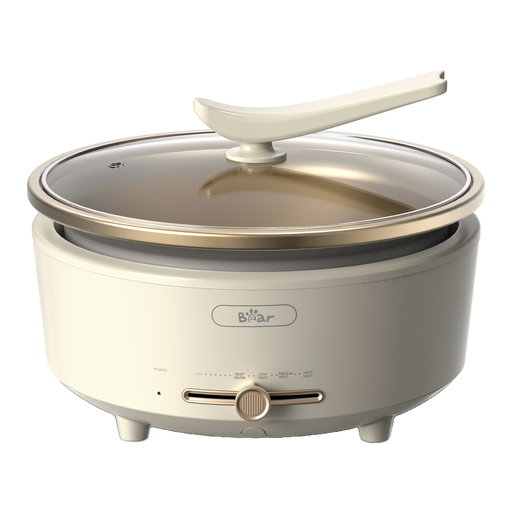 No image available
A possible choice for making stew with cooked chickpeas; check the manual to see whether the settings suit your recipe.
The product title lists a capacity of 5 l. If you want to cook dried chickpeas in the appliance, check specifically whether the manual for this model describes a pressure-cooking function. The pan gets hot; don’t immerse the base in water.
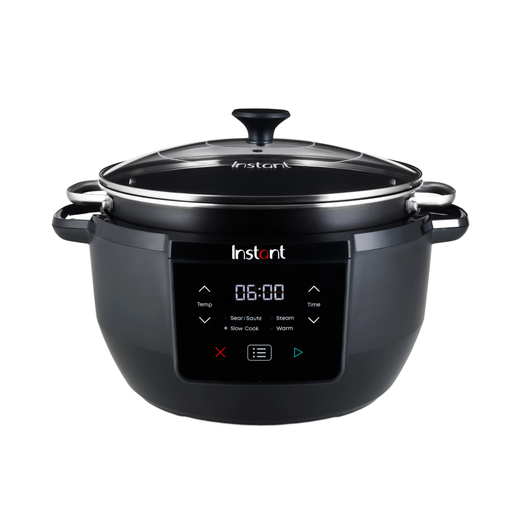 No image available
Suitable for a planned stew with cooked chickpeas; the product title lists slow cooking, sautéing and steaming.
The product title lists a capacity of 7.1 l and up to 10 portions. The description warns that the coating will be damaged above 175 °C; don’t use the inner pot on a hob or in an oven.
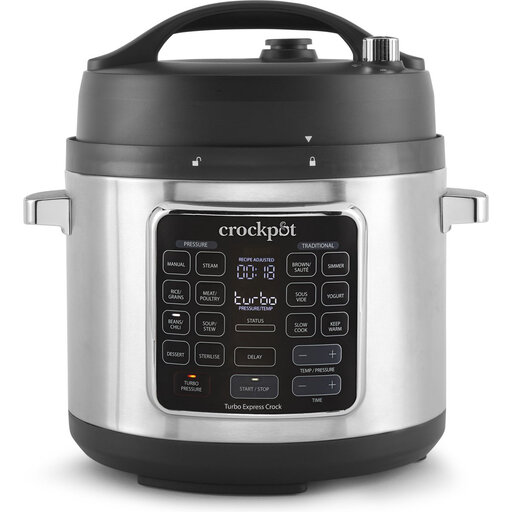
 No image available
An option to look into if you want to cook dried chickpeas in an appliance with a pressure-cooking function.
The product title lists a capacity of 6 l, 1000 W and 14 cooking functions. According to the product description, expanding ingredients such as beans must not exceed the 1/2 fill marking; follow the manual for the specific model.
 No image available
A possible choice for a stew with cooked chickpeas; check the cooking options in the manual for this exact model.
The product title lists a capacity of 5.6 l and three settings. If you want to cook dried chickpeas in the appliance, check specifically whether the manual describes a pressure-cooking function and what fill limit applies.
Not if you’re using tinned or jarred chickpeas: according to the Voedingscentrum, they only need to be heated through. If you want to cook dried chickpeas in the multicooker, check whether the exact model has a pressure-cooking function and follow the cooking instructions; a slow-cooking setting is a different function.
Don’t assume you can when pressure cooking. A Dutch Instant Pot manual says to use the 1/2 fill marking for ingredients that expand during cooking, including dried beans. Check the fill marking and manual for your own model; this specific instruction doesn’t automatically apply to every brand.
The Voedingscentrum advises covering and cooling leftovers, then putting them in the fridge within 2 hours of cooking and keeping the fridge at 4 °C. Reheat leftovers thoroughly until piping hot.
The NVWA states that CE marking is compulsory for electrical products. Check the marking on the specific appliance being offered; a CE marking isn’t a performance test of how well it cooks your stew.
Not automatically. According to the Dutch government, there’s no fixed statutory warranty period in the Netherlands, and the seller must provide a solution if a product is faulty. Before buying extra cover, check what additional protection it offers.