
Cooking for a larger table
You want to make enough stock in one go. So, check the usable pot capacity and fill limit, not just the number of programmes.


Start with the amount of stock you want to serve, then check the maximum fill level for your chosen cooking setting: the stated capacity is not necessarily the usable capacity for pressure-cooking stock. Pressure cooking may suit you if you’re cooking on the day; slow cooking requires more planning ahead. Allow time for straining, too, and for quickly chilling any stock you want to keep for later: the Netherlands Nutrition Centre advises refrigerating leftovers within 2 hours.
You want to make enough stock in one go. So, check the usable pot capacity and fill limit, not just the number of programmes.
You’re making the stock on the day of your dinner party, so you’ll need to allow time for pressure to build and release, as well as for straining.
You’re starting early and want to serve the stock later. Choose slow cooking only if the specific model has this function, and plan to chill and store the stock in line with the Netherlands Nutrition Centre’s advice.
| What to consider | What to look for | Who should pay particular attention? |
|---|---|---|
| Usable capacity | Compare the pot capacity with the maximum fill level for your chosen cooking setting and the amount you want to have after straining. | If I want to make one batch for several guests, I need to know how much food and liquid will actually fit. Around 36% of consumers say having enough usable stock is their main buying priority. |
| Planning for the day | Check whether the model offers pressure cooking, and allow time for pressure to build and release, as well as for straining. | If I have a set serving time, I want the whole cooking process to fit into my schedule, not just the set cooking time. Around 29% of consumers prioritise planning around serving time. |
| Cooking ahead and storage | Check for a slow-cook function, and make room for storage containers in your fridge or freezer. The Netherlands Nutrition Centre advises refrigerating leftovers within 2 hours. | If I make the stock in advance, I want to know how to chill and store it safely afterwards. Around 21% of consumers say cooking and storing food ahead is their main need. |
| Controls and cleaning | Check the instructions for releasing pressure and find out which parts need to be cleaned separately after cooking. | When handling hot liquid and loose ingredients, I want clear instructions for use and cleaning. Around 14% of consumers put ease of use and maintenance ahead of other buying priorities. |
Ingredients take up space, and pressure cooking has a maximum fill level that varies by model. So the pot capacity doesn’t tell you how much strained stock you’ll end up with.
Check your recipe against the fill marks and instructions for the exact model. Be prepared to make a smaller batch or cook in multiple rounds if the pot can’t hold the amount you need.
A test using potatoes doesn’t tell you the total cooking time for chicken stock. Pressure cooking also involves time for the pressure to build and release, and for straining.
Follow a suitable recipe and the instructions for your chosen model. Plan each step around your serving time rather than relying on the set cooking time alone.
A keep-warm function doesn’t remove the need to chill stock promptly if you’re serving it later.
Once cooked, transfer the stock to suitable storage containers and follow the Netherlands Nutrition Centre’s advice to refrigerate leftovers within 2 hours.
The Pro 7,6L and Classic XL 7,1L models list both pressure cooking and slow cooking. Their stated capacity is not the same as the safe fill level for stock.
According to Tefal, the Turbo Cuisine CY7548 combines pressure-cooking, slow-cooking and sauté programmes. This may be useful if you want to complete several cooking steps in one pot.
The 3000 Series HD2823/80 is listed with an 8-litre capacity and automatic pressure release. These are worth considering if pot space and ease of use after cooking matter to you.
The manufacturer describes the 5.6-litre Express CSC051X as offering both pressure cooking and slow cooking.
This selection focuses on multicookers and pressure cookers for making stock on the day you plan to serve it. Compare the stated pot capacity with the fill instructions for the exact model.
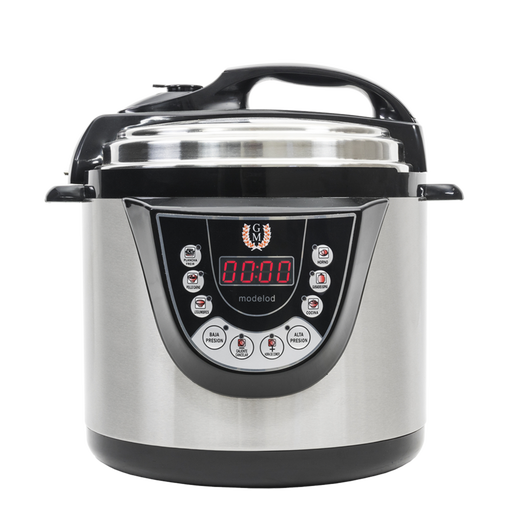 No image available
The listed pressure-cooking function may suit you if you want to make stock on the day. Check the fill limit for your recipe.
The product name lists 6 L, 9 cooking menus and 2 pressure levels.
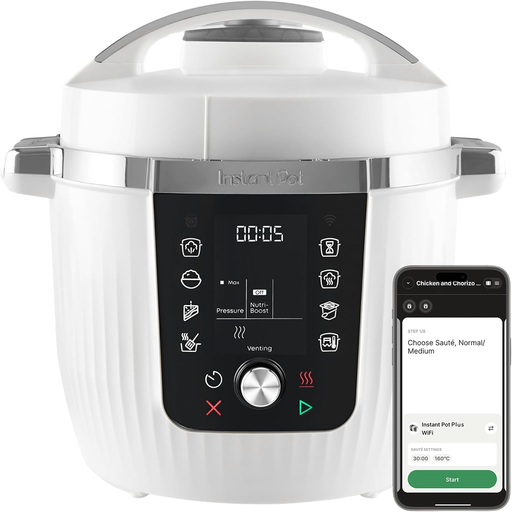 No image available
The listed pressure-cooking and slow-cooking functions give you different ways to prepare your stock. Choose according to your schedule and check the fill instructions for stock.
The product name lists 5.7 L, WiFi, app control and 1200 W.
 No image available
The listed pressure-cooking and slow-cooking functions may suit different preparation schedules. Check the manual for your chosen cooking setting.
The product name lists 6 L, 1000 W, 14 cooking functions and a stainless steel inner pot.
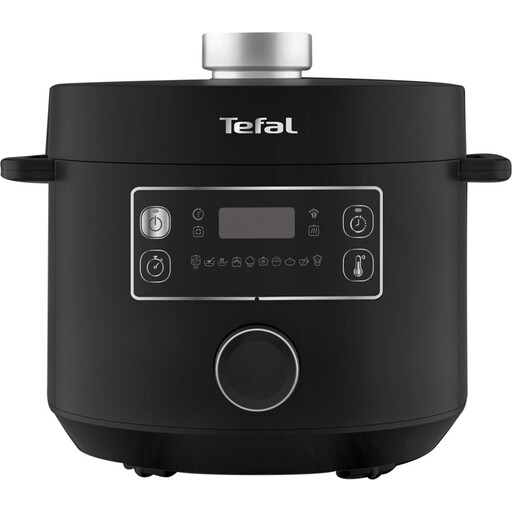 No image available
This model lists a pressure-cooking function. Check the manual for the fill limit and recommended method for making stock.
The product name lists a 5 L pot capacity. Tefal also describes the CY7548 as having a slow-cooking function and a non-stick inner pot.
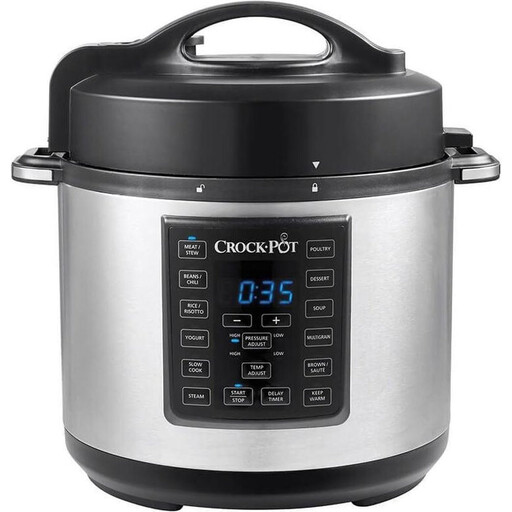 No image available
The product name lists pressure cooking and slow cooking, which may help you choose a cooking method that fits your schedule.
The product name lists a capacity of 5.6L. Check the fill limit and instructions for the exact model before making chicken stock.
No. The stated capacity describes the pot, not the amount of stock you can make under pressure. Check the maximum fill mark and the manual for your model and cooking setting, and allow for the ingredients and straining.
Chill the stock quickly after cooking and refrigerate leftovers within 2 hours. For clear chicken soup, the Netherlands Nutrition Centre recommends keeping it for 2 days in the fridge or 3 months in the freezer.
No. You don’t need an extended warranty to have your statutory rights in the Netherlands. The Dutch government explains that when you buy a product, you’re entitled to a product that works properly, and that you should contact the seller if there’s a problem; there is no fixed statutory warranty period. Compare any additional terms separately with those rights.
Electrical equipment within the scope of the EU Low Voltage Directive must meet the applicable safety requirements and carry a CE marking. EUR-Lex describes the scope as equipment with a rated voltage of 50 to 1,000 V AC or 75 to 1,500 V DC. A claim on a product page does not amount to an individual check of the model being sold; check the marking and accompanying documentation.