
Small-batch cook
You usually make enough soup for one meal and want to know how much will fit within the pot’s fill markings. The Instant Pot manual sets a lower fill limit for ingredients that expand, such as grains, than it does for general use.


For smaller portions, a compact multicooker with soup and pressure-cooking functions is a sensible place to start. If you deliberately make extra portions, you could also compare larger pots. The Instant Pot Duo 3L Mini manual says that the pot should be no more than half full when cooking ingredients that expand; this limit does not automatically apply to other models. Check the functions and fill markings for the exact version. In the Netherlands, CE marking is compulsory for electrical products, according to the NVWA. Check the marking on the individual product you intend to buy.
You usually make enough soup for one meal and want to know how much will fit within the pot’s fill markings. The Instant Pot manual sets a lower fill limit for ingredients that expand, such as grains, than it does for general use.
You want to cook chicken and pearl barley in one appliance and are considering whether a pressure-cooking function and a suitable pressure-release method fit your schedule. Instant Pot’s recipe information for pearl barley describes pressure cooking and natural pressure release for that ingredient; it is not a cooking-time guide for a complete chicken soup.
You make extra portions or plan your cooking in advance. Tefal and Russell Hobbs list slow-cooking options for specific models; you should also consider the space in the pot and how to cool leftovers safely.
Start by checking how much soup fits within the fill markings, then decide whether pressure cooking, cooking ahead or easy maintenance matters most to you.
| What to consider | What to look for | Who is this important for? |
|---|---|---|
| Usable capacity | Compare the amount in your recipe with the fill markings and the manual for the exact model. | If I mainly cook soup for one meal, I want to know how much will fit in the pot with the pearl barley. Around 36% of consumers prioritise a pot with a suitable capacity. |
| Pressure function and cooking | Check whether the exact version has a pressure-cooking function and follow the pressure-release instructions. | On a busy day, I want to know whether the model can really cook under pressure and how to release the pressure safely. Around 29% of consumers prioritise the pressure function and cooking time. |
| Cooking ahead and storage | Check the slow-cooking function on the version you’re considering and plan how to cool any extra soup promptly. | Anyone making several portions will want a pot that fits the planned quantity and a safe way to store leftovers. Around 21% of consumers prioritise cooking ahead and storing portions. |
| Pot and aftercare | Check the inner pot’s material, the cleaning instructions and which parts are available for the exact size. | After cooking, I want to know how to clean the pot and lid, and who to contact if something goes wrong. Around 14% of consumers prioritise maintenance and aftercare. |
When pressure cooking, the fill limit may be lower than the pot’s total capacity. The Instant Pot manual limits the fill level to no more than half the pot’s capacity when cooking ingredients that expand.
Check the quantity in your recipe and follow the fill instructions for the exact version.
If the recipe doesn’t fit in one go, you may need to cook it in several batches.
A soup setting or the word ‘multicooker’ does not, on its own, confirm that the appliance has a pressure-cooking function. For example, Russell Hobbs lists soup and slow-cook programmes for the Cook@Home 21850-56, while Tefal specifies pressure cooking for the Turbo Cuisine CY7548.
If faster cooking under pressure is why you’re buying, check that the exact version has a pressure-cooking function.
Chicken must be heated thoroughly, and cooked soup must be cooled promptly. A programme setting does not replace safe food handling.
Plan how you’ll cool leftovers and don’t leave soup on the worktop for a long time.
Soup that hasn’t been stored safely may not be suitable to eat later.
ACM ConsuWijzer distinguishes between a manufacturer’s or retailer’s guarantee and your statutory rights. The retailer’s legal responsibility may last longer, depending on what you could reasonably expect from the product under normal use.
Keep your proof of purchase and contact the retailer if there’s a fault; don’t judge a claim solely by the length of the commercial guarantee period.
The Duo 3L Mini is a compact option to compare if you want to make small quantities of soup under pressure.
The Turbo Cuisine CY7548, reference CY754830, is worth comparing if you’re looking for pressure cooking, slow cooking and sautéing in one appliance.
The Cook@Home 21850-56 is a model to compare if you want to make soup or plan slow cooking in advance.
The 3000 Series HD2633/80 is a larger option to compare if you make extra portions.
The products below are suited to making soup in smaller quantities for small households. They include a pressure cooker as well as cooking and slow-cooking pots. The NVWA states that CE marking is compulsory for electrical products in the Netherlands; check the marking on the individual product you buy.
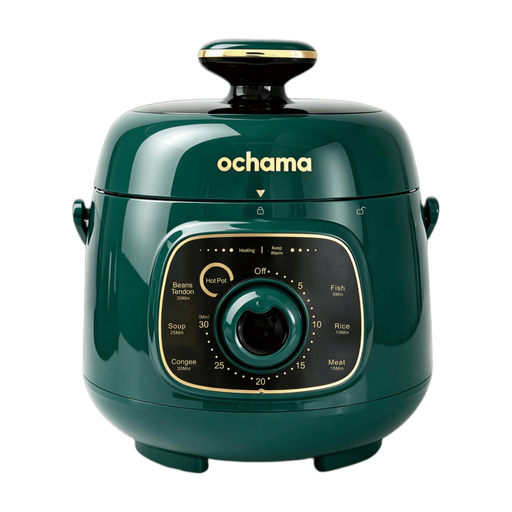 No image available
Suitable if you want to make small portions of soup under pressure.
1,8 L; the product name says it’s suitable for 1–3 people. For grains such as pearl barley, the product information says to fill the pot no more than halfway; also follow the pressure-release instructions.
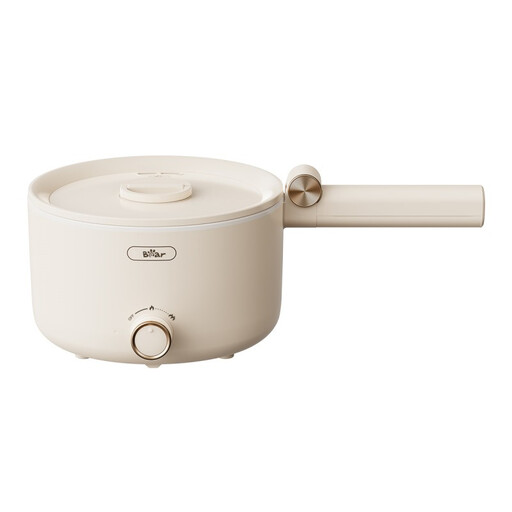 No image available
A compact cooking pot to compare for making soup in a small household.
1,6 L; the product information lists boiling, stewing and steaming. Follow the indicated maximum fill line.
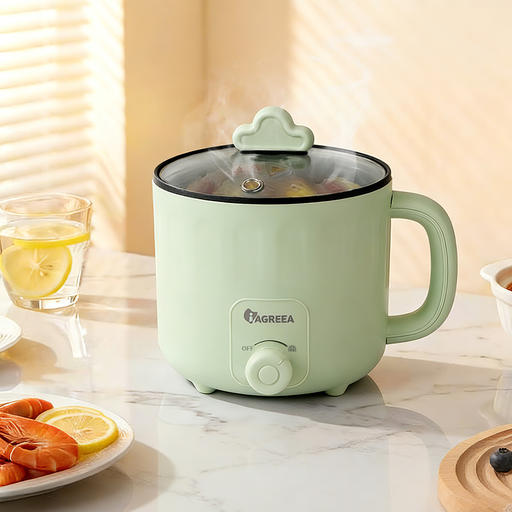 No image available
The compact capacity suits anyone wanting to make soup for one or two people.
1,6 L; the product information lists soup cooking and a non-stick pot.
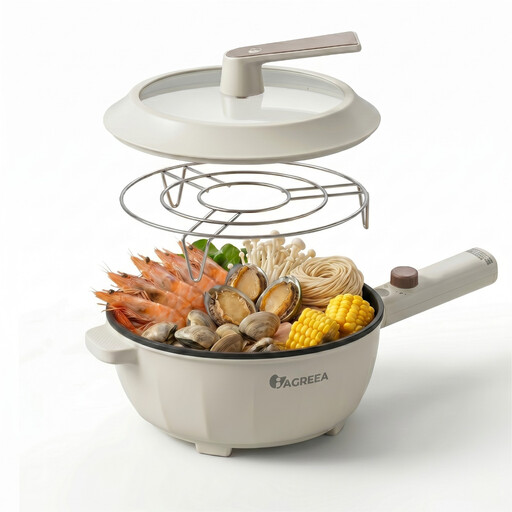 No image available
An option to compare if you want to cook soup and other one-pot meals in a single pot.
2,3 L and 1600 W; the product name describes it as a non-stick sauté pot.
 No image available
Suitable if you want to cook soup slowly or plan your cooking in advance.
2,6 L and 1000 W. The product information advises against high-heat frying to protect the non-stick coating.
No, follow the fill instructions for the exact model. The Instant Pot Duo manual says not to exceed two-thirds full for general use and half full for ingredients that expand during cooking; these limits for the Duo do not automatically apply to other multicookers.
The Voedingscentrum advises cooking chicken thoroughly and keeping raw chicken separate from cooked food. Put leftovers in the fridge or freezer within two hours; refrigerated leftovers can be kept for up to two days.
No, don’t open a pressure-cooking lid while there’s still pressure in the pot. The Instant Pot Duo manual warns never to force the lid open and says to first make sure the pressure has been fully released. For another model, follow its own manual.
The NVWA states that CE marking is compulsory for electrical products. Check the marking and product identity on the individual product you buy; a general brand page doesn’t confirm that every individual product has been checked.
No, regular pearl barley is hulled barley and contains gluten. The Voedingscentrum classifies barley as a gluten-containing grain; choosing a different multicooker won’t change that.