
Cook with limited time in the kitchen
You share the worktop and want to cook the chicken and stock in one pot. Compare pressure cooking with the total time it takes before the lid can be opened safely.


A multicooker with pressure-cooking and sauté functions is a good choice if you want to cook the chicken and stock in one pot and keep your turn in the shared kitchen as short as possible. If you want to check on your soup and adjust it as it simmers, choose a pot without a confirmed pressure function. Also compare the usable capacity, space for steam to escape and cleaning instructions: a soup setting alone doesn’t tell you whether the chicken and barley will cook to your preferred texture at the same time.
You share the worktop and want to cook the chicken and stock in one pot. Compare pressure cooking with the total time it takes before the lid can be opened safely.
You want to use as few separate pans as possible and be able to clean and put the appliance away afterwards. Check the pot, lid and clearance around the appliance.
You make more soup than you can eat straight away and want to cool and store the leftovers promptly in a covered container. Bear in mind how much space the pot and portions will take up.
Choose this option: if you want to spend relatively little time using the shared cooking space and cook the chicken and stock in one appliance.
Bear in mind: heating up and releasing the pressure also take time, and you’ll need a suitable place for steam to escape. Automatic pressure release doesn’t mean no steam is released.
Choose this option: if you’d rather look through a glass lid while cooking and adjust the process as you go.
Bear in mind: simmering keeps the cooking space occupied for longer. Check the programmes and dimensions of the exact model; don’t assume an appliance pressure-cooks just because it’s called a multicooker.
| What to consider | What should you check? | Who is this important for? |
|---|---|---|
| Time at the worktop | Check whether the exact model can pressure-cook and sauté, and how the manual explains pressure release. | If I share the kitchen with housemates, I want to know when I can safely open the appliance and clear the space. Around 33% of consumers prioritise time at the shared worktop. |
| Working and storage space | Compare the external dimensions and the clearance around the appliance; the stated pot capacity isn’t the same as the usable soup capacity. | If my worktop and storage space are limited, I consider where the appliance can sit securely and where hot parts can cool down. Saving space is the most important consideration for around 27% of consumers. |
| Portions and barley | Check the capacity and fill limit of the exact model. Choose the type of barley and cooking order to suit a suitable recipe. | If I’m making several portions, I want the quantity to fit in the pot and the barley to reach the texture I want. Around 20% of consumers start with portion size and doneness. |
| Cleaning | Check which parts are removable for each model and which are actually dishwasher-safe; clean any parts that have come into contact with raw chicken. | If housemates will use the kitchen after me, I want to be able to clean the pot, lid and utensils thoroughly. Cleaning matters most to around 20% of consumers. |
When the timer ends, the pot may still be under pressure and unsafe to open. Heating up and releasing the pressure both count when you’re estimating how long you’ll need the shared worktop.
Compare the full process in the manual with the time you have to use the kitchen.
The capacity shown on a product page doesn’t automatically tell you how much chicken, stock and barley you can safely cook. The Instant Pot Duo product information also lists different capacities.
Check the exact model and its fill limit in the corresponding manual before planning your portions.
The GreenPan Omnicooker is described as an electric cooking pot with a glass lid; the product information doesn’t confirm a pressure-cooking function for this model.
If pressure cooking is one of your main reasons for buying, check that the exact model explicitly lists this function.
An additional plan isn’t the same as your statutory rights. ACM ConsuWijzer explains that your statutory rights apply alongside any guarantee from the seller or manufacturer.
Read what extra cover a paid plan provides and compare it with your statutory rights.
The Dutch product information for the Duo lists soup, sautéing and pressure cooking. These functions make the model worth considering if you want to cook in one pot.
Philips describes the 3000 Series HD2616/70 as a multicooker with a 6 L pot and functions for soup, sautéing, slow cooking and pressure cooking.
According to Tefal, the Turbo Cuisine CY754830 combines pressure cooking, slow cooking and stir-frying, with control via a dial.
GreenPan describes the Omnicooker Stainless Steel 5,6 L as an electric cooking pot with a glass lid and ceramic non-stick coating.
These product picks focus on electric multicookers with a pressure-cooking function for making soup and browning ingredients in the same appliance. For each model, check the clearance around the appliance, the fill limit and the pressure-release instructions.
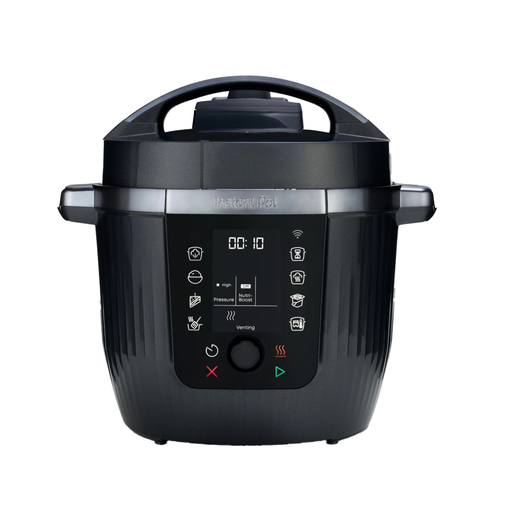 Image unavailable
Ideal if you want to brown chicken and aromatics, then pressure-cook them in the same multicooker.
The product name lists 5.7L, 10-in-1, app control and sous vide. Leave at least 15 cm of clearance around the appliance when positioning it, and don’t open the lid while it’s under pressure; the steam release can be hot.
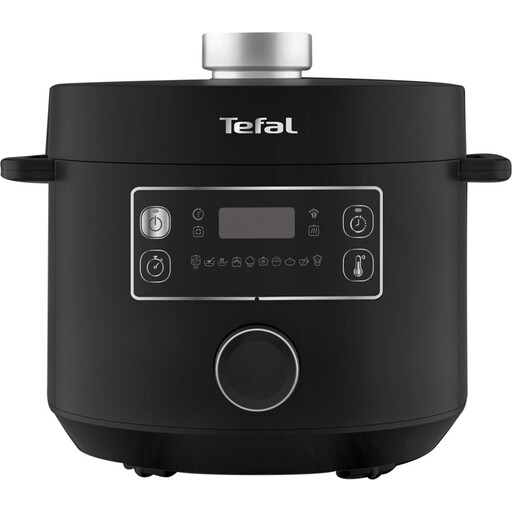 Image unavailable
The listed soup and pressure-cooking functions suit anyone who wants to make soup in one appliance; check that the controls and cooking process work for you.
The product name lists 5 L. Release the pressure before opening, cleaning or moving the appliance.
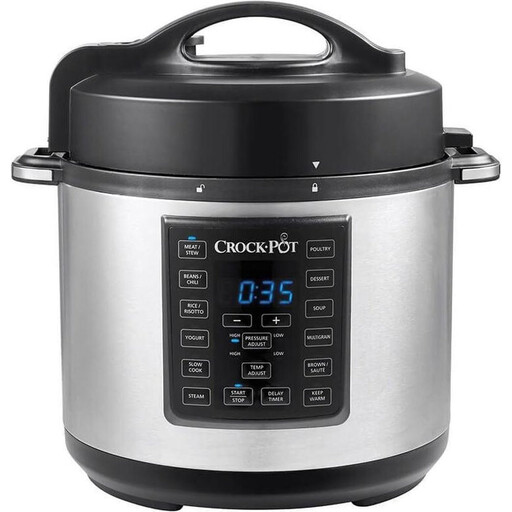 Image unavailable
The listed sauté and pressure-cooking functions suit anyone who wants to brown ingredients and then continue cooking in the same appliance.
The product name lists 5.6L, 1000W and 12 programmes. Keep to the MAX line and don’t force the lid open while the float valve is raised.
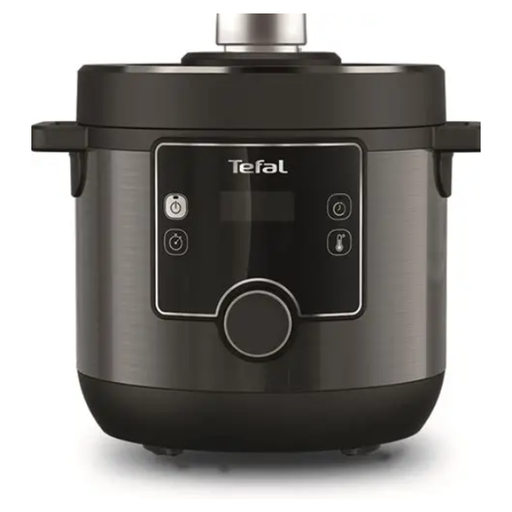 Image unavailable
The listed soup, sauté and pressure-cooking functions suit anyone who wants to prepare chicken and soup in one multicooker.
The product name lists 6L, 15-in-1 and digital touch controls. Wait until the pressure has been released before opening the lid.
 Image unavailable
The listed soup and sauté functions suit anyone who wants to cook chicken and soup in the same appliance.
The product name lists 9-in-1 and 7.6L. For grains, the safety information sets a maximum fill level of halfway; also take care around hot steam and don’t force the lid open while the pot is under pressure.
Not without adjusting the cooking method. In the Instant Pot chicken noodle soup recipe, the noodles are added after pressure cooking; it doesn’t give a cooking time or order for barley. Check the type of barley, find a suitable recipe and consult your model’s manual.
Keep raw chicken separate from ready-to-eat food, wash your hands and clean any utensils you’ve used; cook the chicken all the way through. The Voedingscentrum recommends these food safety measures. According to the manual consulted, place the Instant Pot on a stable, level, non-combustible worktop and only open a pressure cooker once all the pressure has been released.
Don’t leave leftovers out of the fridge for more than 2 hours. The Voedingscentrum recommends cooling them quickly and storing them covered in the fridge or freezer; for clear chicken soup, it advises keeping it in the fridge for 2 days. Follow suitable storage guidance for your homemade soup and freeze portions if needed.
For electrical appliances, the Dutch Ondernemersplein outlines safety requirements and manufacturers’ obligations, including CE marking and an EU declaration of conformity. According to ACM ConsuWijzer, a standard online purchase by a consumer usually comes with a 14-day cooling-off period after delivery, subject to legal exceptions. You also have statutory rights if a product doesn’t meet the standards you could reasonably expect under normal use; a logo on a retailer’s website doesn’t automatically verify that an individual product complies.