
Families cooking one large pot
You want to make enough cabbage soup for the whole meal in one go. Compare your recipe quantity with both the pot capacity and the stated fill line.


First, choose a pot that can hold your entire recipe without exceeding the fill line; the stated capacity is not necessarily the amount of soup you can cook under pressure. Pressure cooking and sautéing suit a tight schedule, while a soup or slow-cook function is ideal for a more leisurely cook. For the exact model, also check the manual and the applicable requirements for electrical safety and materials that come into contact with food.
You want to make enough cabbage soup for the whole meal in one go. Compare your recipe quantity with both the pot capacity and the stated fill line.
You want to brown vegetables before pressure cooking them. Remember to factor in the time needed to build and release pressure when planning your meal.
You prioritise a soup or slow-cook function and parts that are easy to clean after cooking, without needing pressure cooking.
First, compare the usable pot capacity with your recipe, then choose a cooking method that fits your schedule. Finally, check the cleaning instructions and parts for the specific model.
| What to consider | What to look for when buying | Who should prioritise this? |
|---|---|---|
| Will the whole pot of cabbage soup fit? | Compare the full recipe with the stated capacity and fill line. Also check the lower limit for ingredients that expand. | If I want to cook a family-sized portion in one go, usable capacity is my first concern; around 36% of consumers prioritise pot capacity and the fill line. |
| Cooking time | Check whether the model can both sauté and pressure cook. Allow time for preparation, pressure build-up and pressure release. | When I want to make soup on a busy day, the total time matters, not just the set cooking time; around 29% of consumers make speed their top priority. |
| Slow cooking | Check the functions listed for the exact model; don’t assume it has a pressure-cook function just because it’s called a multicooker. | If my schedule allows for a slower cook, I’m mainly looking for a suitable soup or slow-cook function; around 21% of consumers prioritise slow cooking. |
| Cleaning and parts | Read the cleaning instructions and check which parts are removable and which spare parts are compatible with the model. | After making a pot of soup, I want to know how many parts I’ll need to clean and store; around 14% of consumers make ease of maintenance their main priority. |
Pressure cookers have a stated maximum fill level. There may be a lower limit for ingredients that expand, so your recipe might not fit in one batch.
Measure your full recipe, including the liquid, and follow the fill line and manual for the specific model.
If a recipe exceeds the fill limit, you may need to cook it in two batches or use a different pot.
The Ninja MultiPot XL we reviewed lists soup and slow-cook functions, but no pressure-cook function. The Instant Pot Duo and Tefal All-in-One we reviewed do list this function.
Check the functions for the full model number before planning to pressure cook.
On the Instant Pot Duo Crisp, the wet cooking functions are used with the pressure-cooking lid; you need a different lid for air frying.
Choose a model like this if you also want to use its other cooking methods.
A second lid needs extra storage space.
The Duo 5.7 L we reviewed combines pressure cooking, sautéing and slow cooking. The Duo Crisp 5.7 L adds air-frying functions and comes with a second lid.
The All-in-One CY505EF0 we reviewed is a 6 L model with pressure-cook and slow-cook functions. The Turbo Cuisine CY754830 is a separate range with pressure cooking and dial controls.
The MultiPot XL MZ1001EUWH we reviewed has a 7 L pot and functions for soup and slow cooking.
These multicookers with a pressure-cook function are for anyone wanting to make cabbage soup for a family meal; capacity and additional cooking functions vary by model.
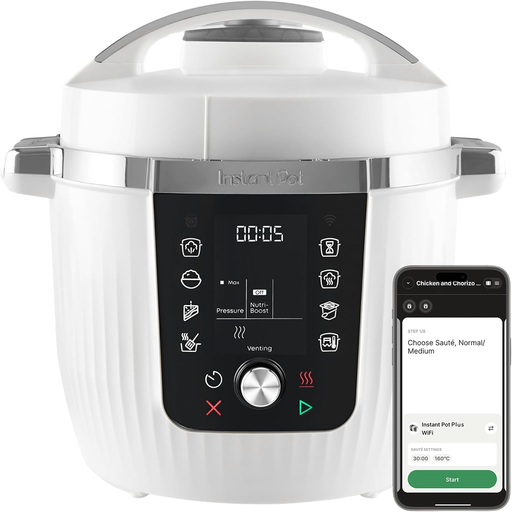 No image available
A good fit if you want to combine pressure cooking and sautéing; compare your recipe quantity with the pot’s fill line.
5.7 L; 10-in-1; 1200W; WiFi and app control.
The product description lists a dishwasher-safe inner pot and accessories. Follow the instructions for releasing pressure before opening.
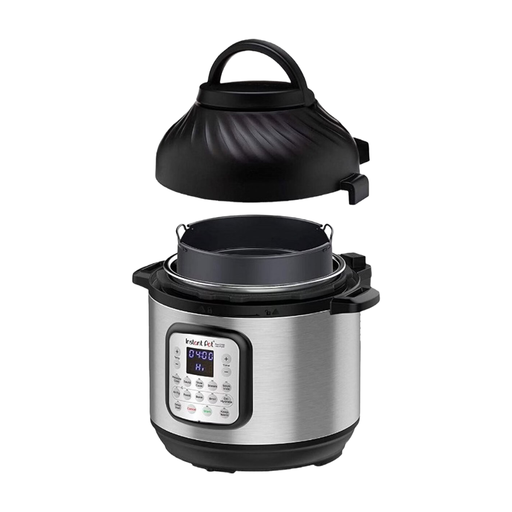 No image available
Worth considering if you want to use the separate air-frying function as well as making soup.
7.6 L; 11-in-1; pressure-cooking lid and air-frying lid.
The product description also lists sautéing, steaming and slow cooking. Don’t open the pressure-cooking lid until the pressure has been released and the float valve has dropped.
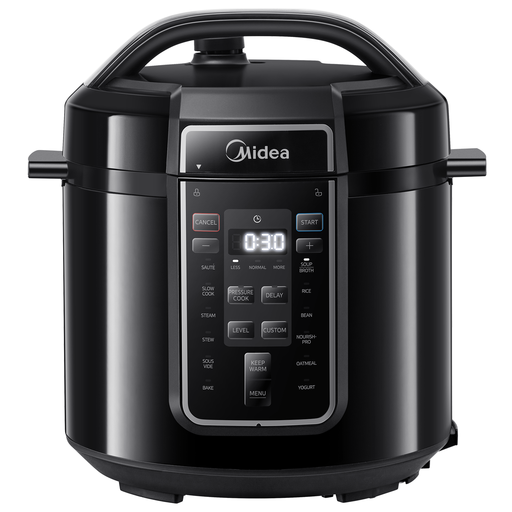 No image available
An option to compare if you’re looking for a pressure cooker with multicooker functions for a larger family meal.
6 L; 1000W; the description lists 6–8 people and a removable inner pot.
Listed functions include pressure cooking, stewing and slow cooking. Follow the fill line and never force the lid open while the pot is under pressure.
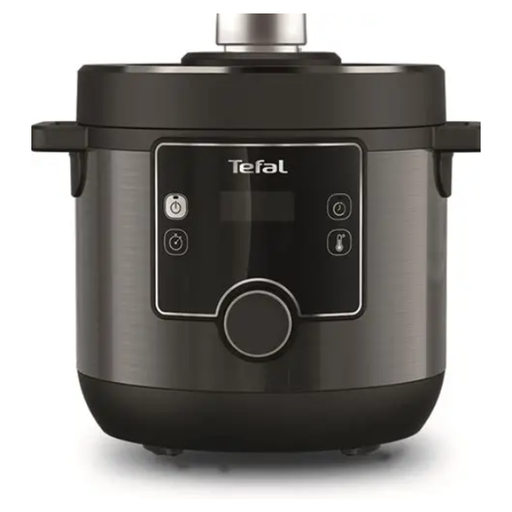 No image available
A good fit if you want to combine pressure cooking with functions such as slow cooking and sautéing.
6 L; 15 functions; digital controls.
The product description lists an inner pot with a non-stick coating. Release the pressure and wait for the pot to cool before opening, cleaning or moving it.
 No image available
Worth comparing if you’re looking for a larger pot that combines pressure cooking with other programmes.
7.6 L; 9-in-1; the description lists 12 programmes and up to 10 portions.
Listed functions include slow cooking, stir-frying and steaming. Follow the MAX line, and use the lower fill line in the product instructions for ingredients that expand.
No. First, check the manual and fill line for the exact pot. Instant Pot advises filling its pressure cooker no more than two-thirds full for most foods and no more than half full for ingredients that expand, such as rice or beans. Don’t automatically use this brand’s guidance as a measuring mark for another model.
Store cooled leftovers in a sealed container in the fridge or freezer, and label them with the date. The Netherlands Nutrition Centre advises eating refrigerated leftovers within two days.
Yes. Your statutory guarantee is separate from any manufacturer’s or retailer’s guarantee. ACM ConsuWijzer explains that the retailer is responsible for offering an appropriate solution if a product, used normally, breaks sooner than you could reasonably expect. There is no single fixed statutory guarantee period for every multicooker.
No. According to the European Commission, the manufacturer uses the CE marking to declare that the product meets the applicable requirements; the logo does not mean that an EU authority has independently approved the appliance as safe. For the exact model, also check the applicable requirements for electrical safety and materials that come into contact with food.