
Vandaag of morgen in huis

Kwaliteit gegarandeerd

Welkomstaanbiedingen ontgrendelen: GRATIS bezorging | Tot 80% korting | Gratis 30 dagen JoyPlus-proefperiode
Download de app
A multicooker can cook rice, steam, simmer and, in some cases, cook under pressure or with hot air. That sounds convenient, but not every appliance automatically replaces several kitchen gadgets. If you only look at the number of programmes, you could end up with a large pot that rarely gets used.
So keep an eye out for these three common pitfalls:
A compact multicooker of around 1 to 3.8 litres may be enough for one or two people. Households of four to six people may prefer a 5 to 7.6-litre model. A 6-litre pressure cooker has room for larger portions, but its maximum usable capacity is lower than the capacity of the inner pot.
For foods that expand, such as rice, pulses and grains, follow the instructions for use. For example, Midea’s product information says not to fill the pot above the MAX line, and that a lower filling limit applies to ingredients that expand. This helps prevent food from boiling over and the steam valve from becoming blocked.
A multifunctional cooking pot can combine several appliances, but features vary between models. Look out for the differences between:
A rice cooker with several functions isn’t automatically a substitute for a pressure cooker. Check whether “pressure cook”, “slow cook”, “steam” and “sauté” are separate functions or just general marketing terms.
A removable inner pot makes cleaning easier. Also check what it’s made of:
Never force the lid open when pressure cooking. Wait until the pressure has been fully released and the float valve has dropped. Keep your hands and face away from escaping steam, and place the appliance on a flat, heat-resistant surface.

Why it suits this profile: A straightforward choice for families who want to prepare soup, stews, rice and steamed meals in one pot. The product information lists a 6-litre capacity, 1000 watts and 14 cooking functions.
The capacity and functions are clearly listed. Be sure to observe the MAX line and the lower filling limit for rice, beans and grains.
6 litres, a stainless steel inner pot according to the product description, and functions including pressure cooking, steaming and slow cooking.
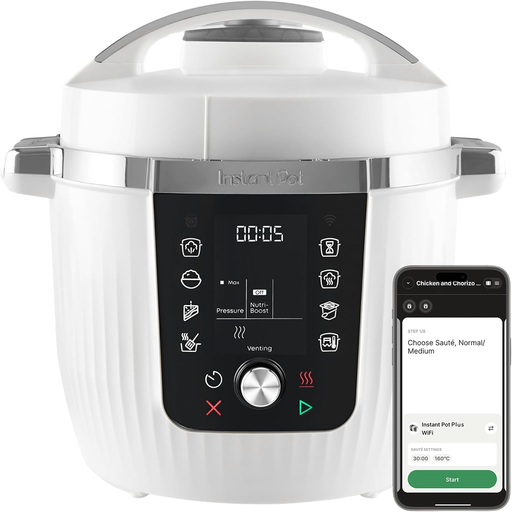
Why it suits this profile: For users who value app control, a range of cooking methods and a pot that can serve around four to six people.
The specifications list a 5.7-litre capacity, 220 volts, 1200 watts, Wi-Fi and dishwasher-safe parts. Before buying, consider whether app control would genuinely be useful for you.
10 functions, Wi-Fi and app control, sous vide and a stainless steel inner pot according to the product information.

Why it suits this profile: For families and keen cooks who want to air fry, bake, roast or dehydrate as well as pressure cook.
The two lids make it clear that pressure cooking and hot-air cooking are different methods. Bear in mind that you’ll need extra storage space for the air fryer lid.
7.6 litres, 11 functions and separate lids for pressure cooking and air frying according to the product description.
We’ve put together a complete, up-to-date list of products that meet these strict selection criteria and comply with current European safety regulations.
It depends on the dish, cooking time, power rating and amount of food. According to Instant Pot’s own information, some dishes can be cooked up to 70% faster, while energy use may be up to 80% lower. These are brand claims based on specific conditions, not guaranteed savings for every household. So compare the power rating with the actual cooking time.
Its lifespan depends on how it’s used and maintained, as well as the quality of parts such as the silicone sealing ring, valve and inner pot. Check the ring regularly for cracks, deformation or lingering smells. Clean the steam valve and lid according to the instructions, and don’t use metal utensils on a non-stick coating.
Consumers in the EU are entitled to a minimum two-year legal guarantee. Some brands also offer their own guarantee or list the availability of spare parts. Keep your proof of purchase and check in advance how parts can be replaced.
Only use a programmable cooking pot according to the instructions. A keep-warm function or delayed start doesn’t mean that supervision is unnecessary. When pressure cooking, the appliance needs clear space around it, the vents must not be covered and the lid must stay closed. Keep children away while it’s cooking, especially when steam is being released.
