
Vandaag of morgen in huis

Kwaliteit gegarandeerd

Welkomstaanbiedingen ontgrendelen: GRATIS bezorging | Tot 80% korting | Gratis 30 dagen JoyPlus-proefperiode
Download de app
A multicooker can be a useful addition to a Dutch kitchen where space is limited. You can use a single appliance as an electric cooking pot, slow cooker, steamer or electric hot pot, for example. However, not every multifunctional cooking pot is suitable for every household. A large appliance takes up unnecessary space for one person, while a mini cooking pot may not be enough for a family.
So don't focus only on the number of cooking programmes. Capacity, heat control, materials, cleaning and safety features are what really determine whether you will continue using your multicooker every day.
A long list of programmes may sound appealing, but control over the temperature and cooking setting is often more important. Ramen, pasta and soup need rapid cooking. Stews and slow cooking, on the other hand, require a low, steady setting. A model with just one on/off setting may therefore be less versatile than its product name suggests.
Check that the multicooker has at least two or three heat settings. If it is a pressure cooker or has a pressure function, clear instructions on filling, sealing and releasing steam are also essential.
A 5-litre pot is not always designed to be filled to the brim. Boiling liquids, rice and pulses need room to prevent spillovers. For a one- or two-person household, 1 to 2.4 litres is often more practical. A multicooker for a family usually starts at around 3.5 litres, depending on portion size and intended use.
Also check the dimensions. A wide pot may offer plenty of cooking space, but it may not fit in a kitchen cupboard or on a narrow worktop.
A cooking pot with a non-stick coating can make cleaning easier, but metal utensils, abrasive sponges and high temperatures can damage the coating. Not every inner pot is dishwasher-safe. Ceramic inner pots have different requirements again: sudden changes in temperature can cause cracks.
Before buying, check:
A guideline for everyday use:
Consider the type of dish you are making. A compact electric cooking pot may be sufficient for ramen or soup. If you want to steam and cook at the same time, you will need a larger pot with an insert or a separate steaming tier.
Power is measured in watts. An appliance rated at 300 to 600 watts is generally intended for small portions, gentle cooking and simple meals. Models rated at 1,000 to 1,200 watts heat larger quantities more quickly and are suitable for hot pot, pasta and cooking for several people.
More power does not automatically mean lower running costs. The actual cost depends on the operating time, setting and amount of food. A lower-wattage appliance that runs for longer may work out similarly in practice to a more powerful appliance that finishes more quickly.
An electric cooking pot should be placed on a stable, level and heat-resistant surface. Important features include:
Only use an induction hob with pans that are suitable for it. When pressure cooking, never force the lid open while there is still pressure inside the pot. Do not immerse the exterior, plug or electrical base in water.
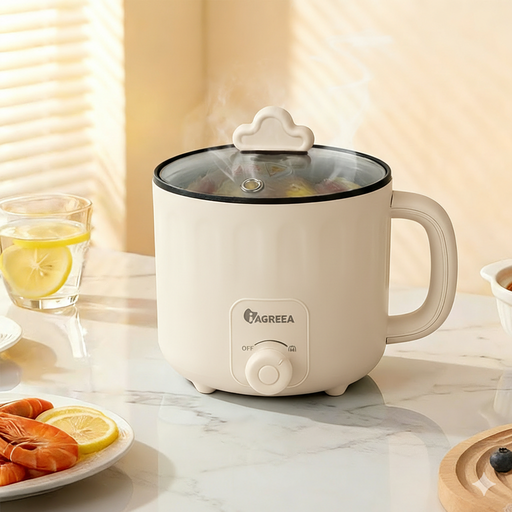
Why it suits this profile: Its capacity is intended for one person or a couple. The pot takes up little space and is suitable for ramen, soup, pasta, shabu-shabu and stews.
The 1.6-litre capacity prevents you from buying an unnecessarily large pot for small meals. The automatic shut-off and boil-dry protection are practical safety features.
600 watts, non-stick coating, one-button operation and a compact design for student accommodation, small flats or travelling.
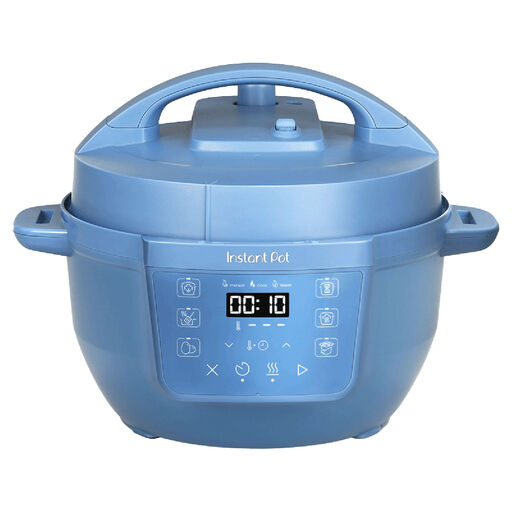
Why it suits this profile: This multicooker for smaller households combines pressure cooking, slow cooking, steaming, sautéing, egg cooking, yoghurt making and keeping food warm.
The range of functions and adjustable cooking time offer more control than a simple electric cooking pot. The manual specifies filling limits and instructions for steam release.
3.8-litre capacity, stainless-steel inner pot and dishwasher-safe parts according to the product description.
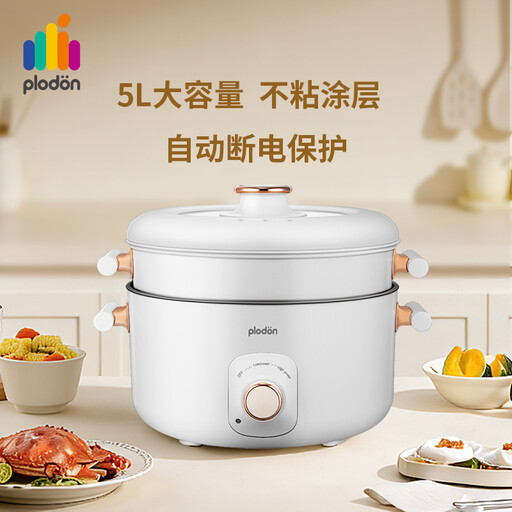
Why it suits this profile: The 5-litre capacity is suitable for families, shared hot-pot meals and cooking for several people.
The two heat settings allow both rapid cooking and gentle simmering. The removable steamer helps you prepare ingredients separately and store them apart.
1,200 watts, 5 litres, steaming function and non-stick coating according to the product information.
We have put together a complete, up-to-date list of products that fully meet these strict selection criteria and the applicable European safety regulations.
For a student or traveller, a mini cooking pot of 1 to 1.6 litres is often sufficient. Pay particular attention to weight, boil-dry protection and a detachable cable. For a couple, 2.4 to 3.8 litres is a useful mid-sized capacity. If you mainly make stews, you could also consider a separate slow cooker with a ceramic inner pot.
A multicooker for a family needs greater capacity and a sturdier base. Functions such as keeping food warm, steaming and sautéing are practical in this case. An egg cooker only makes more sense if you mainly prepare eggs; a multifunctional pot offers more possibilities, but also takes up more space. Special herb cookers are available for herbs or tea, but always check product claims to see whether they come from a brand description. A brand's own research may mention certain preparation claims, but such claims are not automatically independently proven.
For two people, 2 to 3.8 litres is usually practical. Choose a smaller model if you mainly make noodles, soup or single portions. A larger model is more convenient for leftovers, meal prep or entertaining.
Consumption depends on the wattage and cooking time. A 600-watt appliance running for 30 minutes theoretically uses less energy than a 1,200-watt model running for the same length of time. In practice, the more powerful model may finish sooner. So don't compare wattage alone; consider the total cooking time and selected setting as well.
Its lifespan depends on how it is used, cleaned and maintained. Use wooden or silicone utensils with a non-stick coating, avoid boiling the pot dry and do not cool hot ceramic suddenly. Also check the plug, cable, sealing ring and steam valve regularly. Replace parts when recommended by the manufacturer or when signs of wear are visible.
