
Vandaag of morgen in huis

Kwaliteit gegarandeerd

Welkomstaanbiedingen ontgrendelen: GRATIS bezorging | Tot 80% korting | Gratis 30 dagen JoyPlus-proefperiode
Download de app
A multicooker promises a clutter-free countertop and quick meals. This single appliance can function as a slow cooker, pressure cooker, rice cooker, and more. But not every model delivers on that promise. Before you invest in a new electric cooker, it's crucial to look beyond the marketing claims. Many users discover after a few months that their purchase is cumbersome, difficult to clean, or simply doesn't do what it promised.
Here are the most common pitfalls and how to avoid them:
To avoid buyer's remorse, focus on the specifications that actually matter. These are the objective criteria that determine whether a multicooker is practical for your daily use.
The power, expressed in Watts, determines how quickly the electric pot heats up. An electric pressure cooker needs higher wattage (around 1000W) to build pressure quickly. A compact cooker for a dorm room often only needs 300-600W to cook noodles or soup.
Critically examine the usable capacity instead of the total capacity.
The material of the inner pot directly impacts cooking and cleaning.
Don't be tempted by a long list; instead, look for the functions you will genuinely use. Essential programs for a versatile all-in-one cooker include:
Based on objective specifications, we have selected a few models that suit different households and needs.
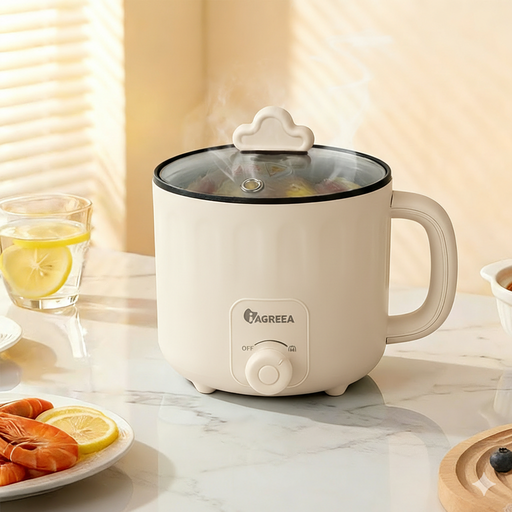
Why This Fits Their Persona: Perfect for a small kitchen, dorm room, or even the office. This compact cooker is designed for quick, simple meals for one or two people, like noodles, soup, or boiling eggs. It's lightweight and easy to store.
This model avoids the "20-in-1" trap by focusing on essential functions. It's a simple, effective electric pot without the superfluous programs you'll never use.
Compact size (1.6L) and 600W power for rapid heating. The non-stick coating and boil-dry protection make it safe and user-friendly.

Why This Fits Their Persona: For families looking to save time, an electric pressure cooker is a game-changer. This model has a generous capacity for 6-8 people and high power to get meals on the table fast. Ideal for stews, soups, and complete meals.
This model tackles the pitfalls of 'misleading capacity' and 'difficult cleaning'. The 6L capacity is genuinely spacious, and the removable inner pot and dishwasher-safe parts make cleanup simple.
The combination of 1000W power and the pressure cook function significantly reduces cooking time. The one-touch operation is practical for quick, daily meals.
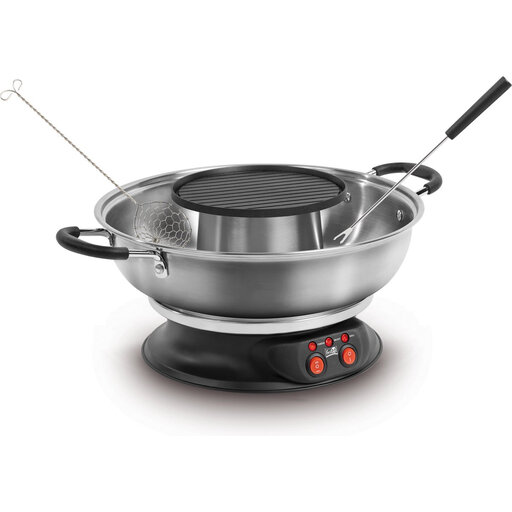
Why This Fits Their Persona: For those who love social dining, like fondue or an Asian hot pot, a specialised appliance is often a better choice. This model combines a fondue pot with a grill plate, perfect for evenings with friends or family.
This is not a 'jack-of-all-trades', but a specialist. It avoids the pitfall of overhyped features by excelling at its core purpose: fondue and grilling. The functions can be used independently.
The dual, independent function (fondue/hot pot and grill) is unique. With 1950W power and a stainless steel pot, it's powerful and durable. The pot and grill plate are dishwasher-safe.
We have compiled a complete, up-to-date list of products that fully meet these strict selection criteria and UK/EU safety standards.
What is the difference between a multicooker and a slow cooker? A slow cooker is designed to cook food slowly at a low, constant temperature. A multicooker is a more versatile appliance that can often function as a slow cooker, but also has other functions like pressure cooking, steaming, baking, or rice cooking. Therefore, a multicooker is a type of all-in-one cooker, while a slow cooker has one specific function.
How much electricity does an electric cooker use? Power consumption depends on the wattage and how long you use the appliance. An electric pressure cooker with 1000W that prepares a meal in 30 minutes can be more energy-efficient than an oven running for an hour at 2000W. A slow cooker uses low power (150-300W) but runs for several hours. In general, multicookers are more efficient than cooking on a traditional stove because the insulated pot retains heat well.
Is a non-stick inner pot safe? Modern non-stick coatings from reputable brands are safe when used correctly. Most concerns relate to PFOA, a substance formerly used in production. Today, virtually all pans are PFOA-free. To extend the life of the coating and minimise any potential risks, it is advisable not to use metal utensils and not to overheat the pan. If you want complete peace of mind, an inner pot made of stainless steel or ceramic is a good alternative.
